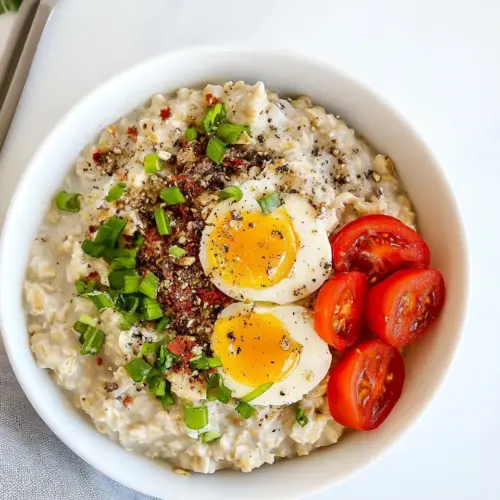
Savory Oatmeal
Savory Oatmeal is a creamy, hearty bowl that balances chewy steel cut oats with bright lemon, peppery arugula, and silky soft boiled eggs. This easy weeknight bowl is comforting yet vibrant, perfect for brunch or a quick dinner. Try it when you want a savory alternative to sweet porridge, it delivers comforting texture and layered flavors that make it worth cooking.
Equipment
- Saucepan
Ingredients
- 1 1/2 tablespoons olive oil Sauté in the oil to soften aromatic vegetables and develop a savory base for the oats; olive oil adds richness and helps brown onions and mushrooms without burning. Use moderate heat to release flavors and carry fat-soluble seasonings throughout the dish.
- 1/4 cup onion finely chopped Finely chop and sweat to build a sweet, savory foundation; onion contributes moisture, sweetness, and umami that balance the oats. Cook until translucent to enhance depth without creating bitterness.
- 1 cup steel-cut oats Toast briefly in the pan or simmer in liquid to provide hearty texture and nutty flavor; steel-cut oats give a chewy, substantial body to the savory bowl. Allow longer cooking time than rolled oats to fully soften while maintaining firmness.
- 2 cloves garlic minced Mince finely and add near the end of sautéing to preserve a bright, pungent kick; garlic enhances savory complexity and pairs with olive oil and onions. Cook until fragrant but avoid browning to prevent bitterness.
- 2 3/4 cups water Simmer the oats in measured water to hydrate and cook evenly; water controls final consistency and dilutes starches for a creamy but not gummy porridge. Adjust simmering time and occasional stirring for preferred texture.
- 1/2 teaspoons ea salt Season during cooking to enhance overall flavor and balance the oats' natural blandness; salt brings out savory notes and helps proteins and aromatics bloom. Add gradually and taste before serving to avoid over-salting.
- Black pepper to taste Season sparingly to uplift and balance flavors with a bright, slightly spicy finish; black pepper adds warmth and depth without masking delicate components. Grind fresh for the most aromatic impact.
- 1/2 cup fresh baby arugula Toss in at the end to introduce a peppery, leafy freshness that lightens the dish; fresh baby arugula contributes crisp texture and a subtle bitter contrast. Add just before serving so leaves wilt gently but retain color.
- 1/2 cups sautéed mushrooms Sauté separately to concentrate earthy, savory flavors and develop a meaty texture; mushrooms bring umami and a tender bite that complements the oats. Cook until caramelized for maximum depth and fold into the porridge.
- 2 soft-boiled eggs Soft-boil to provide a silky, runny yolk that enriches the oatmeal when broken; eggs contribute protein, creaminess, and a luxurious mouthfeel. Time precisely for a set white and custardy center.
- 1/4 cup cherry tomatoes halved Halve and add raw for bursts of acidity and sweetness that cut through richness; cherry tomatoes brighten the bowl and offer a juicy contrast. Scatter on top just before serving to preserve freshness.
- 1 avocado sliced Slice and place atop the bowl to add creamy, buttery texture and healthy fats; avocado mellows spices and creates a smooth mouthfeel when mixed in. Use ripe but firm fruit to hold shape.
- 1 lemon wedge Squeeze over as a finishing touch to introduce bright acidity and lift savory flavors; a lemon wedge balances fats and enhances overall brightness. Add gradually to taste to avoid overpowering delicate components.
- 1/4 cup chives chopped Chop finely and sprinkle as a garnish to add mild oniony freshness and visual appeal; chives contribute a subtle herbaceous note that ties ingredients together. Use just before serving to retain color and aroma.
Instructions
- In a saucepan over medium heat, cook the onion with the oil until translucent. Add the oats, garlic, water, and salt. Bring the ingredients to a boil. Reduce the heat and simmer for about 18 to 20 minutes, until the oats are creamy but al dente. Stir as needed while cooking.: You will notice the aroma of the onion turning sweet as it softens in the olive oil , a warm savory scent that fills the kitchen. As you add the oats , the grains begin to glisten and absorb the oil, giving the pot a nutty perfume; when you add the garlic , give it a quick swirl so its aromatic oils bloom in the hot pan. Pouring in the water creates a gentle hiss, and as the pot comes to a boil you will see a frothy rim before the surface calms into a steady simmer. Lower the heat so the liquid moves softly, not violently, and you will hear occasional quiet bubbling as the oats hydrate. Throughout the simmering phase watch for a creamy texture with individual kernels still intact, and stir periodically to prevent sticking and to encourage even cooking. The why behind this method is about texture control, the moderate simmer coaxing starches out of the oats without turning them to paste. A common mistake at this stage is keeping the heat too high which leads to scorching on the bottom, so be mindful and adjust the flame if you smell anything toasty or see dark flecks on the pan. If you find the pot drying too much before the oats reach the desired tenderness, add a splash of hot water and continue to cook gently until done.
- Remove oatmeal from heat. Season with black pepper and stir. Serve in bowls topped with arugula, soft-boiled eggs, avocado slices, mushrooms, and cherry tomatoes. Squeeze a lemon wedge over each serving and sprinkle on chopped chives.: As soon as the pot comes off the burner, you will see steam rise and a sheen form on the surface, signaling that the starches have reached a creamy finish. Stirring in black pepper at this point disperses its bright bite evenly through the bowl, and the warmth releases its aroma so it layers with the savory base. This step matters because seasoning at the end preserves the pepper's lift, preventing it from fading with long cooking. When stirring, pay attention to the texture, ensuring the oats are glossy and not gummy, and taste to check salt balance. Avoid adding too much pepper in one go, as you can always grind more at the table; overly peppered porridge can overwhelm the delicate toppings.
- Serve in bowls topped with arugula, soft-boiled eggs, avocado slices, mushrooms, and cherry tomatoes.: Plating brings textural contrast and freshness into play, with the peppery arugula offering a crisp counterpoint to the warm, creamy oats . Arrange the soft boiled eggs so their yolks can be broken and mixed in; when pierced, they create a glossy river of yolk that enriches each spoonful. The sliced avocado should be tender and smooth, offering a cooling balance, while the sautéed mushrooms add savory heft and depth. Halved cherry tomatoes introduce bursts of acidity that cut through the richness. A common oversight here is crowding the bowl so toppings steam rather than retain their texture, so give each element its space for contrast.
- Squeeze a lemon wedge over each serving and sprinkle on chopped chives.: The final squeeze of lemon brightens everything, the citrus oils awakening flavors and adding a clean note that lifts the bowl. Chopped chives scattered on top bring a subtle allium freshness and a pop of green that makes the dish look as lively as it tastes. This finishing move matters because small acidic or herbal notes create balance and prevent the bowl from feeling heavy. Watch the amount of lemon you add, starting with a light squeeze and tasting; too much acid can overwhelm the subtlety of the oats and the delicate yolk. If the lemon is particularly tart, a tiny pinch more salt on the eggs can restore harmony.
Notes
- Measure liquids accurately, using the specified 2 3/4 cups water so the steel cut oats cook to the right creamy but al dente texture without being too loose or too dry.
- Sauté aromatics gently, cook the finely chopped onion until translucent rather than browned for a sweet, mellow base unless you prefer a deeper caramelized flavor, in which case cook longer with attention to avoid burning.
- Cook eggs with care, time soft boiling precisely to achieve set whites and runny yolks, then cool quickly in cold water to stop cooking and ease peeling.
- Season at the end, add most of the black pepper after cooking so the spice remains bright and aromatic, adjusting to taste before serving.
- Keep toppings separate, sauté mushrooms apart from the oats so they develop a golden sear and concentrated umami instead of steaming and becoming soggy.
- Finish with acid, a light squeeze of lemon over each bowl balances richness and makes the flavors pop, so start modestly and add more if needed.