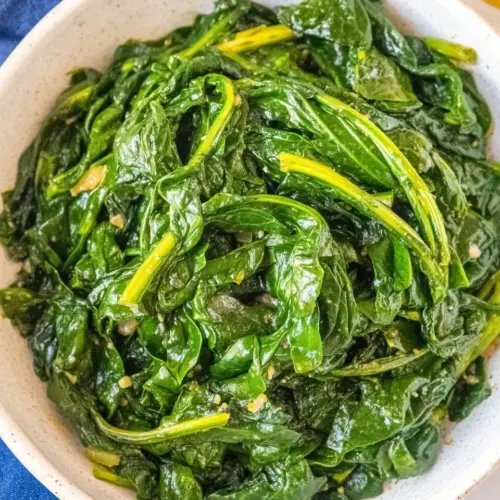
Sauteed Spinach
Sauteed Spinach is a quick and vibrant side, glossy with butter and olive oil and brightened by fragrant garlic. This easy weeknight vegetable brings tender leaves and clean seasoning to the table, perfect for pairing with roasted mains or a fried egg. Make it for fast, healthy dinners that still feel thoughtfully prepared.
Equipment
- Large non stick skillet
- Spatula or tongs
Ingredients
- 2 bunches spinach washed and trimmed Washed and trimmed to remove dirt, grit, and tough stems so leaves cook evenly; provides the main bulk and vibrant green color to the dish. Releases moisture when wilted, creating a tender texture and mild, slightly earthy flavor that pairs well with aromatics. Can be patted dry to reduce excess water in the pan and ensure proper sautéing.
- 1 tablespoon butter Melted in the pan to provide a rich, silky mouthfeel and help brown aromatics; adds a subtle creamy, slightly sweet flavor. Balances the olive oil and carries fat-soluble flavors, contributing to overall sauce cohesion. Used sparingly to avoid overwhelming the spinach's delicate taste.
- 1 tablespoon olive oil Heated to provide a higher smoke point and a light fruity note while preventing butter from burning; helps evenly distribute heat across the pan. Combines with butter to create a balanced cooking fat and contributes depth to the finished dish. Adds a subtle olive-derived aroma when warmed.
- 1 clove garlic minced Minced finely to release pungent, savory aroma that flavors the cooking fat and infuses the spinach as it wilts. Sautéed briefly to mellow sharpness into a sweet, garlicky background note that enhances taste complexity. Added early to bloom in the oil and coat the leaves with aromatic flavor.
- 1/2 teaspoon salt Sprinkled to season the spinach and heighten natural flavors; helps balance bitterness and enhance savory notes. Dissolves into released juices to distribute seasoning uniformly, improving overall palatability. Adjusted to taste to avoid over-seasoning delicate greens.
- 1/4 teaspoon pepper Ground to provide a mild heat and subtle bitterness that complements saltiness; enhances complexity without overpowering. Added to taste to create a gentle peppery finish and lift flavors of the garlic and fats. Used in small amount due to spinach's delicate profile.
Instructions
- Add the butter and olive oil to a large non-stick skillet or pan.: Listen for the immediate sizzle as the butter hits the warm surface, and watch the fat shimmer with tiny ripples. The combination of butter and olive oil raises the smoke threshold and creates a flavor base that coats the spinach . You want the pan hot enough that the oils move freely, but not smoking, so you avoid burnt butter notes. A common mistake is overheating the fat, which can scorch the butter and give an acrid taste. If you see dark specks in the fat, lower the heat and wipe the pan, then start again. This initial stage sets the aroma and texture foundation for the whole dish.
- Once hot, add the garlic, then the spinach, salt, and pepper, and saute for 2-3 minutes, or until wilted.: Right after the oil is shimmering, add the minced garlic and pay attention to the sound it makes, a soft popping that mellows as it releases fragrance. Immediately add the spinach in handfuls so the heat drops slightly and the leaves begin to collapse. You should hear a gentle hiss as moisture escapes, and the leaves will quickly turn a deeper, glossy green. I like to toss or stir constantly to ensure even wilting and to keep the garlic from sticking to the pan. The salt helps pull liquid from the leaves, concentrating flavor, while the pepper adds a background warmth. Watch for signs of overcooking such as a slimy texture or a dull, dark color, which indicate you left the spinach in the heat too long. If that happens, remove it promptly to a bowl to stop the cooking process.
- Remove the spinach from the pan and serve with lemon slices.: As the leaves reach a tender wilt, they will become glossy and reduce drastically in volume, signaling it is time to take them off the heat. Use a spatula or tongs to lift the spinach so it sheds excess oil back into the pan, keeping the texture light rather than drenched. Serving immediately is important because residual heat will keep cooking the greens. A common issue is holding the spinach in the pan too long while plating other components, which makes the leaves soggy. Transfer to a warm plate and offer acidity, such as lemon, at the table to brighten the flavors just before eating. The final aroma should be buttery with a clean garlic note and the color should remain vibrant.
Notes
- Use a neutral oil if you prefer: Swap the olive oil for avocado or grapeseed oil to increase the smoke point without altering the basic technique. This helps if your pan runs hotter than expected.
- Clarify the butter for higher heat: If you want a stronger sear, melt and skim milk solids from the butter so it can withstand more heat without burning, which keeps the flavor clean.
- Minced garlic alternatives: If fresh garlic is unavailable, use a small pinch of garlic powder added at the end, but expect a slightly different aroma and less immediate brightness.
- Adjust salt conservatively: Start with the listed amount of salt and finish with a small sprinkle after tasting, because the volume reduction can intensify saltiness quickly.
- Work in batches for large quantities: If preparing several bunches, cook the spinach in batches to avoid steaming, then combine briefly off heat to marry flavors.
- Keep a splash of water handy: If the pan becomes too dry before the spinach wilts, add a tablespoon of water to create steam and speed gentle wilting without over browning.