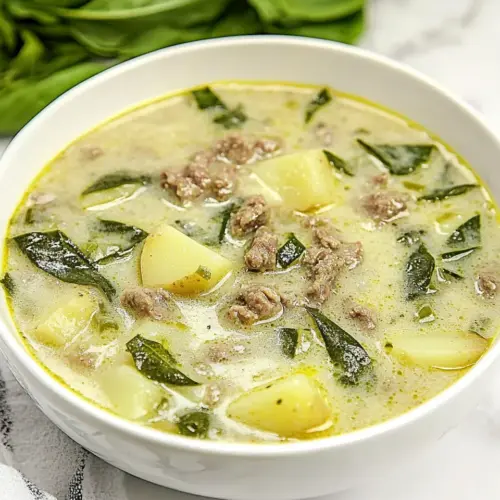
Sausage Potato Soup
Sausage Potato Soup is a creamy, savory bowl that comforts with tender potatoes, savory sausage, and silky beans. This easy weeknight dinner delivers a rich aroma and satisfying texture, perfect for cold evenings or simple family meals. Make it for a cozy night in when you want a hearty, fuss free meal that tastes like a warm hug.
Equipment
- Large Pot
- Slotted Spoon
- Immersion Blender
Ingredients
- 1 teaspoon extra-virgin olive oil Heat gently to provide a nonstick base for browning and to add a subtle fruity flavor; extra-virgin olive oil helps prevent sticking and carries aromatics during the initial sauté stage.
- 4 mild Italian turkey or chicken sausage links, casings removed Crumble while cooking to release savory, meaty flavor and natural fats; removing casings lets the poultry sausage incorporate evenly into the soup and mimic classic Italian textures without too much grease.
- 1 small onion, diced Sweat until translucent to build a sweet, aromatic foundation; diced onion adds sweetness and depth as it softens and melds with the other aromatics in the pot.
- 4 garlic cloves, minced Sauté briefly to release pungent, savory aromatics that lift the entire dish; minced garlic contributes bright, warm notes that complement the sausage and herbs.
- 2 teaspoons Italian seasoning Stir in to season and provide an herbaceous, Mediterranean backbone; Italian seasoning layers oregano, basil, and thyme flavors that tie together the sausage, beans, and broth.
- 1 can cannellini beans (15 ounces), drained and rinsed Rinse and add for creamy texture, protein, and a gentle nutty flavor; cannellini beans lend body and soak up the soup’s savory broth while boosting nutritional value.
- 32 ounces low-sodium chicken or vegetable broth Pour in as the primary cooking liquid to meld flavors and simmer the potatoes; low-sodium chicken or vegetable broth provides savory depth while allowing control over final saltiness.
- 4 cups cubed yellow potatoes, peeling optional Simmer until tender to create hearty bulk and a comforting mouthfeel; cubed yellow potatoes hold shape well and release starch to slightly thicken the soup.
- 1/2 teaspoon salt Season lightly to enhance overall flavor balance while allowing room for adjustment; adding 1/2 teaspoon salt early helps build seasoning as ingredients meld.
- Black pepper to taste Grind over to adjust and brighten flavors at the end or during cooking; black pepper adds mild heat and aromatic sharpness that complements the creamy, savory elements.
- 1 cup finely chopped spinach Fold in near the end to add color, freshness, and a tender leafy texture; finely chopped spinach wilts quickly and contributes nutrients without overpowering the soup.
Instructions
- Heat a large pot over medium-high heat and add the olive oil.: When the pot is warm and the extra-virgin olive oil shimmers slightly, it signals the correct temperature for browning. You should hear a gentle sizzle if you sprinkle in a drop of water. This step is important because starting with the right heat ensures the sausage will brown instead of steam, which builds deep flavor for the whole soup. Watch closely to prevent the oil from smoking, which will add a bitter edge.
- Crumble the sausage links into the pot and cook until browned, about 7 minutes, stirring often. Remove the sausage with a slotted spoon and set aside.: You will notice sizzling and a gradual release of savory juices as the sausage browns; the aroma becomes rich and toasty. Browning creates fond on the pot surface, which carries concentrated flavor into the broth when deglazed. Use a wooden spoon to break the meat so it forms small, evenly browned pieces. One common mistake is moving the meat too soon, which prevents a good sear. If the pan looks wet instead of dotted with brown bits, increase the heat slightly and avoid stirring constantly.
- In the same pot, add the diced onion and minced garlic, cooking until softened, about 5 minutes.: As you lift the browned sausage out, you will see golden bits clinging to the pot, those are precious flavor nuggets. Setting the meat aside keeps it from overcooking while you build the next layer. Leaving the fond in the pot is key, do not wash it away. If you accidentally scraped it off, take a moment to brown a small piece of meat or a splash of broth to recreate some fond.
- Stir in the Italian seasoning, then add the cannellini beans and broth, mixing well.: The onion will turn translucent and sweet, while the garlic will release a warm, savory perfume. Stir frequently so the aromatics cook evenly and do not burn. This is where the soup gains depth beyond the sausage . If the onion starts to color too much, lower the heat to avoid bitterness. Burnt garlic is a common pitfall that can ruin the base flavors.
- Purée the soup using an immersion blender until creamy, or use a high-speed blender, then return the soup to the pot.: When the dried herbs hit the warm pot they release fragrance, and adding the cannellini beans and broth dilutes concentrated browned bits into the liquid, creating a savory base. You should hear a soft bubbling as the liquid meets the hot pot. Mixing now helps the flavors marry early. Be mindful that adding cold broth can briefly reduce the pot temperature, so bring it back up to a gentle simmer before the next step.
- Add the browned sausage, cubed potatoes, salt, and pepper to the pot. Bring to a boil.: As you purée, the texture will shift to a silky body, with the beans and softened onion lending a smooth, velvety mouthfeel. The aroma will deepen and the color will become uniform. Use caution if transferring hot liquid to a blender to avoid splatter, and blend in batches if needed. A common error is overblending to the point of a gluey texture, so stop when the consistency feels pleasantly thick but pourable.
- Lower the heat to a simmer, cover, and cook for about 30 minutes, or until the potatoes are tender.: When these ingredients join the puréed base the pot will look and smell fuller, and the rolling boil helps the potatoes start cooking evenly. You should see active bubbling across the surface, which indicates the pot has reached the right heat. Stir gently so the sausage distributes without breaking down too much. Watch for a vigorous boil that could cause the pot to foam and spill, reduce heat as needed.
- Stir in the chopped spinach and simmer for an additional minute before serving.: At a gentle simmer you will see occasional small bubbles and steam escaping from under the lid. The potatoes should yield to a fork without falling apart, and the broth will thicken slightly as starch is released. Simmering gently preserves texture while allowing flavors to meld. A frequent mistake is cooking at too high a boil which can break down the potatoes and make the soup cloudy and overly thick.
- DEVOUR!: Stirring in the spinach at the end provides a bright color and fresh flavor, and in a minute it will wilt to a tender finish. You should see the leaves collapse and the soup take on flecks of green, which lifts the bowl visually and nutritionally. Avoid overcooking the spinach which would turn it dull and mushy; a quick stir and one minute of heat is enough.
- DEVOUR!: By now the soup should smell inviting, with layered savory notes and a comfortable, creamy texture. Serve hot, using a ladle to scoop generous portions into bowls. A common oversight is not tasting for seasoning at the end; take a spoon, check salt and pepper, and adjust before serving so each bowl is perfectly balanced.
Notes
- Swap the sausage type Carefully choose mild turkey or chicken sausage if you want a lighter bowl, or opt for a spicier variety if you like heat, but keep the quantity the same so the balance of meat to broth remains steady.
- Adjust the bean texture For a chunkier mouthfeel, mash half the cannellini beans and leave the rest whole before pureeing, this gives both creaminess and bite in each spoonful.
- Control the herb profile Increase or decrease the Italian seasoning to shift the herbal intensity, or stir in a small amount of fresh herbs at the end for a brighter, fresher note without changing cooking time.
- Make it lighter Use vegetable broth and chicken or turkey sausage, and reduce oil slightly, to keep the bowl lighter while still satisfying and flavorful.
- Boost green goodness Stir in extra finely chopped spinach or add it in two stages for different textures, one portion for wilting and one for a fresher bite just before serving.