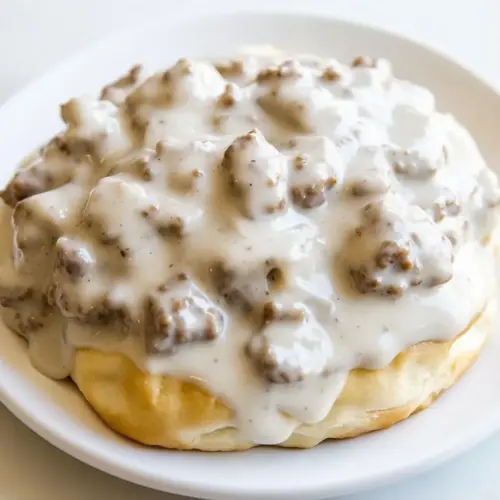
Sausage Gravy
Sausage Gravy is a creamy, savory skillet sauce made with browned breakfast sausage, a silky roux, and evaporated milk, perfect for an easy weeknight or lazy weekend breakfast. The texture is rich and spoonable, the flavor comforting and slightly tangy if you add a dash of Tabasco, making it an ideal choice for family meals and brunches. Try it to warm up any morning.
Equipment
- Large saute pan
- Wooden spoon or spatula
- Whisk
Ingredients
- 16 ounces breakfast sausage Provide rich, savory base and hearty texture for the gravy; brown thoroughly to render fat and develop deep flavor before adding other ingredients. Use crumbled pieces to create a meaty mouthfeel that carries seasoning throughout the sauce.
- 2 tablespoons finely chopped onion Add subtle sweetness and aromatic depth when finely chopped; cook until translucent to mellow sharpness and integrate flavors with the sausage. Contribute moisture and a slight textural contrast to the finished gravy.
- 6 tablespoons all-purpose flour Thicken the pan juices and rendered fat into a smooth, cohesive gravy; sprinkle evenly and cook briefly to form a blonde roux that eliminates raw flour taste. Whisk continuously while adding liquids to avoid lumps and achieve desired consistency.
- Two 12 ounce cans evaporated milk Contribute creamy, concentrated dairy richness and body; pour in gradually while whisking to create a velvety, slightly caramelized flavor profile. Provide most of the milk solids that give the gravy its classic, silky texture.
- 1 cup water Adjust consistency and dilute the evaporated milk as needed; stir in gradually to reach preferred thickness and to balance intensity. Help control overall volume and ensure the gravy pours easily over biscuits.
- 1/4 teaspoons salt Enhance seasoning and bring out savory notes when measured carefully; add incrementally and taste to avoid over-salting. Help round flavors and allow other seasonings, like heat from hot sauce, to balance the gravy.
- Tabasco sauce, to taste Introduce adjustable heat and tang; add sparingly and taste frequently to customize spiciness without overpowering the sausage flavor. Provide a bright acidic counterpoint that lifts the richness of the gravy.
- fresh baked biscuits, for serving (if using for biscuits & gravy) Serve as traditional accompaniment for biscuits & gravy or to soak up sauce; keep warm and fresh-baked for best texture contrast. Offer a tender, flaky base that complements the creamy, savory gravy.
Instructions
- In large sauté pan, cook sausage and onion over low-medium heat, stirring occasionally, until sausage is no longer pink.: The first indication that you are on the right track is the gentle sizzle and the release of savory aromas from the breakfast sausage . As the meat browns, it will give off flavorful fat and small browned bits that add complexity to the gravy. The onion will soften and turn translucent, contributing a sweet, fragrant background that complements the meat. Stir occasionally to promote even browning and to prevent the onion from burning. A common mistake is rushing the browning by using too high heat, which can leave the interior undercooked while charring the exterior, so keep the heat controlled to low to medium and be patient as the sausage reaches that just cooked through stage.
- Add the flour to the pan and mix well. Stir in the evaporated milk, water, salt and tabasco (to taste). Cook, stirring occasionally, until mixture comes to a boil. Cook 1 to 2 minutes, or until slightly thickened and creamy.: When you add the all-purpose flour , it should coat the rendered fat and meat pieces, forming a roux that starts to smell slightly nutty rather than floury. Whisk in the evaporated milk and water gradually so the mixture becomes smooth without lumps, and you will notice the sauce begin to thicken as it warms. As it approaches a simmer, tiny bubbles will rise around the edges and steam will carry a rich, creamy scent. The Tabasco sauce adds an aromatic tang that shifts the profile from flat to lively. Avoid adding all the liquid at once at a high temperature, which can create clumps; instead, temper the liquid in slowly while stirring to maintain a silky consistency.
- Serve hot over fresh-baked biscuits, if desired.: At this stage the sauce should coat the back of a spoon and move with a slow ribbon when stirred, giving a glossy sheen. The texture is crucial, because overcooking can evaporate too much moisture, making the gravy pasty, while undercooking can leave it thin and floury. You will hear a steady gentle simmer and see the surface move with small, consistent bubbles. If the gravy thickens too quickly, reduce the heat and stir in a splash of warm water to loosen it. A frequent misstep is walking away at this point and letting it reduce beyond the desired creaminess, so stay attentive and test the texture often.
- Serve hot over fresh-baked biscuits, if desired.: The final sensory payoff comes when the warm gravy meets a tender fresh baked biscuit , steam rising and the sauce soaking into the layers. Serving immediately ensures the contrast between the crisp edges of the biscuit and the silky gravy. If the gravy cools and thickens, reheat gently over low heat with a splash of warm water and stir until smooth. Avoid reheating at high heat, which can break the emulsion and create a separated texture.
Notes
- Render the fat by cooking the breakfast sausage slowly, which creates a flavorful base for the gravy.
- Cook the roux briefly after adding the all-purpose flour to avoid a raw flour flavor in the finished sauce.
- Temper liquids by adding the evaporated milk gradually while whisking to keep the gravy lump free.
- Control thickness with warm water, adding small amounts until the gravy coats a spoon the way you like.
- Adjust heat near the end to maintain a gentle simmer, which helps the gravy develop a smooth glossy finish.