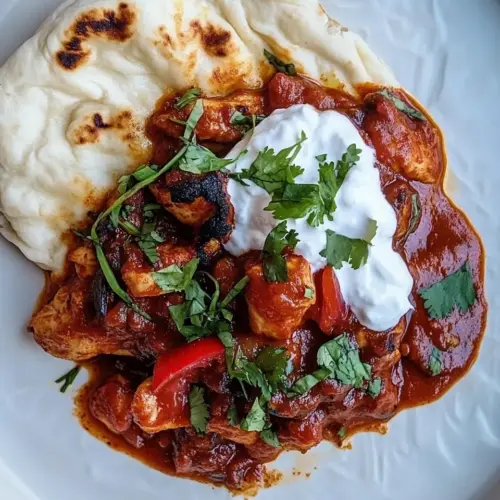
Saucy Indian Spiced Chicken with Naan
Saucy Indian Spiced Chicken with Naan is a creamy, aromatic, easy weeknight dinner that blends tender, slow simmered chicken with warm spices and a silky sauce. With cozy sweet potatoes and the option of coconut milk for extra richness, this recipe delivers comforting texture and bold flavor. Make it for family dinner or a relaxed gathering, leftovers only improve with time.
Equipment
- Large heavy bottom pot
- Plate
- Ladle
Ingredients
- 3 tablespoons coconut oil Melted and fragrant, adds a rich, tropical fat for sautéing aromatics and enriching the sauce with a subtle coconut aroma and glossy finish.
- 3 pounds chicken thighs or a mix of thighs and breasts Cooked until tender, provides the primary protein and a juicy, flavorful base that soaks up spices and creates a hearty main for the saucy curry.
- Kosher salt and freshly ground black pepper Seasoned liberally, balances flavors and enhances the natural taste of the chicken and vegetables while helping to build depth in the broth and final sauce.
- 1 medium onion finely chopped Finely chopped and softened, creates a savory foundation when caramelized, contributing sweetness and body to the sauce and overall texture.
- 4 cloves garlic minced or grated Minced and aromatic, brings pungent heat and savory depth, infusing the dish with garlicky warmth that melds into the sauce as it cooks.
- 2 tablespoons ginger peeled + grated Grated and bright, lends a peppery, citrusy heat that cuts richness and layers complexity into the curry’s flavor profile.
- 2 tablespoons tomato paste Concentrated and savory, boosts tomato flavor, deepens color, and adds umami to anchor the sauce with a slightly sweet, tangy intensity.
- 1 teaspoon garam masala Fragrant and warm, contributes a complex blend of spices that adds warmth and characteristic Indian curry flavor to the dish.
- 2 teaspoons ground cumin Earthy and slightly bitter, imparts a toasted, nutty depth that complements other spices and enhances the overall savory backbone.
- 1/2 teaspoon ground turmeric Bright and warm, offers a subtle earthy bitterness and color, supporting the spice blend and balancing richer ingredients.
- 1/2 teaspoon ground coriander Lemony and floral, provides a mild citrus-like note that rounds out spice layers and adds aromatic complexity to the sauce.
- 1 teaspoon cayenne pepper Spicy and pungent, delivers heat and a punchy kick that raises the overall temperature of the dish and complements milder spices.
- 1/4 teaspoon ground cardamom Sweetly aromatic, adds a unique floral, resinous warmth that enhances the curry’s complexity in small, fragrant amounts.
- 8 cups low-sodium chicken broth Light and savory, serves as the cooking liquid base, concentrating flavors from aromatics and spices while keeping the chicken moist.
- 1 ounce can tomato purée Smooth and tangy, contributes tomatoey acidity and body in a compact form that enriches the sauce without adding extra chunks.
- 1/2 cup heavy cream or coconut milk Creamy and rich, rounds out the sauce with silkiness and mild sweetness, mellowing spices and adding luxurious mouthfeel.
- 1 pounds sweet potatoes chopped Sweet and starchy, offers body and natural sweetness when chopped and simmered, absorbing flavors while adding substance to the stew.
- warm naan | https://www.halfbakedharvest.com/homemade-naan-step-step-photos/] for serving Warm and soft, provided as an accompaniment, perfect for scooping up the saucy chicken and absorbing the flavorful sauce for serving.
- steamed rice for serving Fluffy and neutral, acts as a hearty starch to serve alongside, soaking up sauce and making the meal more filling and comforting.
- greek yogurt for serving Cool and tangy, served as a condiment to provide brightness and creamy contrast that cuts through the spice and richness.
- torn fresh mint for serving Fresh and aromatic, sprinkled over the finished dish to add a cool, herbal lift and pop of color that refreshes each bite.
- salted cashews for serving Crunchy and salty, scattered on top to introduce texture contrast and a savory, nutty finish that complements the creamy sauce.
Instructions
- Heat coconut oil in large heavy bottom pot oven over medium heat. Season chicken with salt and pepper. Working in batches, cook chicken, until golden brown, about 8-10 minutes. Flip and cook another, 5 minutes. Remove the chicken from the pot and transfer to a plate.: You will smell a light, nutty scent as the oil warms and shimmer appears on the surface. Use a pot with a thick base so heat distributes evenly, preventing hot spots that can burn spice later. The visual cue is small ripples in the oil and a faint aroma right before you add the chicken . If the oil smokes, lower the heat immediately, as overheated oil will give a bitter note.
- Add onion, garlic, and ginger to the pot and cook, stirring occasionally until onion is very soft and golden brown, about 8-10 minutes. Add tomato paste, garam masala, cumin, turmeric, coriander, cayenne, and cardamom and cook, stirring often, until tomato paste begins to darken, about 4 minutes.: The grains of salt will look moist on the skin and the pepper will speckle the surface. Salt draws moisture to the surface and helps achieve a crispier exterior when searing, while pepper offers an upfront bite. A common mistake is under seasoning here, which can lead to a bland final dish, so be generous but not heavy handed.
- Add the chicken back to the pot. Add the broth, tomato purée, and coconut milk (or cream) to pot. Season the dish with salt and pepper. Bring to a boil, reduce heat, and simmer, partially covered, skimming occasionally if needed, until chicken is almost falling off the bone and liquid is slightly thickened, about 1 1/2 to 2 hours.: As the chicken hits the hot oil you should hear an immediate sizzle, and after a few minutes you'll see a deep golden crust form. Browning adds caramelized flavor that deepens the entire stew. Crowding the pot lowers the temperature and causes steaming instead of searing, so take your time with batches. If pieces stick, give them another 30 seconds before trying to move them, they will release when properly browned.
- Add the sweet potatoes to the pot and cook, partially covered, until potatoes are fork-tender, chicken is falling off the bone, and liquid is thick enough to coat a spoon, about another 30-45 minutes. Remove skin and bones from chicken, if desired, and lightly shred the chicken. Add the chicken back to the pot and season the stew with more salt and pepper.: After flipping, the second side will brown slightly faster because the pan is already hot. The chicken should feel firmer and show clear browned edges; these visual cues tell you the Maillard reaction is at work. Avoid constantly moving the pieces, which prevents even browning and a rich crust.
- Divide the stew among bowls and serve with rice and [warm naan | https://www. halfbakedharvest. com/homemade-naan-step-step-photos/]. Dollop each bowl with greek yogurt and garnish with fresh mint and cashews if desired.: The pot will look glossy with rendered fat and browned bits stuck to the base, these bits are flavor gold. Removing the chicken prevents overcooking while you build the sauce. A common error is leaving the meat in, which can dry it out as you cook the aromatics.
- Add onion, garlic, and ginger to the pot and cook, stirring occasionally until onion is very soft and golden brown, about 8 to 10 minutes: The scent will shift from oily to sweet and fragrant as the onion softens and sugars caramelize, and you will see a translucent, golden color. Stir occasionally to avoid burning, and scrape the browned bits into the onions to incorporate that fond. If the heat is too high the garlic will burn quickly and taste bitter, so reduce the heat if you see dark flecks.
- Add tomato paste, garam masala, cumin, turmeric, coriander, cayenne, and cardamom and cook, stirring often, until tomato paste begins to darken, about 4 minutes: Toasting the spices in the paste releases essential oils and deepens their aromas, so expect a fragrant, toasty smell that is noticeably richer. The tomato paste will darken and cling slightly to the pan, signaling it's ready. Stir continuously to prevent the paste from sticking and burning, which would create an off flavor; a short, controlled toasting time is key.
- Add the chicken back to the pot: The moment you nestle the browned pieces back in the pot you will hear a soft sizzle as the meat meets the hot base, and that interaction picks up flavor. Reintroducing the chicken lets it continue cooking while absorbing the seasoned base, so it becomes more integrated in flavor. If you notice the sauce is overly dry at this point, add a splash of broth to loosen it and avoid scorch.
- Add the broth, tomato purée, and coconut milk or cream to pot: Pouring in the liquids will deglaze the pot, lifting concentrated brown bits into the sauce and creating a rich aroma of simmering spices. The mixture should look slightly thin at first and then begin to meld. Stir to integrate, and if the liquid does not cover the chicken , add more broth to ensure even cooking; uneven submersion can result in inconsistent tenderness.
- Season the dish with salt and pepper: At this point the flavors begin to concentrate, so adjust salt and pepper carefully. Salt enhances the natural savory notes of the broth and meat, but too much will overpower the aromatics. Taste a spoonful of the broth and add gradually, because it will reduce and intensify during simmering.
- Bring to a boil, reduce heat, and simmer, partially covered, skimming occasionally if needed, until chicken is almost falling off the bone and liquid is slightly thickened, about 1 1/2 to 2 hours: You will see gentle bubbles and steam escaping, and the aroma will deepen into a cozy, savory perfume. Long simmering breaks down connective tissue, creating tender, shreddable meat and a saucy body. Keep the heat low enough for gentle simmering to avoid rapid evaporation, and skim surface foam to keep the sauce clear. A common pitfall is simmering too vigorously, which can toughen meat and evaporate liquid too quickly.
- Add the sweet potatoes to the pot and cook, partially covered, until potatoes are fork-tender, chicken is falling off the bone, and liquid is thick enough to coat a spoon, about another 30 to 45 minutes: As the sweet potatoes soften they will release starches that help thicken the sauce, and the smell will gain a gentle sweetness that balances the spices. Look for potatoes that yield to a fork without disintegrating, and for sauce that clings to the back of a spoon in a ribbon. If the potatoes are cooking too fast and the chicken needs more time, remove the potatoes and finish the meat separately to prevent overcooking.
- Remove skin and bones from chicken, if desired, and lightly shred the chicken: The meat should fall easily from the bone and pull apart into tender shreds. Shredding increases surface area so each bite gets luscious sauce. If you prefer chunkier bites, leave larger pieces intact, but avoid over shredding which can turn the texture mushy.
- Add the chicken back to the pot and season the stew with more salt and pepper: Reincorporating shredded meat allows it to soak up sauce, and an additional seasoning check ensures balanced flavor after reduction. Taste carefully, because the sauce will have concentrated, and small adjustments can make a big difference. A frequent mistake is over seasoning at the end; add in small increments and taste between additions.
- Divide the stew among bowls and serve with rice and warm naan: Ladling the stew into bowls releases steam and the aroma hits first, followed by the rich, spiced sauce. Serve with warm naan and steamed rice to give guests options for scooping and soaking up sauce. Make sure your naan is warm and soft for the best textural pairing; cold or dry bread will not complement the sauce.
- Dollop each bowl with greek yogurt and garnish with fresh mint and cashews if desired: The cool tang of greek yogurt and the bright lift of torn fresh mint cut through the richness, while salted cashews add crunch and a toasty finish. Add these garnishes just before serving to maintain texture and freshness. Overdoing garnishes can obscure the main flavors, so use them judiciously.
Notes
- Brown the chicken in batches to ensure even searing and to avoid steaming. Crowding the pot reduces pan temperature and prevents crust formation, which diminishes depth of flavor.
- Toast spices with tomato paste for maximum aroma. Doing this over medium heat for a few minutes blooms flavors, but stay vigilant to avoid burning the paste, which turns bitter.
- Use low sodium broth so you can control final seasoning. It allows you to add salt gradually as the sauce reduces without ending up too salty.
- Simmer gently, partially covered to allow flavors to concentrate without drying out the meat. A low, steady simmer breaks down collagen and yields tender, shreddable chicken.
- Choose coconut milk or heavy cream based on preference for different finishing notes; coconut milk adds a hint of tropical sweetness, while heavy cream gives a neutral, silky finish.
- Let leftovers rest overnight because flavors deepen and meld, making the dish even better the next day. Reheat gently to preserve texture and avoid splitting the sauce.