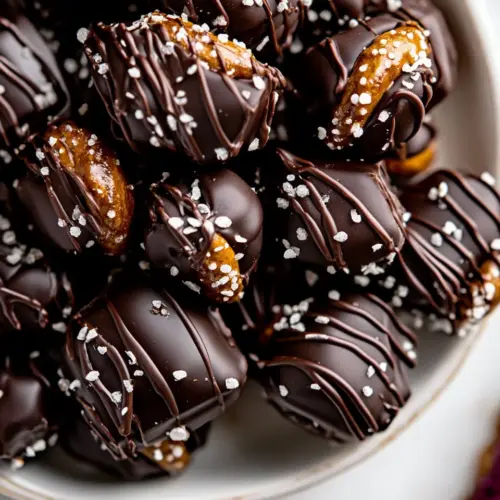
Samoas Pretzel Presents
Samoas Pretzel Presents are a crispy sweet treat that combines toasted coconut, buttery caramel, and glossy dark chocolate for an irresistible contrast of textures and flavors. This easy to assemble bite tastes like a festive cookie with a crunchy pretzel twist, perfect for gifting, parties, or an easy weeknight dessert. Make a batch for a special reason or just because, they disappear fast.
Equipment
- Large Pot
- Whisk
- Baking Sheet
- Parchment Paper
- Microwave-safe Bowl
- Fork
Ingredients
- 1 cup granulated sugar Provide sweetness and structure to the caramel-like coating, dissolving when heated to create a smooth, glossy syrup that binds other components together and caramelizes for depth of flavor.
- 2 tablespoons salted butter, at room temperature, cut into chunks Add rich, creamy fat and a silky mouthfeel to the caramel mixture, melting into the sugar to enhance tenderness and contribute subtle salty balance when mixed in.
- 3/4 cup canned coconut milk Contribute creaminess and moisture while supplying the liquid necessary to dissolve sugar and form a cohesive, saucy caramel; lends a faint coconut flavor when used.
- 1 teaspoon vanilla extract or vanilla bean powder Impart warm aromatic notes and complexity to the caramel, rounding out sweetness with a nuanced vanilla profile that elevates the overall flavor.
- flaky sea salt Provide sharp, briny contrast to the sweet components and enhance overall flavor perception when lightly sprinkled to balance richness and cut through sweetness.
- 3 cups shredded coconut sweetened or unsweetened, toasted Offer toasted, chewy coconut texture and intense coconut flavor that mixes into the caramel, adding both body and a pleasant nutty note when toasted to deepen taste.
- 3 cups mini waffle pretzels Supply crunchy, salty crunch and a playful miniature shape that acts as the base for coating; their saltiness and crispness contrast the sweet coconut mixture.
- 14 ounces dark chocolate or semi-sweet, chopped Deliver a rich, glossy coating and chocolatey bitterness or sweetness that hardens around the pretzels, sealing in texture and adding a final layer of flavor.
Instructions
- Line a baking sheet with parchment paper. In a large pot, cook the sugar over medium heat, stirring occasionally until the sugar has melted and turns a golden caramel, about 10 minutes. Remove the pot from the heat and add the chunks of butter, whisking until combined. Then, stir in the coconut milk. Return the pot to medium heat and cook the mixture, stirring until the caramel has thickened into a sauce, about 5-8 minutes. Remove from the heat, let cool slightly, then stir in the vanilla and a pinch of salt. Add the toasted coconut to the coconut caramel sauce and stir until coated. Spoon 2 teaspoons of the coconut caramel mix onto each pretzel and then sandwich together with another pretzel, placing each on the prepared baking sheet. Freeze 15-30 minutes. Melt the chocolate in the microwave. Use a fork to dip each pretzel into the chocolate, letting the excess drizzle off. Place on the parchment lined baking sheet. Freeze until set, 15 minutes. Drizzle on more melted chocolate, if desired. Sprinkle the tops with sea salt. Store in the fridge or in a cool place for up to 2 weeks.: The air smells faintly of toasted paper when the pan is ready, and having the sheet in place keeps the cooled treats from sticking. This step prevents waste and simplifies cleanup. A common mistake is skipping the parchment, which can make chocolate stick and ruin presentation.
- In a large pot, cook the sugar over medium heat, stirring occasionally until the sugar has melted and turns a golden caramel, about 10 minutes: The sugar will first clump, then become syrupy, then shift from pale to a deep amber with a nutty aroma; listen for a gentle bubbling rather than furious boiling. This visual and aromatic change signals caramelization and builds flavor, while overcooking creates bitterness. Avoid stirring continuously at the start, instead gently swirl the pot so the sugar melts evenly and resists crystallizing.
- Remove the pot from the heat and add the chunks of butter, whisking until combined: After the sugar warms the kitchen with a toffee scent, adding room temperature butter off heat softens the mixture without violent sputtering. Whisk until emulsified into a cohesive golden sauce. A common error is adding cold butter straight from the fridge, which causes uneven cooling and potential separation, so use room temperature butter.
- Then, stir in the coconut milk: When you pour in the canned coconut milk , it will hiss softly and the sauce will relax into creaminess, releasing a richer aroma. Stir steadily to incorporate and prevent curdling. If you pour too fast, the mixture can seize or splatter, so add slowly while whisking.
- Return the pot to medium heat and cook the mixture, stirring until the caramel has thickened into a sauce, about 5 to 8 minutes: As the sauce simmers, it will become more viscous and glossy, coating the whisk with a ribbon. This thickening concentrates flavor and ensures the topping sets around the coconut . Overcooking makes the sauce too stiff; undercooking yields a runny filling that will not hold the sandwich together.
- Remove from the heat, let cool slightly, then stir in the vanilla and a pinch of salt: Cooling mellows the heat so the delicate vanilla ingredient won't evaporate, and the pinch of salt elevates sweetness. Taste carefully, because too much salt can dominate. A common mistake is adding vanilla too early and losing its fragrance to the heat.
- Add the toasted coconut to the coconut caramel sauce and stir until coated: The warm sauce will make the toasted shredded coconut glisten and release a warm aroma, transforming the mixture into sticky clusters. Ensure each shred is coated because dry pockets reduce cohesion. If the coconut seems dry, the sauce may have cooled too much, so briefly rewarm to help it bind.
- Spoon 2 teaspoons of the coconut caramel mix onto each pretzel and then sandwich together with another pretzel, placing each on the prepared baking sheet: Press gently so the filling spreads to the edges without oozing; you will hear a soft tack as the pieces meet. This creates uniform treats that set evenly in the freezer. Over filling causes messy melting during the chocolate dip, so measure portions for consistent results.
- Freeze 15 to 30 minutes: As the treats chill, the caramel firms and becomes easier to handle, and the surface goes from sticky to pleasantly tacky. This step makes dipping simpler and cleaner. A common misstep is skipping the freeze, which leads to filling slipping off during coating.
- Melt the chocolate in the microwave: Melted dark chocolate should be glossy and smooth, with a warm cocoa aroma; heat in short bursts and stir between intervals to avoid overheating. Slow, gentle heating preserves texture and sheen. Overheating can cause the chocolate to seize, becoming grainy, so keep the power low and stir frequently.
- Use a fork to dip each pretzel into the chocolate, letting the excess drizzle off: When you dip, listen for a soft clink as the excess chocolate falls back into the bowl, leaving a thin, even coat. The chocolate should coat without pooling, and the surface should look shiny. A frequent problem is dragging the pretzel across the bowl, creating uneven coverage rather than letting gravity do the work.
- Place on the parchment lined baking sheet: After dipping, place each piece gently on the prepared sheet so the chocolate sets flat and smooth. The chocolate cools with a soft snap if tempered correctly. Avoid stacking until fully firm, or the coating will stick.
- Freeze until set, 15 minutes: Chilling rapidly firms the chocolate and keeps the filling stable; it also locks in that glossy finish. If you leave them at room temperature too long, condensation can develop when moved to a cooler environment, dulling the sheen.
- Drizzle on more melted chocolate, if desired: A final drizzle creates visual contrast and a pleasant textural streak; use a spoon to make thin ribbons and let them cool to a crisp. Overdoing the drizzle can hide the salted caramel center, so use it sparingly.
- Sprinkle the tops with sea salt: The flaky sea salt adds a bright crunch and amplifies the chocolate and caramel. Add it right after the drizzle while the chocolate is still tacky so it adheres. Too much salt can overwhelm the sweetness, so a light hand preserves balance.
- Store in the fridge or in a cool place for up to 2 weeks: In cool storage the treats remain crisp and the chocolate retains its snap, releasing that fresh baked aroma when you open the container. Keep them layered with parchment to avoid sticking. A common issue is warm storage, which softens the chocolate and makes the filling ooze, so choose a cool environment.
Notes
- Swap chocolate styles Try semi sweet or higher cocoa dark chocolate for a less sweet contrast, which emphasizes the caramel character and creates a more grown up bite.
- Adjust coconut sweetness Use sweetened or unsweetened shredded coconut depending on how sweet you want the final treat, useful if you prefer the caramel to stand out more.
- Use different pretzel shapes Mini waffle pretzels are ideal for surface area, but sturdier pretzel shapes can hold thicker fillings and make each present heartier.
- Make them ahead Assemble and freeze the sandwiches, then dip and finish them the day you plan to serve so the chocolate looks freshly set.
- Double coat for gloss Dip twice, chilling between coats, to build a thicker, shinier chocolate shell that resists melting at room temperature.
- Decorate lightly After the final drizzle, press a small pinch of flaky sea salt onto each piece so it adheres and looks uniform across the batch.