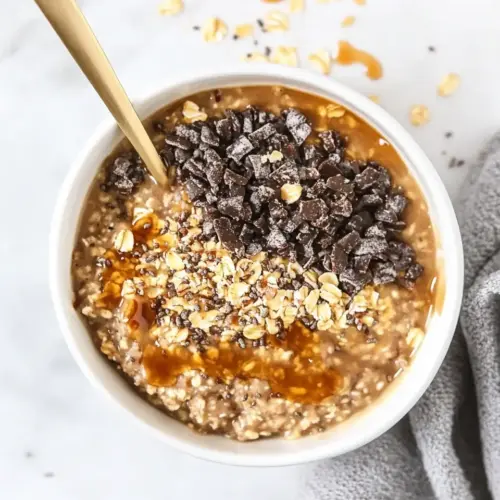
Salted Caramel Overnight Oats
Salted Caramel Overnight Oats are creamy, slightly chewy, and lightly sweet with a savory pop of sea salt. This easy make ahead breakfast blends rolled oats with almond milk and caramel creamer, finished with a glossy coconut caramel sauce. Perfect for busy mornings or a cozy brunch, it delivers comforting caramel flavor with satisfying texture, making it a must try for anyone who loves sweet and salty breakfasts.
Equipment
- Small Saucepan
- Mixing Bowl
- Refrigerator safe jar
Ingredients
- 1/3 cup rolled oats Provide a hearty, chewy base that absorbs liquids overnight and yields a creamy texture; supports flavors and toppings while supplying whole-grain fiber and sustained energy.
- 1/4 cup unsweetened almond milk Add a light, dairy-free liquid to hydrate oats and bind ingredients; contributes subtle nuttiness and keeps the mixture smooth without overpowering sweetness.
- 2 tbsp caramel flavored almond creamer Impart concentrated caramel flavor and sweetness while enriching creaminess; balances the oat base and complements the salted caramel profile.
- 1 tbsp chia seeds Introduce a gelatinous thickener and nutritional boost, helping to create a pudding-like consistency while adding omega-3s and extra fiber for texture and satiety.
- 1/2 banana mashed Contribute natural sweetness, moisture, and a soft texture when mashed; enhances flavor depth and pairs well with caramel and cinnamon notes.
- 1/2 tsp cinnamon Provide warm, aromatic spice that enhances sweetness and depth; delivers subtle complexity and pairs beautifully with caramel and banana.
- Toppings: cacao nibs, chopped cashews, banana slices & caramel sauce Offer crunchy, salty, and sweet finishing contrasts that add texture and flavor brightness; combine to elevate mouthfeel and provide visual appeal when serving.
- 1 cup full fat coconut milk Create an ultra-rich, creamy base option that dramatically increases decadence and mouthfeel; offers tropical flavor and higher fat content for a velvety overnight oat.
- 1/3 cup coconut sugar Supply brown, caramel-like sweetness and slight molasses flavor to deepen the dessert profile; helps balance bitterness and enhances browning notes in the mix.
- 1/2 tsp sea salt Deliver a savory contrast that heightens sweetness and defines salted caramel character; enhances overall flavor balance and prevents cloying richness.
- 1/2 tsp vanilla extract, optional Lend a delicate floral-vanilla aroma and subtle sweetness when used, brightening flavors and rounding out the caramel and banana notes in the oats.
Instructions
- Combine all ingredients (except for toppings) mixing well, cover tightly with a lid or plastic wrap and refrigerate overnight.: The moment when you mix the chilled components creates a faint, comforting aroma of cinnamon and banana, and the texture should seem loose but cohesive, not watery. I pay attention to how the rolled oats absorb the almond milk and creamer, stirring until the mixture looks evenly moistened, which will ensure consistent hydration overnight. This slow soak allows the oats to swell and tenderize, creating that luscious, spoonable texture. A common mistake is adding too much liquid at this stage, which can lead to a soupy final product; if you see excess liquid, simply blot a tablespoon off and use it later. When covering, make sure the container seal is tight to prevent the oats from absorbing refrigerator odors, and label the jar with the time so you know it rested long enough.
- To make the caramel sauce, combine coconut milk, coconut sugar and sea salt in a small saucepan and bring to a boil over medium-high heat. Once it starts to boil, reduce the heat and let the sauce simmer for about 40 minutes, stirring occasionally. (You may want to stir the sauce more frequently in the last 5 minutes to avoid the bottom from burning): As the mixture heats, steam will carry a rich, toasty scent that hints at the deepening sugar, and you will notice small bubbles forming around the edge before a rolling boil. This stage is crucial because the initial boil kick starts the caramelization and concentrates flavors. I keep a close eye because once it hits a full boil the sugars can turn quickly, and uneven heat will create grainy texture. Avoid cranking the heat to rush this, because high heat can burn the sugars giving a bitter note. Use a saucepan with a thick bottom so heat distributes evenly, and stir gently to dissolve any sugar granules before the simmer begins.
- Remove caramel sauce from heat and mix in the vanilla extract. Sauce will thicken as it cools.: During the long simmer the liquid will reduce and the surface will transition from pale tan to a deep amber hue, releasing a butter like toffee aroma that is utterly irresistible. Stirring occasionally prevents the sugar from settling and scorching on the pan bottom, and in the final 5 to 10 minutes I stir more frequently because the sauce thickens quickly and can cling to the pan. The sound shifts too, from a vigorous bubbling to softer, slower bubbles when the mixture has reduced properly. The why is simple, slow reduction concentrates flavor and produces that silky mouthfeel, but if you rush it you risk a thin, undeveloped sauce. A typical error is walking away; set a timer and stay nearby so you can adjust the heat as needed to maintain a steady gentle simmer.
- Spoon a tablespoon or two over top of the oats and store the leftover caramel sauce in a sealed airtight container in the fridge.: When you lift the pan off the burner the steam will continue to fade and the sauce will settle into a glossier surface, and the moment you stir in the vanilla the aroma blossoms, offering a round perfume that softens the sugar edges. Cooling thickens the caramel because reduced liquids concentrate and the temperature drop increases viscosity, so expect it to go from pourable to spoonable as it reaches room temperature. This is why timing matters if you plan to spoon it over cold oats, you want it slightly warm for easy drizzling but not scalding. A common oversight is adding vanilla to a violently boiling sauce which evaporates the delicate flavor, so always add it off the heat. If your sauce seems too thin after cooling, simmer a touch longer, but watch carefully to avoid burning.
- Top the overnight oats with cacao nibs, chopped nuts and banana slices if desired. Enjoy!: The sensory payoff is immediate, the warm glossy caramel softens the cold, creamy oats creating a contrast that is both comforting and exciting. I like to drizzle sparingly at first and taste, because the sauce is concentrated and a little goes a long way. Stored in a sealed container the caramel will keep for a week in the fridge, thickening further; to loosen it for serving gently warm a spoon under hot water and stir it back to pourable consistency. Avoid reheating aggressively in a microwave which can create hot spots or scorch the sugars; a gentle bain marie or short low heat on the stove is preferable. Do not leave the sauce at room temperature for extended periods, as the dairy free base can be prone to spoilage if neglected.
- Top the overnight oats with cacao nibs chopped nuts and banana slices if desired Enjoy: The final assembly is where texture and contrast come together, the bitter crunch of cacao nibs and the nutty snap of cashews elevate the creamy base, while fresh banana slices echo the mashed banana flavor, brightening the bowl. I listen for a little crunch when I scoop into toppings, and the visual of glossy caramel threads over the pale oats is always satisfying. This step matters because it introduces temperature and texture variation, enhancing each spoonful. One mistake is adding toppings too early and allowing them to soften in the fridge; keep crunchy elements separate until just before eating. If you want a cleaner presentation, use a spoon to create a shallow well in the oats then drizzle the caramel, finishing with a few scattered toppings for contrast.
Notes
- Adjust sweetness: Taste the base before chilling, because the caramel creamer and the homemade sauce both add sugar. If you prefer less sweet, reduce the creamer by half or omit it entirely.
- Thickness control: For a firmer texture add an extra teaspoon of chia seeds when mixing the oats, they swell overnight and give a pudding like consistency.
- Make ahead caramel: The caramel can be made several days in advance and refrigerated, which makes morning assembly extremely quick and keeps your mornings stress free.
- Serving temperature: I enjoy the contrast of cool oats and slightly warm caramel; if your caramel is too cold, briefly warm a few tablespoons before drizzling.
- Nut alternatives: If you do not have cashews, try almonds or pecans for a different crunch profile, but add them only at the end to keep them crisp.