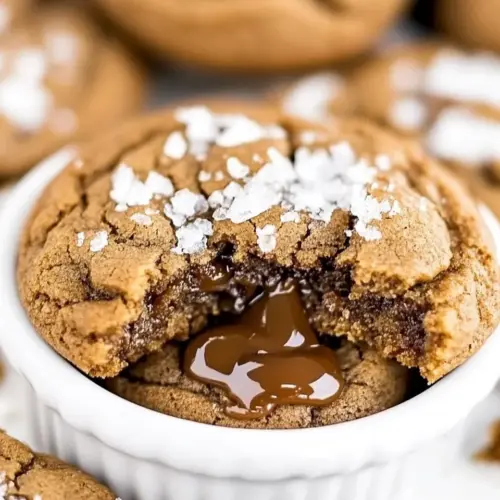
Salted Caramel Molasses Cookies
Salted Caramel Molasses Cookies are soft, chewy, and warmly spiced with pockets of gooey caramel. These easy to bake cookies blend deep molasses flavor with aromatic spices for a comforting fall treat, perfect for gifting or a cozy afternoon. Make them ahead and bake fresh for impressive, melt in your mouth results you will want to share.
Equipment
- Electric Mixer
- Paddle attachment
- Cookie Sheet
- Parchment Paper
- Silicone Baking Mat
Ingredients
- 1/2 cup (113 g) unsalted butter softened Cream together to provide a rich, tender base and help incorporate air for a lighter cookie texture; softened state ensures even mixing with sugars and eggs.
- 3/4 cup (150 g) brown sugar Sweeten and add deep caramel notes while contributing moisture and chewiness; brown sugar's molasses content enhances overall flavor complexity.
- 1/3 cup (79 ml) molasses Introduce concentrated molasses flavor and dark sweetness that defines the cookie's character; also adds moisture and a slightly sticky chew.
- 2 large eggs Bind ingredients and add structure through coagulated proteins while contributing moisture and lift when beaten; large eggs also enrich flavor and color.
- 1 teaspoon vanilla extract Enhance overall sweetness with warm, familiar aroma and round out other flavors; vanilla helps deepen and harmonize the spice and caramel notes.
- 1 teaspoon baking soda Leaven the dough by producing carbon dioxide, creating lighter, slightly puffy cookies; dissolving it properly ensures even rising during baking.
- 1/4 teaspoon salt Balance sweetness and enhance flavor contrast while strengthening gluten slightly; a small amount sharpens the spices and overall taste.
- 1 teaspoon cinnamon Provide warm, aromatic sweetness and classic pairing with molasses; cinnamon contributes complexity and complements the caramel notes.
- 1 teaspoon ground ginger Add bright, peppery warmth and lively spice that complements gingerbread-like flavors; ground ginger enhances aromatic depth and bite.
- 1/2 teaspoon ground cloves Deliver intense, warm, sweet-pungent aroma that supports the holiday-spice profile; ground cloves add depth and a lingering finish.
- 1/2 teaspoon ground nutmeg Contribute sweet, nutty warmth and subtle complexity to the spice blend, rounding out the overall flavor profile of the cookies.
- 2 1/2 cups flour Form the bulk of the dough, supplying structure through gluten development and determining texture; correct measurement ensures proper consistency.
- About 20 Salted Caramel Chocolate Candies such as Dove, unwrapped (or use any caramel candy, like a Rolo) Provide pockets of soft caramel and salty chocolate that contrast the spiced cookie, offering gooey centers and bursts of sweet-salty flavor.
Instructions
- Note: this dough requires chill time!: You will notice the dough tightening and the flavors melding as it cools; the aroma of molasses and spices deepens while the surface firms so the candies stay enclosed. A common mistake is rushing this stage, which leads to dough that spreads too quickly in the oven and leaks the candy out. To check readiness press a small amount between your fingers, it should hold together without sticking excessively.
- Line a cookie sheet with parchment paper or a silicone baking mat.: The sheet will remain cool and the lining prevents sticking, creating even browning on the bottoms. When the dough hits the sheet you should hear a soft thud and see smooth rounds, not flattened blobs. Folks sometimes skip the liner and end up with cookies that stick or brown unevenly, so always prepare your sheet.
- Cream butter and sugar in the bowl of an electric mixer fitted with the paddle attachment. Add molasses and mix until mixture is smooth. Add eggs and vanilla and beat until combined. Mix in baking soda, salt, ginger, cinnamon, nutmeg, cloves, and flour. Mix until a smooth dough forms. The dough will be very soft. Chill dough for 30-45 minutes, or until you can handle it without it sticking too much to your hands.: Expect the mixture to become pale and slightly fluffy, the granulated surface dissolving into glossy cream. This step traps air for lift and helps the brown sugar meld with butter . If your mixer bowl is cold the butter will not cream properly, resulting in a denser cookie, so ensure butter is softened. The sound shifts from grainy to soft whipping, and visual cues are smoother, lighter texture.
- Scoop 2 tablespoon balls of dough. Place a candy in the center and wrap the dough over it, rolling between your hands to form a ball. Make sure the candy is not showing. (Alternately, you could scoop two 1-tablespoon sized balls of dough, sandwich the candy, and roll into a ball. Do whichever method you prefer.) Place cookie dough balls on prepared cookie sheet. You don’t need to space them out at this point, they’re getting chilled again.: The molasses adds viscosity and darkens the batter to a glossy, deep hue, and you ll smell that rich, slightly smoky note. The mixture will loosen slightly; scrape the bowl so nothing clings to the sides. Over mixing here can lead to too much air, which changes how the cookies spread, so stop once smooth.
- Chill dough for at least 2 hours.: The batter will look more emulsion like and silkier, with tiny ribbons forming when you lift the paddle. This step ensures cohesive dough and that the eggs are fully incorporated. A common error is adding cold eggs which can seize the mixture, so use room temperature eggs for a seamless blend.
- Preheat oven to 350°F. Line a second cookie sheet with parchment or a silicone baking mat. Split cookie dough balls evenly between the cookie sheets. These will spread, so I only put two per line. Place any leftover dough balls back in the refrigerator to chill until you’re ready to bake them.: The dough will transition from glossy batter to a pliable, soft dough that holds shape when scooped. The spices will perfume the kitchen, and the visual color deepens. If you overwork after the flour goes in you risk gluten development and a tougher cookie, so mix just until the dough is uniform.
- Bake cookies for 11-14 minutes, until they are no longer glossy in the center and the bottoms are just getting golden brown. I like to err on the side of underdone cookies, but that’s preference. Bake them towards the longer side if you like your cookies baked more.: Cooling firms the dough so the candies can be sealed inside without melting or leaking. The texture becomes less sticky and easier to shape. A mistake here is insufficient chill which leads to excessive spread in the oven; if the dough still sticks heavily, extend chilling time.
- Cool completely before removing from cookie sheets. Store in an airtight container for up to 4 days or freeze for up to 2 months.: You will feel the dough give and then hold, forming neat portions that will encase the candy. Place a candy in the center and wrap the dough over it, rolling between your hands to form a ball, ensuring the candy is completely enclosed so it does not peek through. Alternative methods like sandwiching two smaller scoops work too, but imperfect sealing will cause caramel to ooze and create sticky baking sheets.
- Place cookie dough balls on prepared cookie sheet: Arrange them briefly while you prepare to chill, they do not need full spacing because they will be chilled again. The dough should look round and slightly matte; if they appear too flat your dough was too warm. Avoid crowding which makes transfer tricky after chilling.
- Chill dough for at least 2 hours: This extended chill allows fats to solidify and flavors to mature. During this time the spices meld with the molasses , and you will notice a firmer texture when you press a fingertip lightly. The typical oversight is insufficient patience resulting in flattened cookies that leak caramel, so plan ahead and resist baking immediately.
- Preheat oven to 350°F: Preheating ensures immediate oven spring and consistent bake. Split cookie dough balls evenly between the cookie sheets because they will spread and you want uniform heat exposure. If the oven is not fully preheated you may end up with unevenly baked centers and overbrowned bottoms, so wait until the temperature stabilizes.
- Bake cookies for 11 to 14 minutes: Look for cookies that are no longer glossy in the center and have bottoms that are just getting golden brown, the edges will feel set while the centers remain slightly tender. The aroma will shift to deeper caramel and toasted spice notes, and you may hear faint crackles as moisture escapes. The most common mistake is overbaking; they continue to set after removal, so err on the side of the shorter time for softer centers.
- Cool completely before removing from cookie sheets: Cooling allows the cookie to finish setting and the caramel to firm slightly so the structure holds. As they cool the surface matte deepens and the bottoms stop darkening. If you try to lift them too soon they can break or leave caramel on the sheet, so be patient until they are room temperature.
- Store in an airtight container for up to 4 days or freeze for up to 2 months: Proper storage preserves texture and flavor; at room temperature they remain soft and chewy, and freezing is ideal for longer keeping. To freeze, layer between parchment to prevent sticking. A frequent error is storing while still warm which causes condensation and a soggy texture, so cool fully first.
Notes
- Measure flour accurately by spooning it into the cup and leveling with a knife, because too much flour makes cookies dense rather than tender.
- Use room temperature eggs and softened butter to ensure a smooth, emulsified dough that mixes evenly and traps the right amount of air.
- Chill in stages first briefly so dough firms for shaping, then again for at least two hours to prevent excessive spread during baking.
- Wrap candies well by enclosing them fully in dough and rolling between your palms, so the caramel melts inside rather than leaking out.
- Test bake one sheet first to confirm oven behavior, adjusting time slightly if you prefer a chewier or firmer cookie.