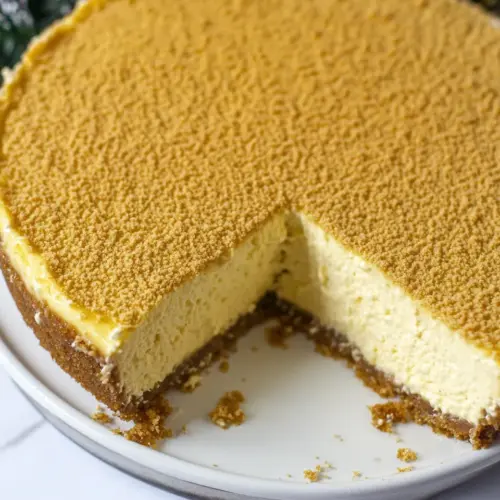
Salted Caramel Eggnog Cheesecake
Salted Caramel Eggnog Cheesecake delivers a creamy, spiced filling with a buttery graham crust and a glossy salted caramel topping. Rich and festive, this dessert blends holiday flavors into a silky, sliceable treat that is perfect for gatherings or a special weeknight finish. Make it ahead for easy hosting and enjoy the balanced sweet and salty notes in every bite.
Equipment
- Blender or food processor
- 9-inch Springform Pan
- Large rimmed roasting pan
- Medium heavy bottomed saucepan
- Mixer (stand or hand held)
Ingredients
- 2 cups Graham Crackers, pulsed into crumbs Crushed to form a sturdy, buttery base that provides structure and a pleasant crunch; combine finely pulsed crumbs with melted butter and sugar to press into the pan. Adds a toasty flavor and helps the cheesecake slice cleanly once chilled.
- 1/3 cup Granulated Sugar Sweetens the crust and balances the savory notes, dissolving into the graham crumbs to help bind them when mixed with butter. Use measured sugar to avoid an overly sweet foundation that would compete with the filling.
- 1/4 teaspoon Kosher Salt Enhances overall flavor by balancing sweetness and rounding out the crust profile; a small amount intensifies other flavors without making the crust salty. Sprinkle evenly into the crumb mixture so the salt is distributed throughout the base.
- 7 tablespoons Unsalted Butter, melted Binds the graham crumbs and enriches the crust with a rich, golden finish; melt thoroughly to coat crumbs for an even press into the pan. Provides moisture and helps the crust hold its shape when sliced.
- 3 (8 ounce) packages Full-Fat Cream Cheese, very soft Creates the creamy, dense body of the cheesecake filling; beat to a very smooth consistency so no lumps remain before adding other liquids. Supplies fat and tang that define the classic cheesecake mouthfeel and flavor.
- 1 and 3/4 cups Eggnog Adds holiday flavor and liquid to the batter while contributing sweetness and spice notes; incorporate gradually to maintain batter consistency. Replaces some dairy and imparts the characteristic eggnog aroma to the cheesecake.
- 1/4 cup full-fat sour cream Contributes a slight tang and extra creaminess to the filling, helping to stabilize texture and prevent cracking; fold in gently after the cream cheese reaches a smooth stage. Balances richness and brightens the overall flavor profile.
- 1 1/4 cups Granulated Sugar Sweetens the cheesecake filling evenly; cream the sugar with the cream cheese to ensure a smooth, lump-free batter. Controls the sweetness level of the dessert and helps with the cheesy batter's structure.
- 2 teaspoons Pure Vanilla Extract Imparts warm aromatic notes and depth to the filling; stir in vanilla toward the end of mixing to preserve its delicate flavor. Enhances and rounds all sweet components without adding moisture.
- 3 large Eggs + 2 Egg Yolks, at room temperature Provides structure, richness, and additional eggy custard character to the cheesecake while helping the filling set; whisk thoroughly for even distribution. Using both whole eggs and extra yolks improves creaminess and reduces over-aeration.
- 2 tablespoons All-purpose Flour Lightens the batter slightly and helps stabilize the filling by absorbing excess moisture; blend in to avoid any floury pockets. Prevents weeping and contributes to a silkier texture in the finished cheesecake.
- 1 cup granulated sugar Forms the base of the salted caramel sauce, supplying sweetness and the caramelized flavor when cooked; heat slowly to dissolve and initiate caramelization. Use careful monitoring to achieve an amber color without burning.
- 6 tablespoons unsalted butter, cut into small cubes Adds richness and a smooth, buttery consistency to the caramel when melted into the sugar, also contributing to mouthfeel. Cut into cubes so it melts uniformly into the hot sugar to create a glossy sauce.
- 1/2 cup heavy cream Lends a silky texture and thins the caramel to a pourable consistency while enriching flavor with creaminess; warm slightly before adding to minimize cooling the caramel abruptly. Balances the concentrated sweetness of cooked sugar.
- 3/4 teaspoon flaky sea salt, divided Provides a bright salty contrast when sprinkled into or on top of the caramel, enhancing overall flavor complexity and tempering sweetness. Divide to incorporate some into the sauce and reserve a portion for finishing to create textural highlights.
- 1/4 teaspoon ground cinnamon Adds warm, aromatic spice notes to the caramel and cheesecake filling; a light dusting complements the eggnog without overpowering it. Use sparingly to maintain the dessert's delicate balance of flavors.
- 2 teaspoons vanilla extract Enhances depth and aroma in both the filling and the caramel with a rounded vanilla character; add at different stages to layer flavor. Use pure extract for a clean, rich vanilla presence that elevates the entire dessert.
Instructions
- Preheat oven to 325 degrees (F).: The warm oven smell signals the beginning of baking, and preheating ensures even rising and proper set. A stable oven temperature matters because cheesecakes respond poorly to sudden heat changes, which can cause cracking. One common mistake is putting the cheesecake into an oven that is not fully preheated, leading to uneven cooking and a soggy center.
- In the body of a blender or food processor, combine graham crackers, sugar, and salt; pulse until the crackers have been completely transformed into fine crumbs. Add melted butter; stir well to combine. Press down into a lightly greased 9-inch springform pan; set aside.: You will hear a steady whir as the graham crackers break down into a sandy texture that looks like wet beach sand when combined with melted butter . This fine crumb is essential for a compact crust that holds together when sliced. If you leave larger chunks, the crust may crumble when serving, so pulse until very fine.
- In the body of a high power blender, food processor, stand mixer fitted with the whisk attachment, or in a large bowl using a hand held mixer, beat the softened cream cheese until smooth. Add in the eggnog and sour cream and beat smooth, scraping down the sides of the bowl as needed.: The melted butter will darken the crumbs and make them glisten slightly, which is your cue that the mixture will bind. Stirring ensures even coating so the crust bakes uniformly. A common error is adding cold butter, which can prevent proper binding and lead to a loose crust.
- Add in the sugar and vanilla and beat until combined, scraping down the sides and bottom of bowl as needed. Add in the eggs and yolks and beat until smooth. Stir in the flour, mixing just until combined.: Use the bottom of a measuring cup to press the crumb mixture firmly into an even layer, and run your hand gently along the edges for a tidy finish. Pressing firmly is how you get a sliceable base that will hold the filling without crumbling. If you do not press firmly enough, the crust will fall apart when you serve the cheesecake.
- Pour filling into prepared crust, and spread the top smooth.: The sound of the mixer will shift from heavy to silky, and visually the mixture becomes glossy and lump free. Smooth cream cheese is your foundation for an even batter, so take the time to beat thoroughly. Rushing this step often leaves lumps that will persist through baking.
- Wrap the bottom of the pan in tin foil (I highly recommend doing several diligent layers here; no one wants a wet/soggy crust).: The batter will become more fluid and carry the aroma of nutmeg and warm spices from the eggnog . Scraping the sides ensures a homogenous mix and prevents pockets of unblended cream cheese. If you skip scraping, you risk an uneven texture in the finished cheesecake.
- Place the cheesecake pan into another large pan (it should be wide enough to comfortably fit the springform pan holding the cheesecake and deep enough to hold a few inches of water without risk of a spill). Fill the pan up with very hot water; it should rise half way along the cheesecake pan. This is your water bath and will help ensure your cheesecake comes out crack free. Be sure to pour the water in slowly, as you don't want any of it to splash up and get into the actual cheesecake!: At this stage the batter will gain sweetness and a fragrant lift from the vanilla . Fully dissolving the sugar avoids a grainy mouthfeel, and scraping keeps everything uniform. Over beating after sugar is fully incorporated can trap air and lead to cracks, so stop as soon as it is smooth.
- Place pan into the preheated oven and bake for 1 hour and 20 minutes. Turn the oven off and let the cheesecake sit, undisturbed, for 45 minutes inside the oven with the door shut. The cheesecake should be still slightly wiggly in the center.: The batter will slope and gather like liquid silk as the eggs emulsify the mixture, creating a custard like texture. Eggs provide structure so beat just until they are incorporated to avoid adding excess air. A frequent mistake is overmixing here, which creates a cake like texture instead of a creamy cheesecake.
- Remove the cheesecake from the oven, run a knife very gently around the edge of the cake, and let it sit in the pan for another 15 minutes before covering loosely with plastic wrap and refrigerating for at least 6 hours. When ready to serve, top with salted caramel sauce and enjoy!: The flour will thicken the batter minutely, helping it set without becoming dense. Mix gently to prevent developing gluten, which would make the filling tough. Overworking at this point is the quickest route to a less tender final product.
- Add the sugar to a medium-sized, heavy-bottomed saucepan over medium-low heat. Stir for 30 seconds, then increase the heat to medium and, stirring constantly with a wooden spoon, cook until the sugar transforms from clumps into a smooth amber-brown liquid. Pay close attention here - sugar burns FAST. Once the sugar has completely melted, add in the butter. Warning: the caramel will ferociously spatter when you add the butter, so do this with care.: The filling should pour like thick cream and settle into the crust in a glossy layer. Use a small offset spatula to level the surface, which encourages even baking and a neat presentation. If the top is bumpy, the cake may bake unevenly and develop thin cracks.
- Stir the butter into the caramel sauce until completely melted, then slowly drizzle in the heavy cream, constantly stirring the whole time. Again, be careful here as the caramel tends to spatter when the cream is added.: The foil will keep water from the water bath from seeping into the pan and ruining the crust, so wrap carefully and test for leaks. Press the foil down snugly and add extra layers around the seams. Skipping or improperly sealing the foil leads to a soggy, waterlogged crust.
- Boil the caramel for 1 minute, allowing it to rise in the pan as it cooks.: When you set the springform into the larger pan you will begin to form the water bath, which stabilizes oven temperature and prevents rapid edges from forming. Ensure the outer pan is sturdy so you can transfer it safely to the oven. Using a pan that is too shallow risks water spilling into the cheesecake.
- Remove pan from heat and stir smooth. Whisk in a 1/2 teaspoon of the flaky sea salt, cinnamon, and vanilla. Cool for at least 20 minutes before drizzling over the cheesecake. Do not try touching the caramel before this time - it is dangerously hot!: The steam and surrounding water create a gentle, moist heat that reduces cracking and promotes even cooking. Pour slowly to avoid splashing water onto the cheesecake surface. Pouring quickly can splash and result in a wet top or uneven bake.
- Sprinkle the remaining sea salt on top of the cheesecake right before serving.: The cheesecake will set around the edges while the center remains slightly wobbly, and you will notice a golden sheen at the edges. This long, gentle bake builds a creamy texture without overcooking. A typical mistake is opening the oven frequently, which drops the temperature and causes an uneven set.
- Turn the oven off and let the cheesecake sit, undisturbed, for 45 minutes inside the oven with the door shut: The residual heat finishes the set slowly, preventing shock cooling which often causes cracks. You will see the center gently firm up but still have a slight jiggle, which is the correct cue. Opening the door during this gentle cool down can create a dry, cracked top.
- Remove the cheesecake from the oven, run a knife very gently around the edge of the cake, and let it sit in the pan for another 15 minutes before covering loosely with plastic wrap and refrigerating for at least 6 hours: Running the knife immediately prevents the top from cracking as it contracts, and the additional rest helps internal temperature equalize. Refrigeration is essential for the filling to fully set for clean slices. Cutting too soon yields a soupy center and messy slices.
- When ready to serve, top with salted caramel sauce and enjoy: Drizzling the cooled caramel over chilled cheesecake creates a glossy finish that sets slightly on the surface, and the first bite will deliver a complex balance of sweet, salty, and spiced notes. Add the caramel just before serving for the best texture contrast. If you add caramel too early, it will soak in and make slices soft.
- Add the sugar to a medium-sized, heavy-bottomed saucepan over medium-low heat: You will watch the sugar clump then gradually smooth into a molten amber pool; the sound shifts from quiet to a faint bubbling. This transformation is the heart of caramel making, and patience is crucial because sugar can jump from perfect to burnt quickly. A common error is cranking up the heat, which leads to burning and bitter flavor.
- Stir for 30 seconds, then increase the heat to medium and, stirring constantly with a wooden spoon, cook until the sugar transforms from clumps into a smooth amber-brown liquid: The sugar will thin and deepen in color, giving off a warm, toasty aroma. Constant stirring prevents localized scorching and ensures a uniformly colored caramel. If you stop stirring, hot spots can burn and ruin the sauce.
- Pay close attention here - sugar burns FAST. Once the sugar has completely melted, add in the butter: When the sugar reaches that deep amber color, it will hiss as you carefully add the cold butter, and the mixture will bubble vigorously. The butter enriches the caramel, making it satin and opaque, but add it carefully to avoid splattering. Adding cold butter too quickly can cause dangerous spattering.
- Warning: the caramel will ferociously spatter when you add the butter, so do this with care : Use a long handled utensil and stand back slightly; the sizzling is normal. Stir until the butter is fully incorporated and the sauce looks smooth and glossy. Not respecting this warning can cause burns or loss of sauce due to spillover.
- Stir the butter into the caramel sauce until completely melted, then slowly drizzle in the heavy cream, constantly stirring the whole time: When the warm cream hits the caramel it will sing and steam, and the sauce will relax into a thicker, creamier texture. Stir continuously so the cream emulsifies into the sugar and butter, creating a velvety sauce. Pouring the cream in too fast can cause excessive bubbling and splatter.
- Again, be careful here as the caramel tends to spatter when the cream is added: Use caution and a steady hand, and turn the heat down if the sauce simmers too aggressively. The sauce should bubble gently, not violently, while you finish it. If the sauce boils violently, it can scorch on the pan bottom and taste burnt.
- Boil the caramel for 1 minute, allowing it to rise in the pan as it cooks: That brief boil deepens the sauce and evaporates a touch of moisture so it will thicken as it cools, giving a luxurious mouthfeel. Watch the color, it should be a rich amber, and the aroma will be toasty and slightly nutty. Overboiling will overly concentrate it and make it too stiff when cooled.
- Remove pan from heat and stir smooth: Off heat the sauce will settle into a shiny, thick pool. Stirring here calms any lingering lumps and ensures a super smooth texture. If you leave it unattended, residual heat can continue cooking and darken the sauce further than intended.
- Whisk in a 1/2 teaspoon of the flaky sea salt, cinnamon, and vanilla: These finishing touches round and brighten the caramel, adding warmth and a hint of spice that complements the cheesecake. The salt in particular wakes up the sweet notes and creates that addictive contrast. Forgetting the finishing salt will make the sauce seem flat in contrast to the rich cheesecake.
- Cool for at least 20 minutes before drizzling over the cheesecake: The sauce will thicken as it cools to a pourable, ribbon like consistency and will no longer be dangerously hot. Waiting ensures you will not melt or scar the chilled cheesecake surface when you pour. Trying to pour piping hot caramel will melt the top and ruin presentation.
- Sprinkle the remaining sea salt on top of the cheesecake right before serving: The final scatter of flaky salt gives each bite a crisp pop that contrasts the sweet caramel, and it creates a beautiful visual finish. Sprinkle sparsely so the salt enhances without overpowering. Over salting at the end can make the dessert overwhelmingly salty.
Notes
- Bring ingredients to room temperature When the cream cheese, eggs, and eggnog are at similar temperatures they blend smoothly, preventing lumps and over mixing, which preserves a silky final texture.
- Double wrap the springform Extra foil layers around the pan prevent water from the bathing pan from seeping in, which protects the crust and keeps the base crisp.
- Make the caramel ahead You can prepare the salted caramel up to two weeks in advance, chilled and tightly covered, then warm gently before serving for convenience.
- Chill overnight for cleaner slices A longer chill solidifies the filling and makes slicing neater, so refrigerate for at least 6 hours, ideally overnight, before serving.
- Use a gentle water bath Filling the outer pan halfway ensures even, moist heat; avoid filling too high or the water may enter the pan during oven handling.
- Slice with a hot, dry knife Run a sharp knife under hot water and wipe dry between slices for glossy, smooth cuts without tearing the cheesecake.