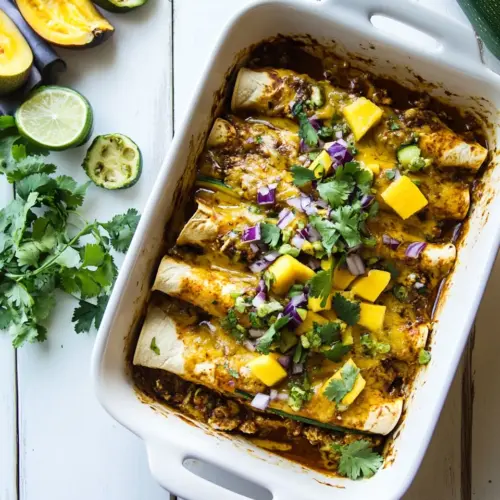
Salsa Verde Chicken and Zucchini Enchiladas with Mango
Salsa Verde Chicken and Zucchini Enchiladas with Mango combine tender shredded chicken, caramelized zucchini, and bright salsa verde with sweet mango and melty cheese for a creamy and crispy easy weeknight dinner. This flavorful dish delivers contrast in every bite, making it a crowd pleasing choice for summer gatherings and casual dinners alike. Try it for an effortless, memorable meal.
Equipment
- Large Skillet
- 9 x 13 inch baking dish
- Instant read thermometer
- Two forks
Ingredients
- 1 1/2 pounds boneless skinless chicken tenders or small breasts Season and cook until tender; provides the primary protein and hearty texture for the enchiladas while absorbing spices and salsa verde flavors during cooking.
- 2 tablespoons extra virgin olive oil Sauté and coat ingredients; lends rich mouthfeel and helps brown the chicken and vegetables while carrying and blending the spices.
- 2 teaspoons chili powder Add and infuse with warm, earthy heat; contributes smoky chili flavor and a mild heat that complements the salsa verde and cheese.
- 2 teaspoons cumin Sprinkle and deepen flavor with warm, aromatic notes; offers earthy, slightly bitter nuances that enhance the overall savory profile of the filling.
- 1 teaspoons smoked paprika Dust and introduce subtle smokiness; brings a gentle, smoky depth that pairs well with the chili powder and roasted vegetables.
- kosher salt and pepper Season generously to taste; balances and elevates all the flavors, with salt enhancing savory notes and pepper providing mild heat and brightness.
- 2 zucchini or yellow summer squash, chopped Chop and add tender bite with mild sweetness; supplies a firm texture and fresh vegetal flavor that stands up to baking and pairs well with salsa verde.
- 1 poblano pepper, sliced Slice and add a mild, roasted heat; provides a slightly sweet, smoky pepper flavor and meaty texture after cooking that complements the zucchini and chicken.
- 1 mango, chopped Chop and contribute bright tropical sweetness; adds juicy, fruity contrast that balances the savory and spicy elements while offering fresh acidity.
- 2 cups salsa verde, homemade or store-bought Pour and saturate with tangy, herbaceous sauce; serves as the main saucing element that moistens the filling and brings concentrated tomatillo flavor to the dish.
- 1/2 cup fresh cilantro, chopped Chop and finish with bright herbal notes; offers fresh, citrusy-green flavor that lifts the enchiladas and pairs especially well with salsa verde and lime.
- 10 -12 corn or flour tortillas, warmed Warm and hold the filling together; provides the vehicle for assembling enchiladas and softens to absorb sauces and fillings during baking.
- 1 cup shredded cheddar Sprinkle and melt into gooey, sharp flavor; contributes creamy, tangy cheesiness that adds richness and a familiar enchilada flavor profile.
- 1/2 cup shredded pepper jack Add and provide spicy, melty kick; introduces a peppery, creamy element with a slight tang that complements the cheddar and salsa verde.
- 1 avocado, sliced Slice and top with creamy, buttery texture; supplies cool, rich contrast to spicy enchiladas and adds silky mouthfeel when served.
- juice of 1 lime Squeeze and brighten the dish with citrus acidity; adds sharp, fresh acidity that balances richness and enhances all the other flavors.
Instructions
- Preheat the oven to 350 degrees F. Toss the chicken with 1 tablespoon olive oil, chili powder, cumin, and paprika. Season with salt and pepper. Heat a large skillet over medium high heat. Add the chicken and cook 4-5 minutes per side or until cooked through. Remove the chicken from the skillet and shred with 2 forks. Add the remaining olive oil to the skillet. When the oil shimmers, add the zucchini and poblano pepper. Cook until the zucchini has caramelized and is soft, about 10 minutes. Remove from the heat and add the shredded chicken, 1/2 cup salsa verde, 1/2 cup mango chunks, and cilantro. Toss to combine. To assemble, pour 1/2 cup of the salsa verde onto the bottom of a 9 x 13 inch baking dish. Spoon a little of the chicken mixture down the center of each warmed tortilla, tuck and roll, placing the tortilla seam side down into the baking dish. Pour the remaining salsa verde over top of the enchiladas and then top with the remaining cheese. Transfer to the oven and bake for 15-20 minutes, until the cheese has melted. To serve, top with avocado, the remaining mango, lime juice, and fresh cilantro. EAT.: The moment your oven approaches the set temperature you will notice a gentle warm hum and even air movement, which creates the stable environment needed for even melting of cheeses and gentle cohesion of the enchiladas. Achieving a consistent oven temp ensures the edges bake without over browning the filling. A common mistake is not preheating, which leads to uneven baking and longer cook time, so start this early.
- Toss the chicken with 1 tablespoon olive oil chili powder cumin and paprika: As you coat the chicken the spices cling and release aromatic oils, so you should smell warm, toasted notes immediately. This spice rub forms the flavor foundation so it is worth massaging evenly for full coverage. If you skip proper seasoning the meat can taste flat despite good technique, so be thorough.
- Season with salt and pepper: When the salt hits the surface you will notice a slight sheen on the meat and an amplified aroma from the spices. Proper seasoning at this stage seasons through during cooking, yielding more flavorful shreds. Over seasoning is easy if you add too much initially, so season lightly and adjust later if needed.
- Heat a large skillet over medium high heat: The skillet should feel hot to the touch above the surface and you will see a faint wisp of heat distortion; this is the prime searing temperature. A properly preheated pan creates a quick Maillard reaction for caramelized flavor. If the pan is too cool, the chicken steams and won’t develop the rich browned crust you want.
- Add the chicken and cook 4 to 5 minutes per side or until cooked through: As the chicken hits the pan you will hear an immediate sizzle and see edges turn golden, signaling caramelization. Cook until an instant read thermometer registers 165 degrees F or the juices run clear, then remove to rest. Cooking longer to chase color can dry the meat, so rely on internal temperature rather than appearance alone.
- Remove the chicken from the skillet and shred with 2 forks: Resting for a few minutes helps the juices redistribute, making shredding easier and the texture juicier. When you pull the meat apart you should see moist, fibrous strands that will soak up the salsa verde . If you shred it while piping hot, you risk squeezing out juices and ending up drier meat.
- Add the remaining olive oil to the skillet: The oil should shimmer but not smoke, indicating it is ready for vegetables. This residual fat captures browned bits from the chicken and deepens flavor. Using too much oil can lead to greasy vegetables, so keep quantities moderate.
- When the oil shimmers add the zucchini and poblano pepper: As the vegetables hit the pan you will hear a bright sizzle and soon notice steam and a rising vegetal sweetness, especially from the zucchini . This is when natural sugars begin to caramelize, creating depth that balances the tangy salsa. Crowding the pan reduces browning, so cook in batches if necessary.
- Cook until the zucchini has caramelized and is soft about 10 minutes: Watch for golden brown patches and a tender bite, plus a concentrated aroma that signals readiness. Proper caramelization enhances flavor complexity and prevents a watery filling. A common error is undercooking, leaving raw, chalky zucchini that dilutes the sauce.
- Remove from the heat and add the shredded chicken 1/2 cup salsa verde 1/2 cup mango chunks and cilantro: The warm skillet helps the salsa verde meld and the residual heat slightly softens the mango while preserving its brightness. Tossing these ingredients together lets the flavors marry without losing texture. Adding too much salsa at once can make the mixture soupy, so use measured amounts and adjust as needed.
- Toss to combine: As you fold the mixture, you should notice an even distribution of color and aroma, with cilantro releasing a fresh herbal scent. Proper tossing ensures every tortilla gets a balanced filling. Overmixing can bruise delicate mango pieces, so be gentle once everything is incorporated.
- To assemble pour 1/2 cup of the salsa verde onto the bottom of a 9 x 13 inch baking dish: That layer acts as a flavor base and prevents sticking, creating a moist environment for the enchiladas to bake evenly. You will see a shallow green pool that will bubble slightly under the cheese during baking. Skipping this step risks the bottom tortillas drying out and sticking to the dish.
- Spoon a little of the chicken mixture down the center of each warmed tortilla tuck and roll placing the tortilla seam side down into the baking dish: Warm tortillas are pliable and cooperative, so the filling stays intact and seams remain closed during baking. The motion of tucking and rolling creates compact enchiladas that hold their shape. If tortillas are too cold, they crack and the filling spills during assembly, so always warm them first.
- Pour the remaining salsa verde over top of the enchiladas and then top with the remaining cheese: As the salsa covers the rolls you will see the color even out and the cheeses begin to nestle into crevices. This layering promotes even melting and flavor infusion. Using too much sauce can make the dish runny, so distribute it evenly and reserve the right amount for a nice saucy coating.
- Transfer to the oven and bake for 15 to 20 minutes until the cheese has melted: In the oven the edges of the cheese will bubble and turn lightly golden, releasing a nutty aroma that signals doneness. Baked uninterrupted, the enchiladas heat through and the flavors meld. Overbaking will dry the tortillas and toughen the filling, so remove them as soon as the cheese is melted and the interior is hot.
- To serve top with avocado the remaining mango lime juice and fresh cilantro: The finishing touches add creaminess acidity and fresh herb notes that elevate each bite. Squeezing lime right before serving brightens all components and the sliced avocado cools the palate. Adding toppings too early can result in wilted cilantro or browned avocado, so finish just before plating.
- EAT: Enjoy the warm combination of textures and flavors, noting the balance of spicy, tangy, sweet, and creamy. Serve immediately for the best contrast between melty cheese and fresh toppings. Allowing the dish to sit too long will reduce the brightness of the final presentation.
Notes
- Warm tortillas first Warm them in a dry skillet for a few seconds per side or wrapped in a towel in the microwave for a short burst, this prevents breaking when you roll and improves texture.
- Check internal temperature of the chicken Use an instant read thermometer to confirm the chicken reaches 165 degrees F, which prevents under or over cooking and keeps the meat moist when shredded.
- Control zucchini moisture Cook the zucchini until golden and slightly reduced to prevent watery filling, avoid covering the pan which traps steam and softens them too quickly.
- Balance salsa verde intensity Taste your salsa verde before using; if it is very tangy, you can mellow it with a spoonful of olive oil or a small extra quantity of shredded chicken to achieve harmony.
- Prep toppings last Slice the avocado and chop extra mango only just before serving to keep them bright and prevent browning or juice loss.