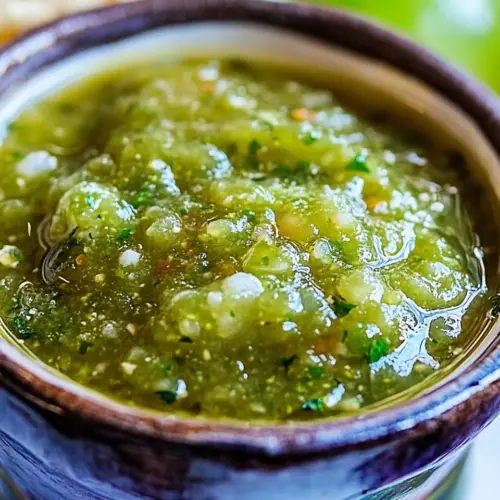
Salsa Verde
Salsa Verde is a bright, tangy, and slightly smoky green sauce made from roasted tomatillos and serrano peppers. This easy, quick recipe yields a creamy yet vibrant purée ideal for chips, tacos, and weeknight dinners, providing a refreshing punch that elevates simple meals. Make a double batch to refrigerate or freeze for convenient flavorful additions to many dishes.
Equipment
- Grill pan
- Blender or food processor
Ingredients
- 1 lb tomatillos outer husk removed Provide bright, tangy acidity and a slightly fruity base after husks are removed; roasted or boiled tomatillos give the salsa its characteristic green color and fresh brightness. Offer a slightly tart backbone that balances the heat and herbs, and blend smoothly when cooked for a velvety texture.
- 1 serrano pepper or 2 for medium heat, 3 for spicy Add crisp, lively heat that can be adjusted by quantity; use one for mild, two for medium, three for a pronounced kick. Contribute vegetal, slightly grassy notes that complement tomatillos and cilantro without overpowering the sauce.
- 2 cloves garlic minced Lend savory depth and pungent aroma when minced finely; garlic provides a warm, roasted flavor if cooked or a sharp bite when raw. Help round out the salsa by enhancing overall umami and marrying the acidic and herbal components.
- 1/4 cup cilantro fresh, chopped Introduce fresh, citrusy herbiness and bright green color when chopped; cilantro brings a lively, aromatic lift that defines many verde sauces. Pair with acid and heat to create a layered, fragrant profile that makes the salsa taste vibrant and fresh.
- 1 teaspoon Kosher salt heaping Season the salsa to taste and enhance all other flavors while also balancing acidity and heat; a heaping teaspoon ensures adequate seasoning for a pound of tomatillos. Dissolves easily into the mixture, preventing flatness and helping individual ingredients pop.
- 1/4 cup yellow onion finely chopped Provide mild sharpness and a slightly sweet, savory crunch when finely chopped; yellow onion adds textural contrast and depth. Soften when cooked or mellow when blended, contributing background flavor that supports the tomatillos and peppers.
Instructions
- Turn your grill to medium-high heat.: The air fills with a warm metallic scent as the grill heats, and you should be able to hold your hand above the rack for roughly four to five seconds before it feels too hot, indicating a proper medium high. Preheating is crucial because it delivers immediate searing and charring to the tomatillos , which caramelizes their natural sugars and amplifies flavor. If the grill is not hot enough you will get steamed, rather than charred, skins and a flatter profile. One common mistake is rushing this step, which results in uneven roasting and less complexity in the final sauce.
- Place the husked tomatillos and pepper(s) on a grill rack. Place over direct heat on the grill and roast, turning occasionally, until browned and lightly charred in places, about 8 minutes.: As they hit the hot metal, you will hear a gentle hiss and soon after small pops as the tomatillos release moisture. Position them directly over the heat so they get dappled char marks, turning occasionally so each side shows light browning. This direct contact creates smoky notes and softens the flesh for easy blending. A typical error is crowding the rack, preventing even charring and creating pockets of undercooked produce.
- Use a pair of tongs to transfer the roasted tomatillos to a blender. Use a small knife to cut away the stem of the pepper(s) and cut them in half, removing the seeds and ribs. Place the pepper(s) with the tomatillos in the blender.: Watch for visual cues: the tomatillos will blister and the skins will darken, and the pepper will collapse and blacken in spots. The aroma transforms from raw, vegetal sharpness to a warm, slightly sweet smokiness. Turning ensures even roast and prevents one side from burning. Overroasting will make flavors bitter, so avoid leaving them until the skin is completely blackened and crisp.
- Add the minced garlic, cilantro, and salt. Purée until smooth, about 30 seconds to 1 minute.: The tomatillos will be hot, emitting steam and a roasted tang, so handle them carefully. Transferring them quickly preserves heat that helps flavors meld in the blender. If you are cooling them for a chilled salsa, let them rest briefly. A common pitfall is squeezing them when hot, which can lead to loss of juices and a drier purée.
- Serve warm, or cover and chill and then serve chilled or at room temperature.: Cutting away the stem and seeds controls spice and prevents air pockets in the blender. The open, soft pepper flesh releases an aromatic, roasted pepper scent and blends smoothly. Removing seeds reduces the chance of an overly fiery salsa. A mistake is skipping seed removal when a mild result is desired, which can surprise guests with unexpected heat.
- Place the pepper(s) with the tomatillos in the blender.: As the ingredients nestle together, their combined aromas intensify, promising a bright, layered salsa. Their softened textures allow for a quick purée with minimal blade work. Overfilling the blender can prevent proper circulation and lead to uneven texture, so work in batches if needed.
- Add the minced garlic, cilantro, and salt.: These finishing ingredients bring savory depth and herbal lift, and adding them to the hot roasted base helps release their oils and aromatics immediately. The salt pulls flavors forward and helps the cilantro's brightness pop. Under seasoning is a typical error here, so taste after blending and adjust carefully.
- Purée until smooth, about 30 seconds to 1 minute.: You will notice a vivid green color and a glossy texture emerge as the blades do their work. The sound changes from a thumping roar to a steady humm, and the scent becomes unified and fragrant. Stopping too soon leaves a chunky texture, while overprocessing can warm the salsa too much and slightly dull the fresh cilantro note. Pulse and check to reach your preferred texture.
- Serve warm, or cover and chill and then serve chilled or at room temperature.: A warm spoonful tastes bright and slightly smoky, while chilled salsa settles into a crisp, refreshing profile. Store in an airtight container if not using immediately; chilling tightens flavors and makes it an excellent make ahead. The most common mistake is leaving it uncovered in the fridge, which can dry the surface and dim the aroma.
Notes
- Choose firm tomatillos for texture and brightness, avoid soft or shriveled ones because they can make the salsa watery and dull.
- Adjust pepper count starting with one serrano and tasting, remembering that roasted peppers mellow and concentrate heat in unexpected ways.
- Preheat the grill fully so you get quick charring instead of steaming, which preserves the tomatillo structure and flavor.
- Pulse when blending to control texture, aiming for a smooth but not overheated salsa which keeps cilantro vibrant and fresh.
- Use Kosher salt and season incrementally, tasting between additions to find the right balance for your palate.
- Store properly in an airtight container and refrigerate up to ten days, or freeze in portions for up to two months.