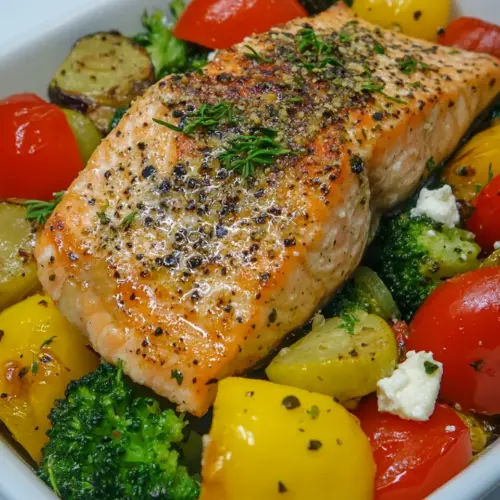
Salmon with Veggies and Feta
Salmon with Veggies and Feta combines flaky salmon, crisp roasted asparagus and broccoli, burst grape tomatoes, and tangy feta for a bright, easy weeknight dinner. The lemon zest and olive oil bring vibrant aroma and silky texture, while roasting adds caramelized depth. Fast to assemble and impressive to serve, this tray-baked meal is perfect when you want something healthy and flavorful with minimal fuss.
Equipment
- Oven
- Rimmed sheet pan
- Small Bowl
Ingredients
- 2 tablespoons olive oil Sizzle in a skillet or drizzle over vegetables to provide a fruity, silky fat that helps cook and flavor the dish; use at the start for sautéing or finishing to enhance mouthfeel. Adds a subtle peppery aroma and helps transfer heat evenly to prevent sticking while promoting browning. Works well combined with lemon zest and seasoning to coat salmon and veggies for roasting or pan-searing.
- 1 teaspoon salt Season generously to enhance natural flavors and balance richness; sprinkle onto salmon and vegetables before cooking to elevate taste throughout. Helps preserve texture and draw out moisture for better caramelization during roasting or searing. Can be adjusted to dietary preference but provides essential seasoning base for the recipe.
- 1/4 teaspoon black pepper Brighten and lightly season with a pungent, warming bite that complements the salmon and vegetables; grind freshly for best aroma and flavor impact. Adds subtle heat and complexity without overwhelming delicate ingredients. Use sparingly to balance salt and lemon notes.
- 1 tablespoon lemon zest Zest to impart an intense citrus fragrance and concentrated lemon oils that lift the entire dish; mix into olive oil or sprinkle over cooked salmon and vegetables for brightness. Enhances savory and salty components while cutting through richness for a fresher finish. Pairs particularly well with feta to create a balanced contrast.
- 1 pound salmon filet center cut, divided into 4 equal portions (see note 1) Portion and prepare as the main protein, offering rich, omega-3–packed flesh that becomes tender when cooked properly; divide into equal pieces for even cooking. Pat dry and season before searing, roasting, or grilling to achieve a crisp exterior and moist interior. Consider cooking time carefully to avoid overcooking while ensuring safe, flaky doneness.
- 8 ounces asparagus cut into 2" pieces, woody stems removed Trim and cut into 2-inch pieces to provide a tender-crisp green vegetable with earthy, slightly bitter notes; remove woody stems to improve texture. Roast or sauté alongside salmon so pieces reach even tenderness and retain a bright color. Adds fiber, vitamins, and a pleasant snap to contrast the fish and cheese.
- 8 ounces broccoli cut into bite-sized florets Separate into bite-sized florets to deliver a hearty, nutrient-dense vegetable that soaks up seasonings and roasts evenly; size evenly for consistent cooking. Provides a firmer texture and mild, slightly sweet flavor that complements asparagus and salmon. Can be blanched first for extra tenderness before roasting with other vegetables.
- 1/2 cup grape tomatoes halved Halve to contribute bursts of juicy sweetness and acidity that balance oily salmon and salty feta; add raw during plating or roast briefly with other vegetables. Offers vibrant color and fresh flavor, releasing juices that mingle with olive oil and lemon for a bright sauce-like effect. Helps cut through richness and adds a pleasant, juicy contrast.
- 1/2 cup feta crumbled Crumble to supply a tangy, salty, creamy element that contrasts with the salmon and vegetables; sprinkle over the finished dish for immediate flavor lift. Melts slightly when warm and provides textural interest and briny depth that complements lemon zest and olive oil. Use sparingly to avoid overwhelming other flavors while delivering distinctive Mediterranean character.
Instructions
- Preheat oven to 375 degrees F.: When you step into the kitchen you should already sense warmth building, a steady dry heat that will coax sugars in the vegetables to caramelize and firm the proteins in the salmon . The oven at 375 degrees F offers a balance between a gentle roast and a quick finish, producing flaky fish without drying it out. You will notice the oven light glow and the metal rack feel evenly warm when you place your hand near the closed door, but do not touch it. A common mistake is rushing the preheat, which leads to uneven cooking and underdone centers, so give the oven those full minutes to stabilize.
- In a small bowl combine olive oil, salt, pepper, and lemon zest.: As you whisk those elements together, the aroma of the lemon zest will become prominent, releasing bright citrus oils that cling to the oil. This mixture is the seasoning glue, and its glossy texture helps the spices coat the vegetables and the salmon uniformly. If the oil separates slightly, that is fine, just stir again; the goal is an even distribution of flavor. Avoid over-salting at this stage, many cooks add too much and the final dish becomes flat.
- Place salmon and vegetables on a rimmed sheet pan.: Lay out the pieces with space between them so air can circulate, and the hot oven can create those desirable roasted edges. The visual cue you want is roominess, not crowded lumps. For the salmon , place skin side down if it has skin, and give each portion its own space so the heat envelops it. A frequent misstep is overcrowding the pan, which causes steaming instead of roasting; keep some gaps between items to encourage browning.
- Rub salmon and vegetables with seasoning mixture and distribute evenly on sheet pan.: As you rub, you will feel the oil slick the surfaces and the zest cling to the flesh and florets. Massage the seasoning gently into the salmon so it adheres, and toss the vegetables so each piece is coated. Visually, you should see a sheen on everything and tiny flecks of zest across the surfaces. If some pieces look dry, apply a touch more oil; undercoating leads to uneven caramelization, so be generous enough to encourage browning but not so much the pan pools with fat.
- Roast uncovered in oven for 15-20 minutes, until vegetables are tender-crisp, and salmon is cooked through.: As the tray roasts you will hear a soft whisper of moisture escaping and see the vegetables begin to blister and deepen in color, the broccoli tips may turn a toasted brown and the asparagus edges will show caramelized marks. The salmon will firm up and flake when touched gently with a fork; look for opaque flesh that flakes easily. The timing window of 15 to 20 minutes depends on piece thickness, and if your salmon is thicker it may need a few extra minutes. Avoid overcooking, which dries the fish; if unsure, check a small area at the lower end of the timing to prevent a too-firm texture.
- Sprinkle with feta cheese crumbles and serve.: After removing the pan from the oven, the scent will be a layered chorus of roasted greens, citrus brightness, and warm, rich salmon . Scatter the crumbly feta so it lands on warm surfaces and softens without fully melting, adding immediate contrast. Serve straight from the pan or transfer to a platter, and notice how the textures and flavors mingle on the plate. A misstep here is adding the feta too early in the roast, which makes it weep or burn; add it at the finish for the best textural pop.
Notes
- Boost citrus brightness by adding an extra teaspoon of lemon zest right before serving to heighten the fresh notes.
- Make it more herbaceous by scattering chopped fresh herbs after roasting, though do not add them to the pan while it roasts or they will wilt and lose fragrance.
- Adjust vegetable timing by cutting heartier vegetables slightly smaller so they match the cooking time of the salmon and softer items.
- Increase salt control by seasoning lightly before roasting and finishing with a touch more salt at the table if needed, which helps avoid over-salting during cooking.
- Swap vegetables based on season such as using green beans or baby potatoes, but remember to par-cook dense roots so everything finishes together.