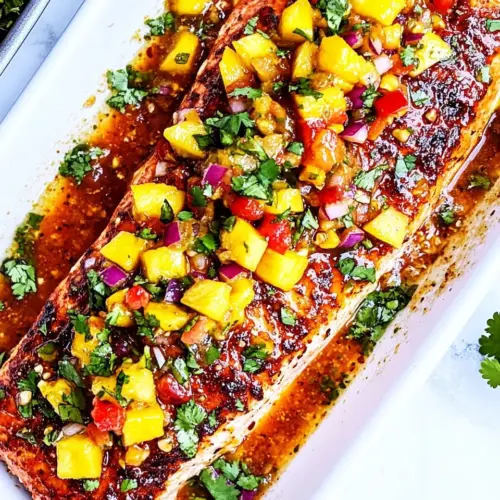
Salmon with Mango Salsa
Salmon with Mango Salsa combines flaky, buttery salmon with a bright, fruity salsa for a creamy and zesty experience. This easy weeknight dinner delivers sweet, smoky, and tangy notes that pop, making it perfect for summer gatherings or a relaxed meal that feels special. Make it for a quick, impressive plate that everyone will ask for again.
Equipment
- Oven
- Baking Sheet
- Foil
- Mixing Bowl
Ingredients
- 1 large wild Alaskan salmon fillet approx 3 pounds Provide a substantial, flavorful centerpiece by offering a rich, oily texture that holds up to roasting or grilling; its natural fats keep the fillet moist and impart a deep, savory seafood flavor when cooked to medium doneness. Marinate or baste to enhance surface caramelization and to allow seasonings to adhere, ensuring even cooking for a family-style main course.
- 2 tablespoons unsalted butter Melt smoothly to add a silky, indulgent finish that enhances browning and helps glaze stick to the salmon; butter contributes a rounded mouthfeel and subtle dairy sweetness that balances savory spices. Use at the end of cooking or to baste during pan-searing for a glossy, rich coating.
- 2 tablespoons honey Sweeten and caramelize when brushed or mixed into a glaze, helping create a sticky, amber finish that complements the fish's natural richness; honey also provides depth and a counterpoint to acidic lime. Whisk into a marinade or combine with butter to form a shiny, slightly floral glaze before broiling.
- 2 tablespoons lime juice Acidify and brighten the overall flavor by cutting through richness and enhancing other seasonings; lime juice adds a tangy, citrus lift that complements both the salmon and the mango salsa. Squeeze fresh over the cooked fillet to add immediate freshness and balance to the dish.
- zest of one lime Concentrate aromatic citrus oils in the dish by contributing an intense, zesty fragrance and subtle acidity without adding extra liquid; lime zest elevates brightness and pairs exceptionally well with seafood and tropical salsas. Sprinkle lightly over the finished fish for an aromatic finish and visual appeal.
- 1 tsp EACH salt, chili powder, ground cumin, garlic powder Season assertively to build a robust savory backbone; salt enhances all flavors while chili powder, cumin, and garlic powder add warmth, earthy depth, and savory umami notes. Combine evenly into a dry rub to form a balanced spice profile that complements the salmon and contrasts the sweetness of the mango salsa.
- 1/2 tsp EACH smoked paprika, onion powder, dried oregano, pepper Layer subtle smokiness and herbal warmth to round out the spice mix; smoked paprika introduces a gentle smoke note while onion powder, dried oregano, and pepper add savory complexity and aromatic structure. Use within the rub to create nuanced background flavors that support the primary seasonings without overpowering the fish.
- 1/2 -1 teaspoon chipotle chili powder Impart variable heat and complex smoky-chili flavor that can be adjusted to taste; chipotle chili powder brings both spiciness and a rich, smoky depth that enhances the glaze or rub. Start at the lower end for mild heat or increase for pronounced warmth that accentuates the savory-sweet contrast with the salsa.
- 1 recipe Mango Salsa Complement the salmon by adding sweet-tart, juicy fruit textures with bright aromatics and a contrasting cooling element; mango salsa provides tropical sweetness, acidity, and crunch that balances the rich fish. Spoon generously over or alongside the cooked salmon to introduce refreshing contrast and color.
- fresh lime juice Enhance freshness and acidity when added just before serving to brighten all components and lift heavy flavors; fresh lime juice adds immediate citrus snap that sharpens both the glaze and the salsa. Drizzle sparingly over the plated salmon to finish with a clean, vibrant tang.
- chopped cilantro Add herbaceous brightness and a clean, slightly citrusy undertone that cuts through richness; chopped cilantro brings freshness, color, and aromatic lift to both the salsa and the plated fish. Sprinkle on top as a final garnish to provide contrast and a lively herbal note.
Instructions
- Preheat oven to 400 degrees F. (See notes for grilling.): As the oven warms you will notice a dry, steady heat that primes the air for even baking, which is important for uniform cooking across the thick salmon fillet. This temp helps the exterior set without overcooking the interior, creating a tender center. A common mistake is not letting the oven fully reach temperature, which can lengthen cooking time and yield uneven doneness. If your oven runs hot, watch the first bake closely and trust the visual cues rather than time alone.
- Line a large jelly roll pan with foil that extends 2” past the pan edge on each long side (so you can fold the sides up). Lightly spray foil with nonstick cooking spray. Place salmon in the center of the foil skin side down.: The foil creates easy cleanup and a shallow packet feel while the long overhang lets you fold the sides up for a snug perimeter. When you spray the foil lightly and place the salmon skin side down, the fish will sit on a stable surface and the spray prevents sticking. You should hear a faint sizzle if the pan is warm from the oven, that sound indicates moisture is starting to evaporate properly. Avoid folding the foil so tightly that steam is trapped against the top of the fish, which can prevent the top from browning during broiling.
- Whisk all the Wet Rub ingredients together in a medium bowl. Pour rub on salmon and evenly rub all over the top. Fold up all the sides of the foil snugly around the salmon (but don’t cover salmon). Let salmon rest 15-30 minutes to come to room temperature (you can make the mango salsa during this time).: As you whisk, aromas bloom from the spices and citrus zest, creating a fragrant, slightly sweet mixture. Pour the rub on the salmon and rub evenly over the top; this ensures each bite carries the seasoning complexity. Letting the rub sit on the fish for 15 to 30 minutes brings the flavors together and allows the salt to begin flavoring the flesh. A frequent error is over rubbing so the spices clump; use gentle, even strokes and distribute the butter and honey so the paste is smooth and spreadable.
- Bake salmon uncovered at 400 degrees F for 12-15 minutes (depending salmon thickness), then broil 3 minutes.: Folding the sides creates a raised rim that helps capture juices while leaving the top exposed for browning. You will feel the foil give and shape around the fish, which keeps it from sliding during transfer. This technique helps the fish steam slightly at first, retaining moisture, while the exposed top can finish with dry heat. Be careful not to pinch the foil flat over the top because that will block the direct heat needed for caramelization.
- Garnish salmon with fresh lime juice and mango salsa. Season with salt to taste.: Allowing the salmon to lose chill makes for more even cooking, and you will notice the rub settle into the surface, intensifying aroma. During this time I often make the mango salsa , which saves hands on final assembly. A typical slip is skipping this rest, which can result in longer oven time and a drier center; patience here pays off with a juicier finish.
- Bake salmon uncovered at 400 degrees F for 12 to 15 minutes: As the fish bakes you will watch the edges change from translucent to opaque and the surface take on a light golden sheen where the honey and butter begin to caramelize. The time depends on thickness, so use visual cues, pressing gently to feel firmness as a guide. Baking seals the fish and sets the top, preparing it for a short broil. Avoid opening the oven repeatedly, which drops the temperature and can extend baking time unnecessarily.
- Then broil 3 minutes: The brief broil encourages a bronzed, slightly charred finish, and you might hear a soft crackle as sugars caramelize. Keep the oven door slightly ajar if recommended by your oven, and watch the color closely, because broiling can go from perfect to overdone quickly. A common mistake is walking away during broil, so stay attentive and remove the fish when the top is a deep golden brown with small bubbling spots.
- Garnish salmon with fresh lime juice and mango salsa: Right before serving squeeze the additional lime juice to lift the flavors, and spoon the mango salsa across the top so the warm fish meets cool, bright fruit. The temperature contrast makes the salsa pop and gives each forkful an exciting range of textures. Avoid adding salsa too early, which can warm and lose vibrancy; add it at the last moment for the best contrast.
- Season with salt to taste: After tasting a small piece, adjust salt so the flavors sing. A final pinch draws out the sweetness of the honey and the acidity of the lime, balancing everything on the plate. Over salting is easy, so add incrementally and taste as you go; if you do add too much salt, a squeeze more lime can help balance the impression.
Notes
- Adjust the chipotle heat by starting with 1/2 teaspoon and increasing to taste; this changes the smoky kick without altering the sweet citrus backbone.
- Use extra lime zest if you want more aroma, grate it finely so it distributes evenly across the rub and gives an immediate citrus lift.
- Make the salsa chunkier by keeping larger mango pieces, which provides a pleasing textural contrast against the tender salmon.
- Try room temperature salsa for better flavor release; cold salsa straight from the fridge mutes aromatic notes, so let it sit briefly before serving.
- Finish with chopped cilantro at the table to preserve its bright, fresh scent; adding it early dulls the herb’s impact.
- Use unsalted butter to control seasoning; butter adds richness and a glossy finish without forcing you to over salt the fish.