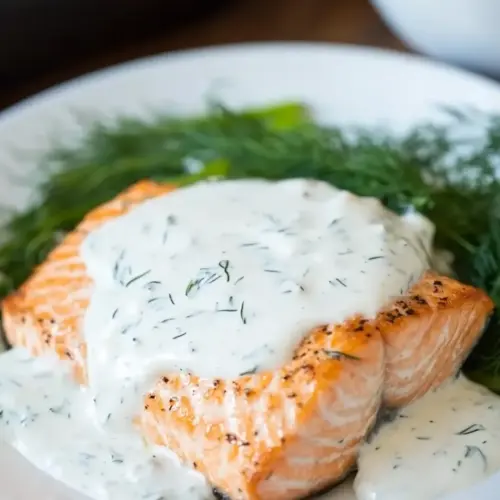
Salmon with Creamy Dill Sauce
Salmon with Creamy Dill Sauce combines tender, flaky salmon with a creamy, herb studded sauce that is tangy and bright. This easy weeknight dinner is creamy, fresh, and reliable, offering a quick method that still feels elegant. Perfect for busy evenings or casual dinner parties, this dish makes a persuasive case for cooking fish at home.
Equipment
- Oven
- Baking Sheet
- Aluminum Foil
- Small Bowl
Ingredients
- 1/3 cup mayonnaise Provide a rich, creamy base that binds and balances the sauce; mayo adds tang and body, helping emulsify the sour cream and horseradish for a smooth texture. Use measured amount to avoid overpowering the delicate salmon flavors while contributing moisture and mouthfeel.
- 1/3 cup sour cream Offer tangy creaminess that lightens the mayonnaise and adds a silky mouthfeel; sour cream contributes mild acidity to brighten the sauce. Stir gently with other components so the dairy blends without curdling and complements herbs and lemon.
- 1 tablespoon minced sweet onion Add sharp, sweet onion bite that introduces texture and subtle pungency; minced sweet onion disperses flavor throughout the sauce without large pieces. Combine finely to ensure even distribution and to enhance the overall savory balance.
- 1 teaspoon lemon juice Introduce bright acidity to cut richness and enhance freshness; lemon juice lifts flavors and complements dill and fish. Add gradually and taste to maintain a lively finish without making the sauce too tart.
- 2 teaspoons horseradish Contribute a spicy, pungent heat that complements fish and cuts through creaminess; horseradish brings a horseradish-forward warmth rather than chili heat. Mix into the sauce sparingly and adjust to preferred intensity for a balanced kick.
- 1/4 teaspoon black pepper Impart mild heat and depth to the sauce; black pepper adds a background spicy note that rounds out flavors. Grind fresh or use pre-ground to taste, distributing evenly so it subtly seasons each bite.
- 1/4 teaspoon garlic salt Provide savory seasoning with a hint of garlic and saltiness; garlic salt seasons the sauce while adding garlic aroma. Use cautiously because of its salt content, and balance with other seasonings to avoid oversalting.
- 3 tablespoons chopped fresh dill, or 1 teaspoon dried dillweed Contribute fresh, aromatic herbal character that defines the sauce; chopped fresh dill (or dried dillweed) lends a bright, slightly citrusy, anise-like note. Add toward the end to preserve herb freshness, or rehydrate dried dill to release flavor.
- 4 (5-ounce) salmon fillets Serve as the main protein featuring rich, flavorful flesh that pairs well with creamy, herbed sauces; salmon fillets provide omega-3 fats and a flaky texture when cooked properly. Season and cook to preferred doneness so the sauce complements rather than masks the fish.
- 1 teaspoon lemon pepper seasoning Add zesty, citrusy seasoning that enhances the fish with peppery lemon notes; lemon pepper seasoning seasons the fillets and harmonizes with the lemon juice and dill. Sprinkle before cooking to create a flavorful crust and consistent seasoning.
- 4 thin slices sweet onion Offer sweet, mild onion slices for layering on top of fish or for roasting; thin slices add visual appeal and gentle sweetness when cooked. Arrange on the fillets or around them to release moisture and mellow into a caramelized accent.
- 1 lemon, thinly sliced Provide citrus slices for roasting or garnish that add aroma and a burst of brightness; thin lemon slices infuse the fish with subtle citrus oils during cooking. Place on top of fillets or around the pan to impart flavor and a fresh finish.
- 4 tablespoons butter Contribute rich fat for cooking and flavor development; butter helps brown the fish, creates a silky pan sauce, and adds luscious mouthfeel. Melt carefully to avoid burning, and baste or incorporate into the sauce for added richness.
Instructions
- Preheat oven to 350 degrees.: As the oven warms you will start to feel a steady, dry heat in the kitchen and the slight hum of the oven element coming to life, which signals that the environment is ready for even cooking. This gentle temperature allows the salmon to cook through without drying out, and it gives the butter time to melt and mingle with the lemon steam inside the foil. A common mistake is rushing this step, putting fish into an oven that has not reached temperature, which can increase cooking time and yield uneven doneness.
- Combine all ingredients for sauce in a small bowl and refrigerate until needed.: When you whisk together the mayonnaise , sour cream , minced sweet onion , lemon juice , horseradish , black pepper , garlic salt , and dill , you notice a creamy sheen and a perfume of citrus and herbs. Chilling lets the flavors meld and the sauce firm slightly, so it clings to the salmon when served. Avoid overbeating, which can thin the mixture, making it less clingy, and never leave dairy at room temperature for long; keep it chilled until serving.
- Place each piece of salmon on a square piece of foil. Sprinkle with lemon pepper and season to taste with salt.: As you lay the salmon on the foil, the raw flesh should look glossy and vibrant. The lemon pepper seasoning brings a bright citrus scent to the surface, and a light sprinkle of salt helps the flesh firm slightly and encourages moisture retention. Over seasoning is common, so season lightly and taste the sauce later to adjust overall saltiness.
- Place an onion slice on top of each salmon filet and 2 slices of lemon on top of the onion.: When you add the thin onion slice and the lemon discs, you will see steam begin to collect under the foil as the packets warm, and the lemon releases a fragrant, zesty aroma. These layers keep the fish moist and infuse subtle flavor during the bake. A mistake to avoid is using overly thick lemon slices which can dominate the texture and slow heating; stick to thin slices so they release flavor quickly.
- Place 1 tablespoon butter on top and then wrap the foil around each piece of salmon.: Dropping a pat of cold butter onto the salmon creates a tiny pool that will melt into the fish, bringing richness and a silky finish. As you seal the foil, you will hear a faint crinkle and later see a small condensation pocket form, which indicates the fish is steaming gently. If the foil is not sealed well, moisture can escape and the fish may dry out, so make snug packets without crushing the fillet.
- Place on baking sheet and bake for 30 minutes.: Inside the oven the packets will steam, and you may detect a warm, lemony scent escaping when you open the door to check. After this period the flesh should feel firm yet yielding, and juices will pool slightly when you lift a corner of the foil. A common error is baking too long at too high a temperature, which can make the salmon flaky and dry instead of tender.
- Remove salmon from oven. Carefully unwrap foil. Carefully remove onion and lemon slices. (You may want to put them back on for presentation.): As you open the foil you will see gentle steam and a glossy surface on the salmon , with softened onion and gelatinized lemon slices. Removing the aromatics allows the final broil to work directly on the fish surface, producing a pleasing exterior. Be cautious of hot steam which can scald, and avoid leaving the filets exposed too long, which can cool them excessively before broiling.
- Broil salmon for about 5 minutes or until cooked through.: During broiling you will notice the top take on a faint golden tone and the edges may curl slightly, indicating the proteins are finishing. The broiler gives a quick burst of intense heat that caramelizes surface sugars and adds a hint of texture, while leaving the interior moist. Do not step away while broiling, as a few moments can change the result from perfectly done to overcooked.
- Serve salmon with sauce.: When plated, the warm salmon should glisten and offer a tender, slightly flaky bite, while the chilled sauce provides a cool, creamy contrast and herbaceous lift from the dill . Spoon the sauce across the filet so each forkful has a balance of cream and fish. A mistake I see is adding too much sauce which masks the delicate flavor of the salmon , so start with a modest dollop and let diners add more if they like.
Notes
- Adjusting salt: If you prefer lower sodium, reduce added salt and rely more on the lemon pepper and dill for flavor, tasting the sauce before serving to ensure balance.
- Herb swaps: If you do not have fresh dill, use the dried dillweed at a smaller quantity, and allow the sauce to sit so the dried herb hydrates and releases flavor.
- Cooking time tweaks: For thicker fillets, add a few minutes to the baking time before broiling, watching for the fish to become opaque and flake easily with a fork.
- Sauce consistency: If your sauce seems too thick after chilling, stir in a few drops of lemon juice or a teaspoon of water to loosen it while keeping the taste bright.
- Presentation idea: Return the warmed onion and lemon slices to the top before serving for a rustic, attractive plate that hints at the flavors used in cooking.