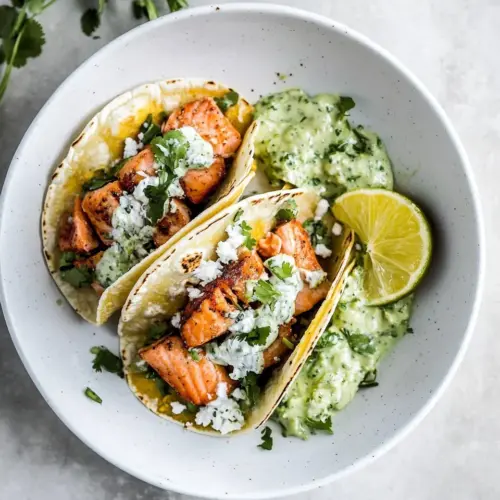
Salmon Tacos
Salmon Tacos combine flaky, smoky salmon with a creamy cilantro lime sauce and crunchy cabbage for a bright, easy weeknight dinner. This recipe is quick, flavorful, and great for feeding a small group, offering smoky spices, zesty lime, and cool yogurt sauce in every bite. Make it for a casual gathering or a busy evening when you want big taste with minimal fuss.
Equipment
- Baking Sheet
- Foil
- Food Processor
- Skillet
- Oven
Ingredients
- 1 lb . center-cut salmon, skin-on Seasoned and hearty fish providing the main protein and rich, flaky texture for the tacos; cook skin-on to protect the flesh and render extra flavor while searing or grilling.
- 1 tablespoon extra virgin olive oil Light fruity oil used to coat the salmon before seasoning and cooking; helps achieve a crisp exterior and prevents sticking during high-heat cooking.
- 1 teaspoon smoked paprika Smoky spice adding depth and a subtle barbecue-like aroma to the salmon rub; pairs well with chili powder to enhance overall savory flavor.
- 1 teaspoon chili powder Warm, slightly earthy spice contributing mild heat and complexity to the seasoning blend; balances the smoked paprika and complements the lime zest.
- 1 teaspoon garlic powder Savory powdered spice that adds concentrated garlic flavor without moisture; helps build a layered, aromatic crust on the cooked fish.
- 1 teaspoon kosher salt Coarse salt used to enhance all flavors and aid in seasoning the salmon evenly; helps draw out moisture for better browning and texture.
- 1/4 teaspoon freshly ground black pepper Bold ground pepper supplying a bright, slightly pungent counterpoint to the paprika and chili; adds a mild heat note when freshly ground.
- 1 small lime, zested (reserve juice for sauce) Aromatic citrus zest offering intense lime oil that brightens the salmon and ties into the sauce; reserve the juice for emulsifying a tangy dressing.
- 8 corn tortillas, or flour tortillas, warmed Soft, neutral flatbreads to hold the salmon and toppings while providing structure; warm briefly to make pliable and slightly charred for extra flavor.
- 1 cup finely shredded green cabbage, or coleslaw mix Crisp shredded vegetable providing cool crunch and contrast to the warm salmon; adds freshness, texture, and a subtle bitter balance.
- 1/2 cup pickled red onion, or fresh chopped red onion Tangy, vibrant onion choice adding sharpness and acidity to cut through the richness of the fish; pickled version adds sweet-vinegary notes while fresh adds sharper bite.
- 1/4 cup fresh chopped cilantro Fresh herb adding bright, citrusy-green flavor and visual garnish; chop finely to distribute herbal aroma throughout each taco.
- Hot sauce, for serving Spicy condiment served alongside for adjustable heat; allows diners to customize each taco to their preferred spice level.
- 1/2 cup plain Greek yogurt Thick cultured dairy providing a creamy, tangy base for sauces or slaws; helps mellow heat and bind other sauce ingredients.
- green onions, chopped Mild allium with green tops used as a fresh garnish to add subtle oniony crunch and color contrast to finished tacos.
- 1/2 cup fresh cilantro, or more, to taste Fragrant leafy herb used in larger quantity for fresh herbaceous flavor in sauces or garnishes; can be blended into crema or sprinkled atop tacos.
- 1 clove garlic Pungent allium used to infuse the sauce or crema with savory depth; mince or press to evenly distribute sharp garlicky flavor.
- fresh lime juice Zesty acidic liquid squeezed to add bright tartness and balance to sauces, slaws, and finished tacos; adjusts seasoning and lifts flavors.
Instructions
- Preheat oven to high broil.: You will notice a sharp, hot heat in the oven that promises quick surface browning, creating caramelized edges and toasted spice aromas that make the fish sing. Why this matters, the intense direct heat gives you a lightly charred exterior which contrasts with tender flakes inside. Sensory cues include a toasty smell from the oven and a faint sizzling sound when the fish goes in. Troubleshooting, if your oven broils unevenly, move the sheet to a different rack or rotate midway to prevent one side from over browning.
- Prep Salmon: Pat salmon dry with a paper towel, and place on a foil lined baking sheet. Rub oil all over top of salmon flesh. In a small bowl, combine spices and lime zest. Rub mixture onto flesh of salmon.: Pat salmon dry with a paper towel, and place on a foil lined baking sheet. Rub oil all over top of salmon flesh. In a small bowl, combine spices and lime zest. Rub mixture onto flesh of salmon : The moment you pat the salmon dry you will feel the surface go from slick to slightly tacky, which allows the oil and spice to cling and form a seasoned crust. The lime zest releases fragrant oils that smell floral and citrusy against the smoky paprika. Why this matters, proper drying and oil adhesion promote even browning and prevent steaming. Sensory cues include a glossy sheen of oil and an aromatic lift from the spices. Troubleshooting, if your spice layer starts to slide off, press it gently into the flesh with the back of a spoon to help it adhere.
- Broil on upper middle rack for 8 to 10 minutes (140 degrees on a thermometer) or until salmon flakes with a fork. (Or Bake at 400 for 15-20 minutes). Remove from oven and tent with foil to rest.: As the broil works, watch for the surface to go from pale to golden and then spotted with deeper brown char, the aroma will deepen into warm, slightly sweet notes. Why this matters, cooking to 140 degrees ensures the fish is moist and flaky rather than dry. Sensory cues include the fish flaking easily when nudged with a fork and gentle steam rising when you lift the foil. Troubleshooting, if the fish looks dry, reduce your broiling time next time and check with a thermometer early.
- Cilantro Lime Sauce: Add all ingredients to a food processor and blend until smooth.: Add all ingredients to a food processor and blend until smooth : Right away you will notice the bright scent of lime and cilantro, and the yogurt will turn silky as air is whipped into it. Why this matters, pureeing creates a cohesive sauce that coats the taco components evenly, bringing creamy balance to the spicy fish. Sensory cues include a glossy, smooth texture and a fresh, citrusy herb aroma. Troubleshooting, if the sauce is too thick, add a little reserved lime juice or a teaspoon of water until it reaches a drizzable consistency.
- Assemble Tacos: Warm corn tortillas on a hot, dry skillet, flipping once. Break salmon into pieces and place a spoonful of salmon on a tortilla. Top with cabbage, pickled onions, sauce, and cilantro. Spritz with fresh lime juice and add hot sauce if desired.: Warm corn tortillas on a hot, dry skillet, flipping once. Break salmon into pieces and place a spoonful of salmon on a tortilla. Top with cabbage, pickled onions, sauce, and cilantro. Spritz with fresh lime juice and add hot sauce if desired : The warm tortillas should hiss slightly on the skillet and become pliable, releasing a toasty corn fragrance that tells you they are ready. When you break the salmon it should separate into moist flakes with a lightly crusted exterior. Why this matters, the contrast of warm tortilla, hot flaky fish, and cool sauce creates the ideal mouthfeel. Sensory cues include the pop of pickled onion , the crispness of the cabbage, and a final bright citrus burst when you spritz lime. Troubleshooting, if your tortillas crack, warm them in a damp towel for a few seconds to restore pliability before assembling.
Notes
- Switch tortillas: Try soft flour tortillas if you prefer a chewier wrapper, which pairs well with the rich salmon.
- Air fryer option: Cook the seasoned salmon skin side down at 400 degrees F for 7 to 10 minutes for a crispier exterior and evenly cooked interior.
- Adjust the heat: Add extra chili powder or drizzle hot sauce to the assembled tacos to increase spiciness incrementally.
- Make it greener: Increase the cilantro in the sauce or sprinkle extra chopped cilantro on top for herbal lift that brightens each bite.
- Pickle quickly: If you are short on time, slice red onion thin and toss with a splash of lime juice and salt for a fast bright pickle.