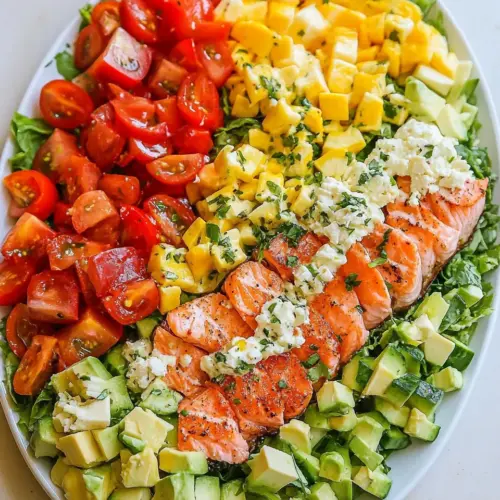
Salmon Cobb Salad
Salmon Cobb Salad is a bright, creamy, and crunchy composed salad featuring flaky salmon, crisp romaine lettuce, sweet corn, and silky avocado. Perfect for an easy weeknight dinner or a light summer lunch, it balances protein and fresh produce for a satisfying plate you will want to make again and again.
Equipment
- Large non stick skillet
- Measuring Cup
- Salad spinner
- Platter
Ingredients
- 1 lbs salmon, boneless, skinless (preferably wild-caught) Season and sear to provide a rich, flaky protein centerpiece that anchors the salad and adds savory depth when cooked to medium or desired doneness.
- 1 tsp sea salt Enhance flavor balance by seasoning the salmon and other components lightly; use to draw out natural tastes without overpowering the dish.
- 1/4 tsp black pepper Add subtle heat and complexity when freshly ground, boosting the overall seasoning profile while complementing the salt on the salmon and dressing.
- 1 large head of romaine lettuce, chopped, rinsed and spun dry Form the crisp, leafy base that provides structure and crunch; chop and dry thoroughly so it holds dressing and contrasts with tender toppings.
- 2 ears of corn, cooked, shucked and cut off the cob Introduce sweet, juicy kernels for texture and summery flavor; cook and cut off the cob to add bursts of sweetness throughout the salad.
- 1/2 medium red onion, thinly sliced Contribute sharp, slightly pungent bites that cut through richer elements; slice thinly to distribute flavor without overwhelming other ingredients.
- 2 large hard-boiled eggs, peeled and quartered Provide creamy, firm protein and a rich texture when quartered; hard-boiled eggs add heft and a complementary mouthfeel to the salad.
- 1 large avocado, peeled, pitted and sliced Bring buttery richness and a creamy texture that mellows acidity; slice ripe avocado to add healthy fats and a silky contrast to crunchy elements.
- 1 1/2 cups cherry tomatoes, halved Add bright acidity and juicy pops of flavor; halved cherry tomatoes deliver color and a fresh, tangy counterpoint to the salmon and dressing.
- 3 tbsp fresh lime juice, from 1 to 2 limes Brighten and acidify the dressing for balance; fresh lime juice adds zesty citrus notes that lift the whole salad's flavors.
- 3 tbsp extra virgin olive oil Bind and enrich the dressing with fruity richness; extra virgin olive oil creates a smooth mouthfeel and carries herbs and seasonings.
- 2 tbsp cilantro, chopped Impart fresh, citrusy herbaceousness when chopped; cilantro adds aromatic lift and pairs well with lime and the overall coastal flavors.
- 2 tbsp dill, chopped Contribute a delicate, slightly sweet herbal note that complements fish; chopped dill enhances the salmon and brings freshness to the salad.
- 1 large garlic clove, pressed or finely minced Provide pungent, aromatic depth to the dressing or salmon rub; minced garlic adds savory complexity and enhances umami flavors.
- 1 tsp sea salt Season again to ensure all components are balanced; a second pinch of salt helps finish the dressing and seasoning of assembly.
- 1/8 tsp black pepper Offer a final hint of gentle heat and balance; a small amount of black pepper brightens flavors without overpowering delicate ingredients.
Instructions
- Season salmon generously with salt and pepper. Heat 1 Tbsp oil in a large non-stick skillet over medium-high heat. Once oil is hot add salmon, top-side down and cook until golden and crisp on the first side (4 minutes) then flip salmon and continue cooking another 4 minutes or until cooked through, depending on thickness of salmon. Transfer to a plate and cool to room temperature then flake salmon with forks into bite-sized pieces.: The moment you season the salmon you should smell the faint briny sweetness of the fish combined with the peppery aroma, which will help build that savory crust when it hits the pan. Letting it sit for a few minutes at room temperature helps the seasoning adhere and promotes even cooking. A common mistake is overcrowding the pan later, which causes steaming not searing, so keep the filet alone or use a large skillet.
- Arrange romaine lettuce on a large platter or large shallow bowl.: When the oil shimmers and moves fluidly across the pan, that is the cue that the surface is properly heated. You may hear a soft sizzle as moisture evaporates from the pan surface which ensures an optimal sear. If the oil smokes heavily, the pan is too hot and will burn the exterior before the interior cooks, so lower the heat slightly.
- Arrange remaining salad ingredients in rows over the romaine lettuce; cooked corn kernels, sliced onion, quartered eggs, sliced avocado, and halved cherry tomatoes.: As the salmon hits the skillet you will hear a steady sizzle and see the edges begin to set and turn opaque, then develop a deep golden color. Resist the urge to move the fish, leaving it undisturbed promotes a beautiful crust. A common error is flipping too early which rips the surface and prevents proper browning.
- Combine dressing ingredients in a measuring cup and stir to combine. Drizzle evenly over the salad just before serving.: When you flip the salmon the second side will sizzle and begin to firm up; watch the flesh near the center for a gentle color shift indicating doneness. Thicker filets may need extra time; use a fork to check that flakes separate easily. Overcooking dries the fish, so pull it off the heat just shy of done and let residual heat finish it.
- Transfer to a plate and cool to room temperature then flake salmon with forks into bite-sized pieces: As the salmon rests you should notice steam subsiding and the juices settle, making it easier to flake neatly. Use two forks to break it into chunky, bite-sized pieces that keep some texture, not a paste. Rushing this step while it is too hot can make the fish fall apart into small fragments, so give it a short rest.
- Arrange romaine lettuce on a large platter or large shallow bowl: When you lay out the chopped romaine lettuce , aim for a generous even layer that creates a canvas for the other toppings. The lettuce should be crisp and cold, providing contrast to the warm salmon . If the leaves are limp, the salad will feel flat, so always spin them dry thoroughly after washing.
- Arrange remaining salad ingredients in rows over the romaine lettuce; cooked corn kernels, sliced onion, quartered eggs, sliced avocado, and halved cherry tomatoes: Placing the toppings in neat rows makes an attractive presentation and helps guests assemble their own plates with balanced bites. You will see color contrasts and textures come together visually. Take care with the avocado slices so they remain intact; arrange them last if you worry about browning.
- Combine dressing ingredients in a measuring cup and stir to combine: As you whisk lime juice , extra virgin olive oil , minced garlic , chopped cilantro , chopped dill , salt and pepper, notice the fragrance shift as citrus and herbs mingle with the oil. A brief whisk emulsifies the dressing into a cohesive sauce. If you skip whisking you might end up with separated dressing that does not cling to ingredients evenly.
- Drizzle evenly over the salad just before serving: The moment you pour the dressing across the salad, watch how the leaves glisten and the colors brighten, signaling a finished plate ready to eat. Drizzle lightly and then offer extra at the table so you do not oversaturate the greens. A mistake is dressing too early, leading to limp lettuce, so always dress right before serving to keep texture vibrant.
Notes
- Choose uniform salmon filets so they cook evenly and finish at the same time, preventing one end from drying while the other is undercooked.
- Pat the salmon dry before seasoning to encourage a crisp crust when it hits the hot skillet, moisture is the enemy of browning.
- Use fresh lime juice for the dressing rather than bottled, the bright citrus aroma lifts the entire salad and feels more vibrant.
- Cook corn for contrast either by grilling for smoky notes or boiling for sweet simplicity, both work and yield different flavor profiles.
- Chop herbs finely so the cilantro and dill distribute evenly, small herb pieces release flavor without overpowering any single bite.
- Assemble just before serving to maintain crispness of the romaine lettuce, dress right at the end to avoid soggy greens.