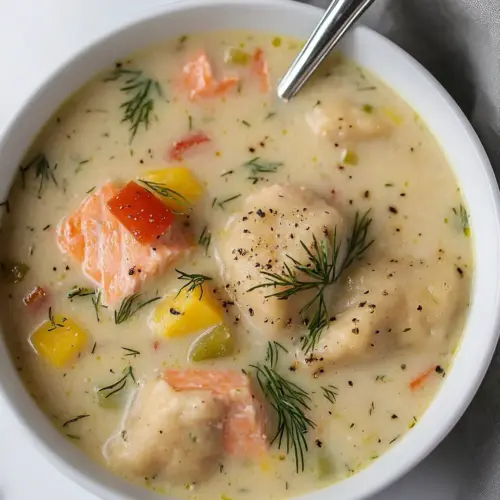
Salmon Chowder with Dill Dumplings
Salmon Chowder with Dill Dumplings is a creamy, herb scented bowl featuring flaky salmon, tender potatoes, and pillowy dill dumplings. This easy weeknight dinner balances savory stock, sweet corn, and a touch of cream for a comforting but refined meal. Make it when you want a cozy, impressive dish that comes together without fuss.
Equipment
- Large Pot
- Shaker cup or small bowl
- Whisk
- Spoon
Ingredients
- 1 tablespoon unsalted butter Melted to provide a rich cooking fat and base flavor for sautéing aromatics; helps prevent sticking and adds a subtle buttery richness to the chowder. Use at medium heat to gently soften onions and carrots without browning them. Complements the seafood and cream for a cohesive mouthfeel.
- 1 sweet onion, diced Diced to contribute a sweet, aromatic backbone that softens into a mellow savory flavor when sautéed; adds texture and depth to the soup base. Cook until translucent to release natural sugars that balance the broth and cream. Works with butter and garlic to form the foundational flavor layer.
- 1 cup diced carrots Diced to add natural sweetness, color, and a slight bite that holds up in simmering broth; provides a tender, slightly firm texture contrasting the potatoes and salmon. Sauté briefly to begin caramelization and integrate with onion and garlic flavors. Enhances the overall heartiness and visual appeal of the chowder.
- 4 garlic cloves, minced Minced to infuse pungent, savory notes into the base; releases aromatic oils when gently cooked, brightening the soup’s flavor. Add near the end of the sauté step to avoid bitterness from overcooking. Pairs well with dill and chives to accentuate the seafood.
- kosher salt and pepper Used to season and balance flavors throughout cooking and at service; adjusts taste to highlight the natural sweetness of salmon and vegetables. Add in stages to build seasoning—some while cooking and more to taste at the end. Pepper adds mild heat and complexity.
- 1/2 teaspoon dried dill Added as a subtle herb to impart a delicate, slightly grassy and lemony note that complements fish; enhances the classic pairing of dill and salmon. Sprinkle into the simmering broth to allow flavors to mellow and infuse. Works harmoniously with cream and potatoes.
- 5 cups chicken stock Poured as the liquid base to simmer vegetables and build the soup’s savory body; contributes saltiness and depth depending on stock quality. Use low-sodium stock if you plan to adjust seasoning later. Provides a clean backdrop for seafood and cream to shine.
- 1 pound baby yukon gold potatoes, cut in half Cut in half to provide tender, creamy texture and body to the chowder; releases starch that helps thicken the broth slightly as it cooks. Simmer until fork-tender so pieces hold their shape without disintegrating. Complements corn and salmon while adding rustic substance.
- 1 tablespoon all-purpose flour Sprinkled and cooked briefly to help thicken and bind the chowder; combines with butter to create a light roux that adds subtle body. Ensure the flour cooks out to avoid a raw taste, then gradually whisk in stock. Helps the soup achieve a silky consistency before adding cream.
- 1 cup frozen corn Folded in to contribute bursts of sweet, fresh-corn flavor and a pleasing pop of texture; adds color and seasonal brightness to the chowder. Stir in toward the end of cooking to preserve some crunch and sweetness. Balances the richness of cream and salmon.
- 1/3 cup heavy cream Measured to lend a touch of richness and smoothness to the chowder; rounds out the broth for a velvety finish without overpowering the fish. Stir in off heat if preferred to prevent curdling, allowing gentle warming with the residual heat. Harmonizes with butter and potatoes for a creamy mouthfeel.
- 1 pound salmon, cut into chunks Cut into chunks to provide the primary protein and signature flavor of the dish; offers tender, flaky texture when cooked gently in the broth. Add during simmering and avoid overcooking to preserve moisture and delicate texture. Pairs naturally with dill and cream for a classic chowder profile.
- sliced green onions, for topping Sliced for topping to add fresh, bright onion flavor and a crisp, green garnish at serving; enhances appearance and provides a mild, sharp contrast to creamy soup. Scatter just before serving to retain color and crunch. Complements dill and salmon without overwhelming the palate.
- 1 cup all-purpose flour Measured to form the dry base of dumpling dough and provide structure and lift; combines with leavening and seasonings to create tender bites. Whisk with other dry ingredients before adding wet components to ensure even distribution. Produces fluffy dumplings that cook atop the simmering soup.
- 2 teaspoons baking powder Added to introduce lift and lightness into the dumplings by creating air pockets during baking or steaming; helps dumplings remain tender rather than dense. Sift or whisk into the flour to prevent lumps and ensure even rise. Balances texture when combined with milk and egg.
- kosher salt and pepper Used to season the dumpling dough and the soup if desired; provides salty enhancement that accentuates other flavors. Add cautiously since the broth and stock may already contain salt, and adjust after tasting. Works with pepper to create subtle savory notes in each dumpling.
- 1/2 teaspoon dried dill Sprinkled into the dumpling mixture to echo the herbaceous note used in the chowder and tie flavors together; adds a gentle, slightly lemony herb flavor. Distribute evenly in the dry mix so every dumpling has consistent flavor. Enhances the seafood pairing without overpowering.
- 1/2 teaspoon dried chives Added to the dumplings for a mild, onion-like herb flavor that complements dill and salty seafood; contributes an understated fresh, savory element. Mix evenly in the dry ingredients to avoid clumping and to provide consistent taste. Balances the dough’s richness and egginess.
- 1/2 teaspoon garlic powder Sprinkled to impart a savory, aromatic boost that deepens the dumpling flavor profile; brings garlic essence without fresh garlic’s intensity. Combine with other seasonings so the garlic powder is subtle and integrated. Helps bridge the flavors between chowder base and dumplings.
- 1 large egg, lightly beaten Beaten lightly to bind dumpling ingredients, add richness, and contribute to a tender crumb; helps create structure while keeping dumplings moist. Fold into the dry mixture with milk just until combined to avoid tough dough. Adds color and subtle flavor to finished dumplings.
- 1/2 cup milk Measured to moisten the dumpling dough and achieve the proper batter consistency; balances liquid with flour to create pillowy dumplings that steam atop the soup. Use whole milk for best richness or adjust for desired tenderness. Combine gently to avoid overmixing and tough dumplings.
Instructions
- Heat the butter in a large pot over medium-low heat. Stir in the onions, carrots, garlic and a big pinch of salt and pepper. Stir in the dill too. Cook for 5 minutes, stirring often, until the veggies soften.: The moment the butter melts it should look glossy and fragrant, not brown. You want a gentle sizzle if you add a pinch of onion right away, which releases sweet aromas; that scent signals the fat is ready for the vegetables. Stir frequently so nothing sticks, and keep the heat low to avoid browning, which would change the flavor profile. A common mistake is turning the heat too high, which makes the onion bitter instead of sweet.
- Add in 4 cups of the stock and the potatoes. Bring the stock to a boil then reduce to a simmer and cook until the potatoes are tender.: As these aromatics soften, you will notice the kitchen fill with a warm, savory perfume and the carrots will start to shine a deeper orange. Cook until the onion looks translucent and the garlic becomes fragrant but not browned, about 3 to 5 minutes. This step builds the soup base, so rushing it compromises depth. Avoid overcrowding the pot, which can steam instead of gently sweat the vegetables.
- While the potatoes cook, I mix up my dumpling mixture.: Adding dried dill now lets its flavor bloom in the warm fat, releasing subtle herbal notes that will anchor the seafood. You should detect a faint herb aroma melding with the garlic and onion at this point. If the dill smells musty, it may be old, and replacing it will improve the final taste. Don’t overdo the dill or it will dominate the broth.
- Make a slurry. Add the flour to the remaining cup of chicken stock in shaker cup. Shake for 30 seconds. Then stream it into the soup. Bring the mixture back to low boil.: As the vegetables soften the pan will emit a gentle sizzling sound and the mixture will take on a sweeter, mellow character. Stirring ensures even cooking and prevents any bits from sticking and burning, which would add an unwanted bitter note. If your vegetables are still firm after 5 minutes, continue cooking in short increments, tasting for tenderness rather than relying only on time.
- Stir in the corn and the cream. Stir in the salmon chunks. If you are skipping the dumplings, simmer the salmon for about 5 minutes and then serve. Otherwise, drop in the dumpling mixture in 2 tablespoon-sized scoops. Simmer the soup for 8 minutes then flip over the dumplings and simmer until they are done, about 5 more minutes. Taste and season with more salt and pepper if needed.: When the chicken stock hits the pot it should steam and smell savory, lifting the aromatics. The potatoes will soon begin to soften and release starch, which starts to body the soup. Bring to a boil to activate cooking, then lower to a simmer; this transition helps cook the potatoes through without breaking them down too aggressively. Avoid a rolling boil which can make the potatoes fall apart.
- Sprinkle with green onions and fresh dill. Serve!: You'll hear a gentle bubbling when the pot is at a good simmer and the aroma deepens into a richer stock scent. Test the potatoes with a fork for tenderness; they should give easily but hold shape. This stage develops the chowder's base texture, so patience matters. A mistake here is undercooking the potatoes, which leaves a starchy raw center.
- Whisk together the flour, baking powder, a pinch of salt and pepper, dill, chives and garlic powder in a bowl. In a smaller bowl, whisk together the milk and egg. Pour the milk mixture into the dry ingredients until just mixed. Set aside for a few minutes until you add them to the soup above.: Combining the dry ingredients produces a sandy texture that will hydrate into tender dumplings. Mixing early allows flavors like dried dill and chives to distribute evenly. I whisk the milk and egg separately so the batter comes together smoothly when combined. Avoid overmixing, which toughens the dumplings instead of keeping them soft.
- Make a slurry: When you add the flour to the remaining cup of chicken stock in a shaker cup and shake it, the slurry should look smooth and pale; after pouring into the soup the broth gains a slightly thicker, silky sheen. The smell becomes fuller and the mouthfeel more substantial. This technique prevents lumps and allows you to control thickness incrementally. If lumps form, whisk vigorously and simmer briefly to dissolve them.
- Add the slurry into the soup: As the slurry hits the hot liquid the soup will thicken subtly and take on a glossy appearance. Bring the mixture back to a low boil so the starch fully activates and the texture sets. You should feel the soup lightly coat the back of a spoon when it’s ready. Too much flour can make the chowder gluey, so add the slurry slowly while watching consistency.
- Stir in the corn and the cream: The frozen corn will hiss and send little bursts of sweet steam as it warms, and the heavy cream will soften the broth into a creamy, velvety finish. Stir gently so the cream blends without breaking. This is when the bowl starts to feel indulgent, so taste and adjust seasoning. A common error is adding cream to very high heat which can cause slight separation; keep it gentle.
- Stir in the salmon chunks: When the salmon enters the pot you’ll see the color shift as it cooks through, going from translucent to opaque. The aroma becomes distinctly seafood forward in a calm, reassuring way. If skipping dumplings, simmer the salmon for about 5 minutes until just cooked through; overcooking makes it dry and mealy, so watch closely and remove promptly once it flakes.
- If you are skipping the dumplings, simmer the salmon for about 5 minutes and then serve: During those minutes the soup should be barely bubbling and the salmon will flake with a gentle prod from a fork. Serve immediately to enjoy the best texture contrast. Leaving the salmon in hot liquid for too long will cause it to disintegrate into flakes that weaken the dish’s structure.
- Otherwise, drop in the dumpling mixture in 2 tablespoon sized scoops: As the batter hits the simmering surface it should sink slightly then rise, forming little domes that steam and puff. The dumplings will create a soft, bread like contrast to the chowder, absorbing a little broth flavor. Use consistent scoops so they cook evenly. Crowding the pot with too many dumplings can reduce circulation and leave them doughy in the center.
- Simmer the soup for 8 minutes then flip over the dumplings and simmer until they are done, about 5 more minutes: You will hear a soft bubbling and see the dumplings set and become tender but not raw. Flipping them helps ensure even cooking and a uniform interior texture. A properly cooked dumpling is springy to the touch and yields a light, airy crumb when split. Under cooked dumplings taste floury, so test one if uncertain.
- Taste and season with more salt and pepper if needed: Final seasoning is crucial because the flavors concentrate during simmering, and small adjustments can brighten the entire pot. Use a spoonful to sample for balance, adding salt incrementally and finishing with a crack of pepper . Over salting is easy, so add conservatively and re-taste.
- Sprinkle with green onions and fresh dill: The finishing garnish adds color and a sharp freshness that cuts through the cream. The sliced green onions give a crisp textural element while the fresh dill echoes the dumplings, tying the bowl together. A heavy hand with garnishes can overshadow subtle flavors, so use them judiciously.
- Serve: Ladle the chowder into warmed bowls so the temperature stays pleasant for the first bite. You want a comforting steam and an inviting surface dotted with dumplings and green onion. Serve promptly, as waiting too long softens textures and dulls freshness.
- Whisk together the flour, baking powder, a pinch of salt and pepper, dill, chives and garlic powder in a bowl: The dry mix should look evenly colored with flecks of herbs distributed throughout; this ensures each dumpling has balanced flavor. Sifting or whisking breaks up lumps and aerates the mixture slightly, contributing to lighter dumplings. Overworking the dry ingredients is unnecessary and can compact the batter later.
- In a smaller bowl, whisk together the milk and egg: The combined liquid should be smooth and pale; adding it to the dry mixture gradually prevents lumps and helps you stop when the dough just comes together. This yields dumplings that are tender rather than gummy. A mistake is pouring the liquid all at once which invites over mixing and tougher results.
- Pour the milk mixture into the dry ingredients until just mixed: The batter should be slightly lumpy and not overworked, which preserves a tender crumb when cooked. Letting the batter rest for a few minutes hydrates the flour and gives the baking powder a chance to distribute evenly, improving rise. If you overmix, the dumplings can become dense.
- Set aside for a few minutes until you add them to the soup above: Resting allows the leavening to activate and the dough to relax, producing lighter dumplings. You will notice the batter look a touch puffier after resting, which is a good sign. Don’t let it sit too long, or the rising action will dissipate and you lose lift when they cook.
Notes
- Herb Swap Try increasing the dill and adding fresh chopped parsley at the end to brighten the bowl and complement the salmon.
- Cream Level Reduce the heavy cream by half and increase stock for a lighter chowder that still feels silky thanks to the potato starch.
- Potato Texture Cut the potatoes smaller for faster cooking and a creamier body as they release more starch into the broth.
- Dumpling Size Make the dumplings smaller for a larger number of tender bites, or larger for a heartier, bread like complement.
- Corn Variation Swap frozen corn for fresh in season for a sweeter, crunchier pop that brightens each spoonful.