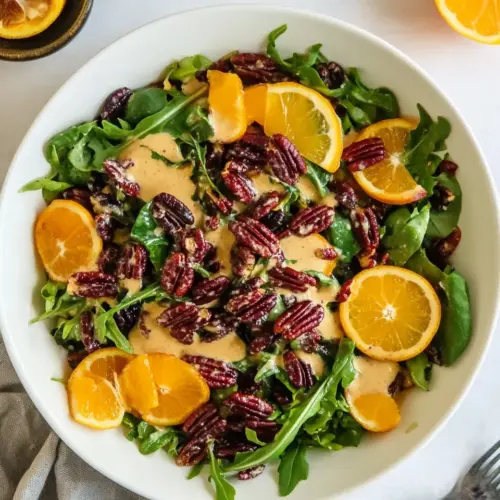
Salad with Citrus Vinaigrette and Sugared Pecans
Salad with Citrus Vinaigrette and Sugared Pecans is a bright crunchy salad with juicy orange sections and a silky citrus dressing. The sugared pecans add warm, toasted sweetness and a hint of spice, creating a satisfying contrast. It is an easy weeknight or entertaining salad that feels elevated yet simple to make, perfect for spring gatherings and quick lunches.
Equipment
- nonstick skillet
- Blender
- Large Bowl
- Wax paper
Ingredients
- 1/4 cup chopped pecans Provide a crunchy, buttery texture and nutty flavor to the salad while also taking sugar and spices during a quick toasting and coating process to create sugared pecans; add them just before serving to maintain crispness and contrast with tender greens and juicy citrus segments.
- 2 teaspoons granulated white sugar Add a bright, clean sweetness that helps caramelize the pecans when heated and balances the acidity of citrus juices in the vinaigrette; dissolve into warm nuts or whisk into dressing until fully integrated for smooth sweetness.
- 1/8 teaspoon cayenne pepper Deliver a sharp, warming heat in a very small amount to enhance the overall flavor complexity of the dressing and sugared nuts without overpowering; sprinkle sparingly and adjust to taste to provide subtle background spice.
- 1/2 cup freshly squeezed orange juice Contribute a sweet, fragrant citrus base that brightens the vinaigrette and pairs naturally with grapefruit and lemon; use freshly squeezed juice for the best aromatic oils and vibrant flavor in the dressing.
- 1/3 cup fresh grapefruit juice Bring a pleasantly tart and slightly bitter citrus note that complements the orange and sharpens the overall vinaigrette profile; freshly squeezed grapefruit juice adds depth and a refreshing contrast to sweet elements.
- 2 tablespoons freshly squeezed lemon juice Provide a zesty acidic lift that balances the sweetness from sugar and honey while preserving the salad's bright character; freshly squeezed lemon juice helps emulsify the vinaigrette and brighten flavors.
- 1 tablespoon extra-virgin olive oil Supply a smooth, fruity mouthfeel and healthy fat that helps emulsify the vinaigrette and carry flavors across the salad; use extra-virgin olive oil for its rich aroma and superior taste.
- 1 tablespoon honey Introduce a floral, complex sweetness that rounds and thickens the vinaigrette while complementing the citrus juices and sugared pecans; warm slightly to incorporate easily into the dressing if needed.
- 1 tablespoon Dijon mustard Add a tangy, savory depth that helps stabilize and emulsify the vinaigrette while contributing sharp mustard flavor and slight creaminess; whisk thoroughly to integrate with oil and citrus juices.
- 1 tablespoon low-sodium soy sauce Provide a salty-umami counterpoint that deepens the dressing's savory profile without overwhelming sweetness; low-sodium soy sauce keeps salt in check while adding complexity.
- 2 teaspoons minced peeled fresh ginger Deliver a bright, pungent zing and aromatic warmth that lifts the dressing and pairs well with citrus and soy notes; mince fresh peeled ginger finely so its flavor disperses evenly.
- 10 cups mixed salad greens Offer a large, leafy base that contributes freshness, volume, and textural contrast to the salad while absorbing the vinaigrette and showcasing the citrus and sugared pecans; mixed greens ensure varied flavors and colors.
- 2 medium naval oranges, peeled and sectioned Contribute juicy, sweet citrus segments that add bursts of flavor, color, and pleasant acidity to each bite while complementing the vinaigrette and sugared pecans; peel and section oranges carefully to remove membranes for a tender texture.
- 1/4 cup sweetened, dried cranberries (craisins) Introduce chewy, sweet-tart bursts of flavor and a contrasting texture to the salad while harmonizing with the citrus vinaigrette and sugared pecans; use sweetened dried cranberries for color and concentrated berry notes.
Instructions
- Heat a nonstick skillet coated with cooking spray over medium-low heat. Add the pecans and cook for 6 minutes, stirring until lightly toasted. Sprinkle with sugar and red pepper and cook an additional minute. Remove from heat and cool on wax paper or a cutting board.: Warmth from the skillet will coax the oils in the pecans to bloom, releasing a toasty aroma that signals they are nearing readiness. You'll hear a faint gentle sizzle when the nuts hit the pan, and their surface will turn a shade deeper and shimmer slightly. This step matters because dry toasting concentrates nutty flavors and prevents a raw taste. A common mistake is using too high heat which can scorch the pecans and create a burnt aftertaste, so keep the temperature steady and watch closely.
- In a blender, combine all vinaigrette ingredients and process until smooth. Pour into a bowl; cover and chill. (Makes 1 1/3 cups and will keep in an airtight container in the refrigerator for one week).: As you stir, note the deepening brown edges and the intensified nutty scent; the pecans should feel warm and slightly crisp to the touch. Stirring ensures even color development and prevents hot spots. This technique gives an evenly toasted texture which is essential for the contrast in the final salad. Avoid walking away during toasting, because nuts can go from perfect to burnt very quickly.
- In a large bowl, combine the greens, 3/4 cup of citrus vinaigrette, and orange sections. Toss well.: When the sugar hits the warm pecans it will begin to melt and coat their surface in a shiny glaze while the cayenne adds a subtle warmth you can almost sense in the nose. That quick extra minute caramelizes the sugar without making the nuts sticky or clumpy. The result is a glossy, sweet exterior that snaps when you bite it. Overcooking here will harden the sugar glaze and make the pecans overly brittle, so remove them promptly.
- To serve, place 1 cup of greens mixture on each of 8 plates. Top with 1 1/2 teaspoons pecans and 1 1/2 teaspoons cranberries. Serve immediately.: Cooling lets the sugar set and the pecans firm up into crisp, separate pieces. You'll notice the glaze harden and the nuts become crisp rather than chewy. Cooling also prevents residual heat from making the vinaigrette warm if you mix them too soon. A pitfall is storing them while still warm which creates condensation and softens the coating, so let them reach room temperature before handling.
- In a blender, combine all vinaigrette ingredients and process until smooth: As the blender runs, the citrus juices, honey , Dijon mustard , soy sauce , and olive oil will emulsify into a glossy, fragrant dressing with bright citrus perfume. The texture should be silky and pourable, with no visible separation. This method ensures full incorporation and a balanced mouthfeel across the salad. If the dressing separates later, it's often due to cold ingredients, so bring components to cool room temperature before blending for best stability.
- Pour into a bowl cover and chill: Chilling mellows the raw brightness of citrus and allows flavors to knit together, producing a more rounded profile on the tongue. The vinaigrette will thicken slightly as it cools and the aromas will settle into a more cohesive scent. This resting step also makes the dressing easier to store if you prepare it ahead. Common trouble is over chilling which can make the oil solidify; if that happens, give it a quick whisk at room temperature to restore texture.
- In a large bowl combine the greens 3/4 cup of citrus vinaigrette and orange sections: When you toss the mixed salad greens with the vinaigrette and orange sections , you should see the leaves glisten and hear the soft rustle as they move. The citrus binds to the leaves, imparting a lively sheen and scent without making them soggy. This technique ensures even coating so every bite has flavor. Adding too much dressing at once is a common mistake that can weigh down the greens; start with the specified amount and add more only if needed.
- Toss well: Tossing lifts the dressing into the canopy of leaves and evenly distributes the fruit, creating a balanced bite in each forkful. Look for visual uniformity, with no pools of dressing at the bottom of the bowl. A gentle toss keeps the leaves intact while mixing the ingredients; vigorous shaking can bruise delicate greens. If leaves appear wilted after tossing, it usually means they were overdressed or lower quality, so handle them gently.
- To serve place 1 cup of greens mixture on each of 8 plates: Portioning ensures consistent presentation and helps the salad maintain structure on the plate. You should see a colorful nest of greens with orange sections peeking through, which creates immediate visual appeal. Serving in even amounts also helps guests enjoy the intended balance of flavors. A mistake some people make is piling too much on each plate which masks the delicate contrasts between ingredients.
- Top with 1 1/2 teaspoons pecans and 1 1/2 teaspoons cranberries: The final touch of sugared pecans and sweetened dried cranberries introduces crunch and chewy sweetness that completes the flavor story. When placed on top, they remain texturally distinct rather than sinking into the greens. This finishing step preserves the contrast and keeps the salad dynamic. Avoid pre mixing these toppings into the entire bowl far in advance, as moisture can soften them; add just before serving.
- Serve immediately: Freshness is everything, so serve the salad right away to enjoy crisp leaves, juicy orange segments, and crunchy pecans at their best. The immediate contrast of temperatures and textures gives the dish its lively character. Waiting too long will let the dressing and fruit soften the greens and diminish the crunch of the pecans, which is the most common reason salads lose their impact.
Notes
- Use fresh juices Freshly squeezed citrus will always taste brighter and more aromatic than bottled alternatives, which can contain preservatives that mute flavor; I squeeze the oranges and grapefruit just before blending the dressing for the best perfume and acidity.
- Toast nuts carefully Keep your skillet at medium low and stir constantly to avoid hotspots that burn the pecans; if you notice a burnt smell, discard and start again because burnt nuts will make the whole salad bitter.
- Adjust sweetness to taste If your citrus is especially tart, increase the honey by a small amount and taste as you go; balancing is easier with small increments so you do not oversweeten the vinaigrette.
- Chill the dressing briefly A short rest in the refrigerator helps flavors meld and gives a smoother mouthfeel, but avoid over chilling which can thicken the oil; if it firms up, bring it to room temperature and whisk briefly.
- Keep toppings separate Add the sugared pecans and cranberries at the last minute to preserve crunch and chew; if you mix them into the bowl too early they can absorb moisture and lose their texture.