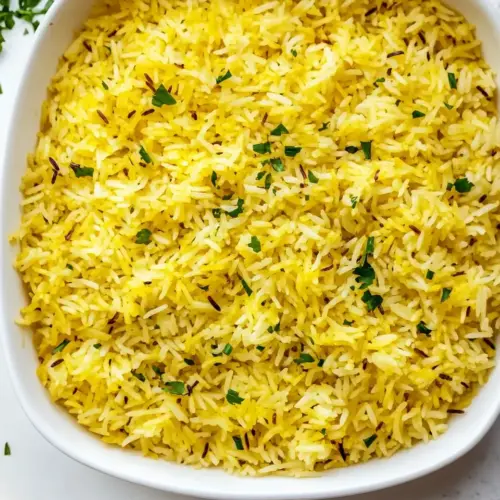
Saffron Rice
Saffron Rice is a fragrant, golden side that feels luxurious yet easy to make. The rice steeps in saffron infused broth for a floral aroma and tender, separate grains, making it an ideal easy weeknight dinner or special occasion side. It’s fast to prepare and delivers an elegant result worth making for family meals and gatherings.
Equipment
- Large Pot
- Fork
Ingredients
- 1 tablespoon vegetable oil Heat gently to provide a medium for sautéing aromatics and to help toast the rice before simmering; contributes a neutral fat that prevents sticking and adds subtle mouthfeel to the finished dish.
- 1/2 yellow onion diced Sauté until translucent to add sweetness and foundational savory flavor; supports aromatic layering and softens to integrate with the rice during cooking.
- 2 cloves garlic finely minced Crush and cook briefly to release pungent, aromatic oils; enhances overall savory depth and brightens the rice with a gentle garlic note.
- 1 cinnamon stick Simmer whole to impart warm, woody, and slightly sweet spice notes; infuses the cooking liquid with complexity without overwhelming the dish.
- 1/2 teaspoon cumin seeds Toast lightly to release nutty, warm flavors and a subtle peppery aroma; punctuates the rice with an earthy, aromatic background.
- 1/4 teaspoon ground turmeric Add sparingly to provide warm, slightly bitter color and gentle earthy flavor; contributes to the golden hue traditionally associated with saffron rice.
- 1 1/2 cups dry basmati rice Rinse and toast or sauté briefly to separate grains and encourage fluffy texture; serves as the primary carbohydrate and structure of the dish.
- 3 cups low-sodium chicken broth or vegetable broth Pour in as the cooking medium to hydrate and flavor the rice; choosing low-sodium varieties allows better control of the final salt level while contributing savory depth.
- 1/2 teaspoon kosher salt Season into the cooking liquid to enhance and balance flavors; ensures the rice is properly salted for a well-rounded taste profile.
- 1/4 teaspoon saffron threads Steep in warm liquid to release floral, honeyed, and slightly haylike aroma and color; provides the signature saffron fragrance and subtle golden tint to the rice.
Instructions
- In a large pot, heat the vegetable oil over medium heat and sauté the onions for 4 minutes.: You will hear a gentle sizzle as the vegetable oil warms, and the chopped onion will soften and lose its raw bite, turning translucent and releasing a sweet fragrance. This step builds a mellow savory foundation that lets the spices sing later, and it's important not to rush it. If the heat is too high the edges will brown too quickly, creating bitter notes, so keep the flame steady. Watch for a shimmer on the oil and softening edges on the onion , and stir occasionally to prevent sticking.
- Add in the garlic, cinnamon, cumin and turmeric and cook for 30 seconds or until aromatic.: As you add the minced garlic and spices, you should smell a quick burst of toasty, warm notes, almost like the kitchen is waking up. The sizzling sound will change to a brighter, quicker crackle for a moment. This brief toast releases essential oils from the cumin seeds and the floral perfume from the turmeric , enhancing depth. Be careful, because garlic can brown fast and turn bitter; 30 seconds is enough for the spices to bloom without burning. Stir constantly during this short window so nothing sticks to the bottom.
- Add the rice and sauté for 3-5 minutes or until it turns to an opaque white color, stirring occasionally.: When you add the drained rice , the grains will start to clatter and release a faint nutty smell as they toast in the pan. Over the next few minutes they will change from translucent to opaque and become slightly firmer to the bite. This toasting step helps separate the grains later and adds a gentle nuttiness that complements the saffron. Avoid stirring too vigorously, which can break the grains, and keep the heat moderate so the rice toasts evenly rather than browning.
- Pour the broth into the saucepan, add the salt and saffron, then stir to combine.: When you pour in the warm broth , listen for a reassuring hiss and watch steam rise as the liquid meets the hot pan. The saffron threads will begin releasing color and aroma into the broth, tinting it a pale gold. Stir gently to distribute the saffron and salt evenly among the grains. Using warm rather than cold broth keeps the cooking temperature steady to prevent shocking the rice. A common mistake is adding cold liquid which can slow cooking and make grains gummy.
- Bring the mixture to a boil, then reduce the heat to low and cover the pot with a tight fitting lid.: As the liquid comes to a boil the surface will show rolling bubbles and the aroma will intensify. Immediately lower to low heat to reach a gentle simmer and place a tight fitting lid on the pot to trap steam. The lid is crucial because it creates an even cooking environment, steaming the grains from above as well as below. If the lid is loose, steam will escape and the rice may take longer to cook or dry out unevenly.
- Let it cook for 20 minutes, or until the liquid has been absorbed and the rice is tender.: During this quiet phase the rice will absorb the golden broth and swell to tender, separate grains. You might hear an occasional gentle bubble as trapped pockets of steam settle. Resist the urge to lift the lid, because checking will release steam and interrupt the gentle steam cooking. A sticky, gummy texture usually results from removing the lid too often, so use the time to prep other elements instead of peeking.
- Remove the pan from the heat and let it sit for 5 minutes with the lid on.: After removing from heat, the pot will continue to relax internally, and residual steam will finish the last bit of cooking. This resting period firms up the grains and helps them separate when you fluff. You will notice the steam soften and the scent mellow into a cohesive aroma. If you skip this step you can end up with unevenly textured rice, with some grains still tight and others overcooked.
- Fluff the rice with a fork before serving with freshly chopped cilantro if desired.: Use a fork to gently separate the grains, lifting and aerating rather than stirring vigorously. As you fluff, the texture will feel light and airy and the color will be a warm, even gold. This final motion reveals the successful separation you worked for, and it also helps any residual moisture evaporate. Avoid using a spoon that packs the rice down, which can compact the grains and lose the delicate texture you achieved.
Notes
- Use vegetable broth to make the dish vegetarian friendly, which keeps the savory base rich while allowing the saffron to be the star.
- Swap long grain rice if basmati is not available, choosing another long grain variety for similar separate texture and a neutral flavor profile.
- Double the saffron bloom by steeping the threads in a tablespoon of warm broth for ten minutes, which intensifies both color and aroma without adding heat.
- Add toasted nuts like slivered almonds or pistachios at the end for a crunchy contrast, folding them in gently after fluffing.
- Finish with fresh herbs such as chopped cilantro or parsley right before serving to introduce a bright herbal lift against the warm spices.