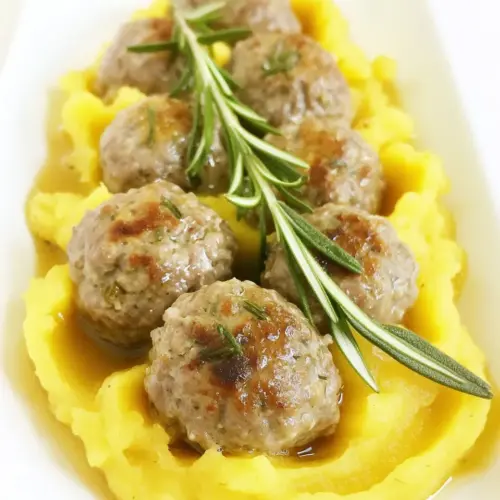
Rosemary Squash Meatballs with Squash Puree
Rosemary Squash Meatballs with Squash Puree combine tender, lean beef with creamy roasted butternut squash for a comforting, slightly sweet and savory meal. This easy weeknight dinner delivers silky puree, aromatic rosemary, and juicy meatballs, perfect for family meals or simple entertaining. Try it for a balanced, cozy dish that is surprisingly light, and you will want to make it again.
Equipment
- Oven
- Baking Sheet
- Food Processor
- Mixing Bowl
- Small Pan
Ingredients
- 2 pound beef, ground, 95% lean Provide lean protein and binding structure for meatballs; contributes savory flavor while keeping fat content low and yielding firm texture when cooked.
- 1 pound butternut squash Add sweet, nutty flavor and tender texture when roasted or pureed; supplies moisture and body for the squash puree component of the dish.
- 2 large egg Act as a cohesive binder to hold meatball mixture together; add richness and help emulsify fats for smoother texture during cooking.
- 2 teaspoons salt Enhance overall seasoning and bring out other flavors; help with preservation and seasoning balance across both meatballs and puree components.
- 2 clove garlic Introduce pungent aromatic depth and savory bite; infuse meat mixture with garlic aroma and enhance Maillard browning during cooking.
- 3/4 teaspoon rosemary, dried Provide aromatic, pine-like flavor and earthy notes; complement beef and squash while imparting a warm, herbaceous background.
- 1/4 teaspoon black pepper, ground Contribute subtle heat and depth to seasoning mix; balance sweetness of squash and richness of meat without overpowering other flavors.
- 2 pound butternut squash Deliver additional sweet and creamy squash for making a smooth, doubled-volume puree; contribute texture and reinforce squash flavor in the sauce.
- 1/4 cups sour cream, light Add tangy creaminess and slight fat to the squash puree; lighten texture and add a gentle acidity that balances sweetness.
- 1 teaspoon salt Provide a final layer of seasoning to seasoning blends or puree; ensure salt levels are correct and help amplify all other flavors.
Instructions
- Preheat the oven to 400° F.: Warm air hitting the room will feel comforting, and the oven will be hot enough to roast the butternut squash and brown the meatballs. You should sense a dry heat when you open the door, and racks should be centered so airflow is even. Preheating ensures the squash caramelizes rather than steams, which is crucial for developing deep flavor. A common mistake is not waiting for full preheat, which can lengthen roast time and change texture.
- Peel all squash, remove the seeds, cut into 1 inch cubes. Place on a baking sheet and roast for 25 minutes. Check to be sure it is really tender. Remove from oven, allow to cool. Place in food processor to puree.: The roasted cubes should glisten slightly and smell nutty, with edges showing a little golden brown. When you pierce a cube with a fork it should slide in easily, signaling tenderness. Cooling briefly prevents excess steam in the processor, which keeps the puree thick rather than watery. When pureeing, pulse until silky but stop before it becomes gluey. Overprocessing or adding hot liquid will make the texture runny, so aim for smooth but still substantial body.
- Mix together ground beef, 3/4 cup squash puree, egg, salt, garlic, rosemary, and black pepper. (If you prefer, you can use less rosemary for those who prefer milder flavors).: The bowl will fill with savory, herbed aromas as you combine the ingredients, and the pale orange of the butternut squash puree will streak through the meat. Use a gentle folding motion with your hands or a spoon so the mixture becomes cohesive without becoming dense. The puree adds moisture and tenderness, while the egg binds; seasoning distributes through the mix for balanced flavor. Avoid overworking the meat, which leads to tight, dry meatballs.
- Make into small 1 1/2" balls (approximately 1 ounce each) and bake on a baking sheet (or you can use a mini muffin pan for better shape retention).: Rolling them by hand gives you tactile feedback about density, and you should feel a slightly yielding center beneath a taut exterior. Using a mini muffin pan can help them keep a uniform shape and catch any rendered juices. Place them evenly spaced so hot air circulates and browning occurs on all sides. Packing them too tightly will prevent even cooking, and they may steam rather than roast.
- Bake for 12-14 minutes until no longer pink in the center.: Listen for a faint sizzle as the exterior firms and the interiors finish cooking. The meatballs should have a light crust and a warm center free of pink. Use a thermometer for certainty, aiming for the safe internal temperature for ground beef , or cut one open to check color and juices. Leaving them in too long will dry them out, while removing them too early risks undercooking.
- For the squash puree: mix together the remaining squash puree (should be approximately 2 cups), sour cream, and salt in a small pan. Gently heat until warm.: mix together the remaining squash puree (should be approximately 2 cups), sour cream, and salt in a small pan. Gently heat until warm. : The puree should be luxuriously smooth and emit a sweet, roasted aroma. Warm it slowly over low heat so the sour cream blends without separating, and whisk until glossy. The gentle heat helps marry flavors without breaking the dairy. Heating too fast can cause curdling, so stir frequently and keep the temperature low to medium.
- Top meatballs with sauce and enjoy!: Serve the warm meatballs over a pool of the velvety butternut squash puree, and watch the contrast of textures bring smiles. The sauce will cling to the meatballs, and the combined warmth will lift the herbs and garlic aromatics. A typical misstep is plating everything cold, which mutes flavors, so serve immediately for best results.
Notes
- Use fresh herbs: Swap dried rosemary for finely chopped fresh rosemary, using a bit more by volume to brighten aromatic intensity without overwhelming the dish.
- Adjust puree creaminess: Replace light sour cream with plain yogurt for a tangier finish, but add it off heat to prevent curdling and preserve silky texture.
- Change meat ratio: If you want richer flavor, use a slightly less lean beef, but note it will render more fat and may require draining to avoid greasy meatballs.
- Shape options: Use a mini muffin pan to keep each meatball uniform; this also helps them cook evenly and catch juices for flavor concentration.
- Make ahead: Prepare meatballs and puree a day ahead, refrigerate separately, then reheat gently in the oven and on the stove to preserve texture before serving.