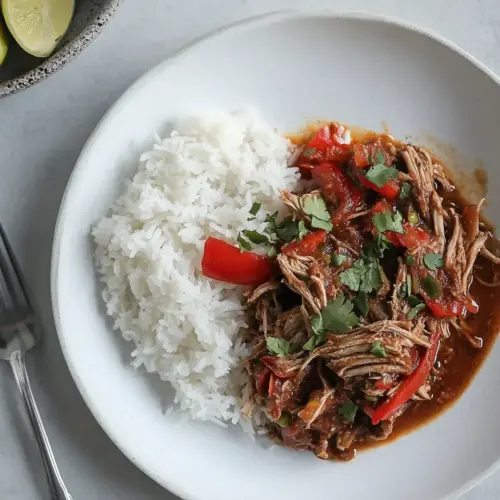
Ropa Vieja
Ropa Vieja is a tender, shredded beef dish simmered with aromatic onion, garlic, and warm spices that yields a rich, saucy texture. This easy weeknight dinner brings bright notes of lime and deep tomato savor, perfect for family meals or make ahead feasts. It reheats wonderfully and is a reliable, crowd pleasing main worth making again and again.
Equipment
- Dutch Oven
- Tongs
- Rice Cooker
Ingredients
- 2 pounds flank steak or brisket or top round, cut into 4 chunks Provide rich, meaty flavor and become tender after long cooking; used as the primary protein for shredding into the ropa vieja; cut into chunks to allow even simmering and absorption of aromatics.
- 1 large yellow onion, peeled and quartered Add savory-sweet depth and a mild sharpness when simmered; quartering exposes layers that release sugar and soften into the broth, helping to flavor the meat and cooking liquid.
- 1 large carrot, peeled and cut into 1-inch chunks Contribute a subtle sweetness and earthy body to the braising liquid; chunking helps them break down slightly and impart nutrients and natural thickening to the sauce.
- 1/2 small red or purple cabbage, quartered Offer a gentle vegetal sweetness and hold up during long simmering; quartering a small cabbage infuses the broth with mild cabbage flavor and can be removed after cooking if desired.
- 1/2 small bunch flat-leaf Italian parsley Impart fresh, herbaceous notes when added to the braising liquid; small bunch used to bouquet garni-style infuse bright green aromatics without overpowering the dish.
- 2 sprigs fresh mint Provide cool, aromatic brightness to the broth; mint sprigs lift and balance the rich, meaty flavors when used in the simmering bouquet and are usually removed before serving.
- 4 garlic cloves, peeled and crushed Give pungent, aromatic depth and a savory backbone to the sauce; crushing releases oils that perfume the cooking liquid and meld with the meat.
- 1 teaspoon kosher salt Season and enhance savory flavors during cooking; kosher salt helps extract meat juices and balance the overall taste of the braise.
- 1 teaspoon freshly ground pepper Add a rounded heat and aromatic bite to the dish; freshly ground pepper brightens flavors and gives subtle warmth to the cooking liquid.
- 1 teaspoon ground allspice Introduce warm, slightly sweet and peppery undertones; ground allspice complements the beef and traditional Caribbean flavors when added to the braise.
- 1/4 teaspoon ground cloves Contribute a concentrated warm, slightly sweet-bitter aroma in small amounts; ground cloves add complexity and traditional spice character to the stew.
- 2 dried bay leaves Infuse a subtle herbal bitterness and depth; bay leaves added to the braising liquid help round out and harmonize the overall flavor profile.
- 1/4 cup olive oil Provide a silky cooking fat to sauté vegetables and build the sauce; olive oil helps brown aromatics and creates a flavorful base for the tomatoes and peppers.
- 1 large yellow onion, thinly sliced Add soft sweetness and body when thinly sliced and sautéed; the second onion layer builds caramelized flavor that melds into the sauce.
- 2 red bell peppers, stemmed, cored, seeded, and thinly sliced Bring bright, sweet, and smoky notes when sliced and cooked; red bell peppers contribute color, texture, and classic ropa vieja flavor when sautéed until softened.
- 4 garlic cloves, peeled Boost savory aroma and integrate with the sautéed vegetables; whole peeled garlic cloves gently release flavor when cooked and then blend into the sauce.
- 1 teaspoon kosher salt Season the pepper-and-onion mixture and the sauce; kosher salt ensures the cooked vegetables and tomato base are properly seasoned.
- 1/2 teaspoon freshly ground pepper Provide a mild heat and aromatic lift for the sauce; freshly ground pepper in a smaller amount than the broth seasoning balances the final flavor.
- 1/2 teaspoon ground allspice Echo the warm spice theme in the sauce with a subtle sweet-spicy note; ground allspice ties the braise and sautéed vegetables together.
- 1 pinch ground cloves Add a tiny concentrated pungency and depth in the sauce; a pinch of ground cloves gives a nuanced warmth without dominating the other spices.
- 1 (15-ounce) can crushed tomatoes Create a rich, tangy tomato base that thickens and anchors the sauce; crushed tomatoes provide body, acidity, and a cohesive medium for the beef and peppers.
- Juice from 1 lime Introduce bright acidity to balance richness and lift flavors; fresh lime juice cuts through fat and adds a lively finish to the dish.
- 1 dried bay leaf Reinforce herbal complexity and provide subtle background aroma; an extra bay leaf in the sauce deepens the layered herbal notes during simmering.
- Fresh flat-leaf parsley, finely chopped, for garnish Finish with fresh, crisp herbal brightness when sprinkled as garnish; finely chopped parsley adds color, a fresh aroma, and a clean contrast to the rich stew.
Instructions
- Place the ingredients for the beef in a Dutch oven with 6 cups of water. Bring to a boil then reduce the heat to maintain a low simmer and cook, covered, until the beef is tender, 1 1/2 to 2 hours. If you’re using top round, it’ll take about 2 1/2 hours to be tender.: When the pot first heats, you will notice a clean, steamy scent as the water warms, and faint vegetal notes from the onion , carrot , and cabbage . This initial stage is about extracting flavor into the liquid, creating a fragrant broth that will infuse the beef . Listen for the gentle rise of small bubbles as the water approaches a boil, and be careful not to rush to a rolling boil which can make meats tough. A common mistake here is using too high a heat, which agitates the proteins and tightens the meat. Keep the heat low to encourage collagen break down so the beef becomes tender and shreddable over time.
- Remove the pot from the heat and allow the beef to cool in the broth, so it will stay moist and juicy. Reserve about 3/4 cups of broth. Drain the beef and transfer to a cutting board. Using two forks, shred the beef apart. Set the shredded beef aside.: As the pot simmers, the aroma grows richer and the broth will change color slightly, becoming deeper and more robust. Steam should gently escape from the lid, not roar, and the surface will have a few occasional bubbles. The slow simmer is essential to convert collagen into gelatin, which gives the broth body and the meat a silky mouthfeel. Avoid peeking too often, which lets heat escape and prolongs cooking. If you are using leaner top round, expect closer to 2 1/2 hours for the same tenderness. Watch for the meat to pull at the edges when poked with a fork as your cue it is nearly ready.
- Heat the olive oil in a Dutch oven (you can use the one you used to cook the beef, no need to rinse it out either). Add the onion and red bell pepper and cook until the onion is soft and translucent, about 2 to 3 minutes. Mix in the minced garlic, salt and spices.: As the pot cools slightly, the residual heat continues to tenderize the meat while locking moisture inside. The broth will smell concentrated and savory, carrying garlicky, herbal notes. Reserving about 3/4 cups of broth is important since it becomes the bridge between the shredded beef and the tomato sauce, adding body and seasoning. A typical error is draining away all the liquid, which loses that concentrated flavor and leaves the meat drier. Letting the meat cool in the liquid also makes shredding easier and cleaner.
- Add the reserved broth, crushed tomato, lime juice, and bay leaf and return to a simmer. Stir in the shredded beef, reduce the heat to low, and cook, covered, 15 to 20 minutes.: Once cooled enough to handle, you will notice the surface of the beef slightly tacky from the gelatin rich broth. Transferring to a cutting board gives you a stable surface for shredding. Use the natural grain as a guide so the shreds come out long and tender. One misstep here is shredding while the meat is too hot, which can cause splattering or uneven texture. Let it cool to a comfortable temperature for a more controlled shred.
- Give it a taste and adjust the salt according to your liking. Serve over rice and top with a sprinkling of parsley.: The sound is quiet as the forks pull the meat, and the strands will separate easily when the collagen has transformed properly. The goal is uniform thin strands, since they will soak up sauce consistently. If you find large chunks remaining, give the meat a few extra minutes in the warm reserved broth to relax. A common mistake is shredding across the grain which yields short, chewy pieces; always pull with the grain for long, tender strands.
- Set the shredded beef aside: Once shredded, the meat will glisten faintly with gelatin, and it is wise to let it rest briefly so juices redistribute. This pause lets the shredded beef absorb a little of the reserved seasoning and prevents the strands from becoming gummy when added to the hot sauce. Resist the urge to immediately submerge it into boiling sauce, which can toughen the edges. Keeping it aside also helps you prepare the aromatics for the next stage without overcooking the meat.
- Heat the olive oil in a Dutch oven: When the oil warms, it will shimmer slightly and release a faint fruity aroma if it is good quality olive oil . This is the stage where you create a caramelized base, and the oil needs to be hot enough to sizzle the vegetables without burning them. If the oil smokes, lower the heat to avoid bitterness. A frequent slip is not heating the oil enough, which leads to steaming the vegetables rather than browning them. Proper heat gives you savory, slightly sweet caramelization that is essential to the final sauce.
- Add the onion and red bell pepper and cook until the onion is soft and translucent, about 2 to 3 minutes: As the vegetables hit the hot oil they will sizzle and begin to soften, releasing sweet, vegetal scents. You want the onion to turn translucent and the red bell pepper to become pliant but still retain structure. This brief sauté pulls out sugars that complement the tomato base. Avoid overcooking to the point of deep browning here, which changes the flavor profile. Stir occasionally so the vegetables cook evenly and the aroma becomes rich without burning.
- Mix in the minced garlic, salt and spices: Adding the garlic and spices now releases a bright, spicy perfume as essential oils bloom in the warm oil. The salt helps the aromatics soften and the ground allspice and tiny bit of cloves merge with the vegetables to form a fragrant, layered base. Be careful not to let the garlic brown too quickly, which brings bitterness. Stir for just long enough to smell the garlic become sweet and nutty, which signals readiness for the next liquid additions.
- Add the reserved broth, crushed tomato, lime juice, and bay leaf and return to a simmer: When you pour in the reserved broth, the mixture will hiss gently and steam, and the crushed tomatoes will deepen the color to a rich red. The fresh lime juice offers an immediate brightness that balances the sauce, and the bay leaf layers in subtle herbal notes. Let the pot come back to a gentle simmer; vigorous boiling will separate the sauce and mute the fresh brightness. A common error here is adding too much broth which thins the sauce, so keep the balance to allow it to cling to the beef .
- Stir in the shredded beef, reduce the heat to low, and cook, covered, 15 to 20 minutes: As the shredded beef meets the sauce, you will see strands take on a glossy coating and the aroma becomes deeply savory with citrus highlights. This short finish is about marrying flavors so each strand absorbs the tomato, spice, and broth. Keep the heat low so the sauce thickens slightly without reducing to dryness. Overcooking in this step can make the meat fall apart excessively or dry out, so watch for the strands to be evenly coated and heated through before serving.
- Give it a taste and adjust the salt according to your liking: Finally, tasting reveals the true balance, with savory depth, a touch of spice, and citrus lift. Adjusting salt at the end ensures the flavors pop without being flat or overpowering. If it tastes flat, a small pinch of additional salt can transform the dish. One mistake is over salting early in cooking then being unable to correct concentrated flavors after reduction. Taste and tweak gently.
- Serve over rice and top with a sprinkling of parsley: The finished plate should show glossy strands of beef nestled over fluffy rice, with bright green flecks of fresh parsley on top. The contrast of textures and the mix of warm, rich sauce with fresh herbs is what makes each bite satisfying. Don't rush plating, let the dish rest a minute so flavors settle, and spoon some of the pan juices over the rice to complete the experience. A common oversight is serving immediately from a boiling pan; a minute of rest gives a neater presentation and a more integrated flavor.
Notes
- Choose the right cut: Picking flank steak, brisket, or top round affects richness and cook time, choose brisket for more fat and deeper flavor, flank for a leaner finish.
- Low and slow: Maintain a gentle simmer to convert collagen into gelatin, which results in silkier shredded beef rather than chewy pieces.
- Reserve broth: Save about three quarters of a cup of the braising liquid to add depth when you finish the sauce, it prevents the crushed tomatoes from making the dish too acidic or thin.
- Layer aromatics: Use whole aromatics in the braise and fresh sliced vegetables in the sauce to build flavor in stages, giving the dish complexity from simple ingredients.
- Finish gently: After combining shredded beef with the sauce, keep it on low covered heat to allow flavors to marry without over reducing the liquid.
- Make ahead advantage: The dish improves after a day in the fridge, which lets the flavors meld; reheat gently to preserve texture.