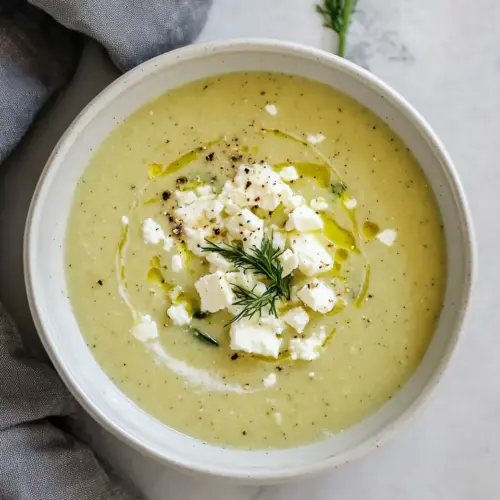
Roasted Zucchini Soup with Feta
Roasted Zucchini Soup with Feta is a creamy, herb forward summer soup featuring caramelized zucchini, sweet roasted garlic and tangy feta. This easy weeknight dinner or chilled lunch is silky, bright, and comforting, making it ideal for quick entertaining or light meals. Try it for a simple yet impressive bowl that highlights peak season produce.
Equipment
- Blender
Ingredients
- 4 cups zucchini, cut in large cubes, about 3/4 inch thick (20 ounces total) Provide firm, mildly sweet squash flesh that becomes tender when roasted and pureed; contributes bulk and a fresh, vegetal base to the soup while absorbing flavors from herbs and oil.
- 1 large white onion, cut into wedges Add pungent, savory sweetness and aromatic depth when roasted; softens into translucent layers that enhance the soup's overall flavor profile and mouthfeel.
- 1 large sprig fresh thyme Infuse subtle, earthy, and slightly minty notes during roasting and simmering; hold the sprig whole for easy removal after it imparts delicate herbal complexity.
- 1 large sprig fresh oregano Contribute warm, peppery, and slightly citrusy undertones; use the sprig while roasting or simmering to lend a complementary herbaceous character to the broth.
- Kosher salt, and freshly cracked black pepper to taste Season and balance flavors by enhancing natural sweetness and cutting through richness; adjust to taste to bring out the best in both roasted vegetables and feta.
- 1 whole garlic head, cut in half lengthwise Deliver mellow, roasted garlic sweetness and depth when halved and roasted alongside vegetables; crush or incorporate into the puree to create a rich, savory backbone.
- 16 -ounce feta block, plus 1 more ounce for garnish Provide tangy, salty creaminess that melts smoothly into the soup; crumble or blend the block to add body, briny flavor, and a luscious, slightly grainy texture.
- 3 tablespoons extra virgin olive oil, divided Coat vegetables for even roasting, help conduct heat, and add fruity, peppery richness; reserve some for finishing to enhance aroma and mouthfeel.
- 4 cups chicken bone broth, or vegetable broth to keep it vegetarian Create a savory, umami-rich liquid base that dilutes and carries flavors; choose chicken for a deeper savory note or vegetable broth to maintain vegetarian status.
- fresh dill, for topping Offer a bright, anise-like freshness for finishing; sprinkle chopped dill over the finished soup to add color, fragrance, and a clean herbal contrast.
- Extra virgin olive oil, optional for drizzling Provide optional glossy finish and extra fruity aroma when drizzled sparingly over the served soup; enhances presentation and adds a final layer of richness.
Instructions
- Preheat oven to 400°F.: The warm oven scent that fills the kitchen is the first sign the recipe is underway, and a steady 400°F encourages even caramelization without drying the vegetables out. You should feel a gentle heat from the oven when you open it, and the rack should be in the center for balanced roasting. A common mistake is starting with an oven that is not fully up to temperature, which can lead to longer cooking and less caramelization. If your oven runs hot or cool, use an oven thermometer to confirm accuracy.
- Combine zucchini, onion, oregano and thyme in a large baking dish or sheet pan then toss with 2 1/2 tablespoons olive oil, 1/2 teaspoon salt & fresh cracked black pepper. Nestle each half of the garlic head into the vegetables, cut side down.: As you toss the vegetables, you should notice a light sheen from the olive oil and herbs clinging to each piece, which helps with browning. The aroma of fresh oregano and thyme will become more pronounced as the oil warms. Nestling the garlic cut side down prevents it from burning while letting it sweeten inside its papery shell. Avoid overcrowding the pan, since crowded vegetables will steam instead of roast, which reduces caramelization.
- Create a hole in the center and place feta block, drizzle with remaining olive oil. Roast until zucchini is tender and feta is caramelized, about 30-35 minutes.: During roasting you will see the edges of the zucchini and onion turn golden and the block of feta take on a slightly browned, blistered surface. The kitchen will fill with a savory, slightly sweet aroma and you may hear gentle sizzling as moisture evaporates. That caramelization adds complexity and depth to the soup. If the top is browning too quickly, loosely tent with foil to prevent burning while the interiors finish cooking. Check for tenderness with a fork, and remove when the zucchini feels soft through to the center.
- Remove herbs and squeeze out roasted garlic. Transfer vegetables and cheese to the blender; add broth (use less for a thicker soup) and blend until smooth. Warm on the stove when ready to serve if you want it hot or eat chilled. Ladle soup into bowls; garnish with extra feta and fresh dill, plus a drizzle of olive oil, if desired.: After the pan cools just enough to handle, pull out the thyme and oregano sprigs to avoid woody stems in the blender. Squeezing the roasted garlic releases a sweet, spreadable paste that dissolves into the soup, providing mellow umami. The roasted garlic should be soft and slightly caramel in color; if it still resists, give it a couple more minutes. Watch for any charcoal black bits which indicate over-roasting, and discard those cloves if present.
- Transfer vegetables and cheese to the blender; add broth (use less for a thicker soup) and blend until smooth.: When you pulse the blender, you will see a glossy, homogeneous mixture form, and the aroma will become intensely inviting. The texture should be smooth and slightly thickened by the roasted solids, with the feta melted into a creamy emulsion. Blending in batches ensures even processing, and you should scrape down the sides to incorporate any bits clinging to the container. A common error is adding too much broth at once, which can thin the soup more than intended; start with less and add until you reach your desired consistency.
- Warm on the stove when ready to serve if you want it hot or eat chilled.: Gently warming the blended soup over medium low heat lets the flavors knit without risking separation. You may notice a gentle steam and a soft bubbling at the edges as it warms, which is the cue to stir frequently to prevent scorching. If serving chilled, allow the soup to cool to room temperature before refrigerating in an airtight container, which preserves the bright herbal notes. Avoid boiling the soup vigorously, as that can dull fresh flavors and sometimes make the texture grainy.
- Ladle soup into bowls; garnish with extra feta and fresh dill, plus a drizzle of olive oil, if desired.: The final presentation should show a smooth surface, small crumbles of salty feta , and flecks of bright dill . The drizzle of olive oil adds a glossy finish and a fragrant top note. Serve immediately for the best contrast between warm soup and cool herb garnish. A common serving mistake is overgarnishing, which can overwhelm the delicate roasted base; a light sprinkle is usually enough.
Notes
- Swap the broth carefully: If you use vegetable broth to keep the soup vegetarian, choose a well seasoned one since the broth contributes a lot to the final savory profile. Water will work in a pinch, but you may need to add more salt and a splash of lemon to brighten the flavor.
- Control soup thickness: Start with less than the listed 4 cups of broth when blending, about 3 cups, then add more to reach a sippable or spoonable texture. Over thinning is reversible by simmering to reduce, but that requires extra time.
- Caramelizing the feta: Drizzling the leftover oil over the feta helps it develop a golden surface rather than drying out. If your feta is too crumbly, nestle it more securely in the pan so it melts into the vegetables as it roasts.
- Roasting garlic safely: Place the garlic cut side down to prevent the tips from charring while the cloves inside soften. If one clove is stubbornly undercooked, remove it from the bulb and give it additional time on the pan edges where it browns faster.
- Storage and reheating: Store cooled soup in an airtight container in the refrigerator for up to 3 days. Rewarm gently on the stove over low heat, stirring frequently to preserve the creamy texture and avoid scorching at the bottom.
- Make ahead tips: Roast the vegetables and feta ahead of time, then refrigerate until ready to blend. This shortens dinner prep and helps the flavors meld, but blend just before serving for the freshest texture.