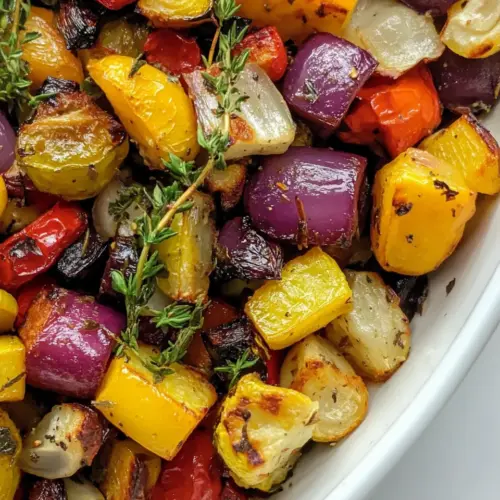
Roasted Vegetables
Roasted Vegetables are an easy weeknight dinner option that delivers crispy edges and tender centers, showcasing naturally sweet, savory, and nutty flavors. This aromatic tray bake brings together potatoes, peppers, onion, Brussels sprouts, asparagus, and squash with garlic and olive oil for a simple, healthy side or centerpiece. Make it for fall gatherings or casual meals, and enjoy a reliable, flavorful dish worth repeating.
Equipment
- Baking Sheet
Ingredients
- 2 potatoes I used Yukon Gold, but any kind will work! Cube and roast to develop a creamy interior and crisp edges; Yukon Golds hold shape well and provide a buttery flavor that balances the mix. Parboil briefly if large to ensure even roasting with other vegetables. Season while hot to help the surface absorb flavors.
- 2 red peppers Char and slice to add sweet, smoky notes and tender texture; red peppers caramelize beautifully under high heat and contribute vibrant color. Remove seeds and membranes so pieces roast evenly without excess moisture. Toss with oil to encourage browning.
- 1 red onion Slice into wedges to bring a sweet, slightly pungent flavor that softens and caramelizes when roasted. Red onion adds moisture and depth, helping to create a savory-sweet contrast with starchy potatoes. Separate layers slightly to allow the heat to reach inner surfaces.
- 1 cup halved Brussels sprouts Halve to expose cut surfaces for caramelization and to ensure even cooking; Brussels sprouts develop sweet, nutty flavors and crispy outer leaves when roasted. Small sprouts cook quickly so space them on the pan to avoid steaming. Toss cut-side down for maximum browning.
- 3 spears asparagus Trim and leave whole or cut on the bias for quick roasting; asparagus provides a tender, grassy element and bright green color to the medley. Add during the last portion of roasting time to avoid overcooking and preserve texture. Drizzle with oil to prevent drying out.
- 1 cup chopped squash Cube or slice to contribute a sweet, creamy component that roasts to golden-brown edges; squash adds moisture and a pleasant contrast to firmer vegetables. Choose uniform pieces so they finish cooking with the rest. Season lightly to complement natural sweetness.
- 4 cloves garlic minced Mince finely to disperse aromatic, savory intensity throughout the dish; garlic becomes mellow and sweet when roasted, infusing the vegetables. Mix with oil to prevent burning and ensure even distribution of flavor. Add early enough to flavor the oil but monitor to avoid scorching.
- 6 tablespoons olive oil Drizzle to coat vegetables evenly and promote browning and crispness; olive oil helps heat transfer and carries aromatic seasonings across the pan. Use enough to lightly coat surfaces without pooling to allow edges to caramelize. Choose extra-virgin for richer flavor or regular for neutral taste.
- Kosher salt and freshly ground black pepper to taste Season liberally to enhance and balance the roasted flavors; kosher salt brings out natural sweetness while freshly ground black pepper adds warm, piquant notes. Adjust to taste after roasting for best control over seasoning. Sprinkle evenly to avoid under- or over-salted bites.
Instructions
- Cut the veggies into medium-sized pieces. You want bite-sized pieces of everything. Preheat oven to 400°F.: The air should smell fresh and slightly metallic when you first start, then it will fill with warm, sweet notes as the oven comes to temperature, signaling preparation is complete. Cutting vegetables to a similar size ensures even cooking, which is why I take an extra minute to eyeball pieces and adjust as needed. When chopping potatoes , aim for uniform chunks so they become tender at the same moment the peppers and squash reach their ideal doneness. Avoid cutting some pieces too small, because tiny bits will overbrown before the denser items finish. A common misstep here is rushing the chopping and ending up with mismatched sizes, which results in some pieces being mushy while others remain underdone.
- Spray a baking sheet with nonstick spray. Arrange the veggies and garlic on the baking tray. Some overlap is fine, but you want the vegetables to all touch the baking sheet if possible.: When you spread the pieces out, listen for the faint patter of pieces settling and watch for the vegetables to form a single layer. Direct contact with the sheet promotes browning, so I favor minimal overlap even if the tray looks crowded; the trade off is better caramelization. The garlic should be distributed across the tray so it infuses without burning. If you pile items, steam will build underneath and prevent the roasted, crisp edges you want. A mistake I see often is overcrowding the pan, which leads to soggy results rather than the crisp, golden surfaces we are aiming for.
- Drizzle with olive oil and sprinkle with salt and pepper to taste. Bake for 30 minutes, then flip the veggies and bake for another 20-25 minutes.: As you pour the olive oil , notice how it glistens and clings to the vegetable surfaces, highlighting contours and promising crisping at the edges. Salt draws out moisture and amplifies natural sweetness, while freshly ground black pepper adds a subtle, aromatic sting. I usually lift the tray and toss with my hands or a spatula to make sure every piece is lightly coated, which helps create even browning. Be careful not to over oil, because excess will pool on the sheet and fry rather than roast. A typical error is under seasoning, which leaves the finished vegetables flat; taste and be confident when seasoning going in.
- Bake for 30 minutes, then flip the veggies and bake for another 20-25 minutes.: In the oven, the sound is faint, but you will notice a deepening aroma after about 20 to 25 minutes, a hint that sugars are caramelizing. When you open the oven to flip, the edges should look blistered and golden, and the aroma should be toasty with a gentle sweetness. Flipping encourages even browning on all sides, so use a spatula to turn pieces gently to avoid breaking softer items. Continue roasting until vegetables show golden crusts and tender centers; for dense pieces like potatoes , a fork should glide in without resistance. A common mistake is leaving them too long without checking after the flip, which can result in overly dark edges or dried interiors. Remove at the right moment so textures remain contrasting and vibrant.
Notes
- Use parchment paper to line the baking sheet for easier cleanup and to prevent sticking, which helps maintain intact roasted pieces when you flip the tray.
- Toss in a bowl first so the olive oil, minced garlic, salt, and pepper coat every piece evenly, increasing the likelihood of uniform browning on the sheet.
- Add asparagus later because it cooks faster than root vegetables, which prevents limp or overdone spears while denser items finish roasting.
- Cut vegetables uniformly to promote even texture and timing, which avoids a mix of undercooked and overly soft pieces on the same tray.
- Gently flip halfway to expose multiple sides to the hot sheet for the most even caramelization, watching carefully to avoid breaking softer pieces like squash.