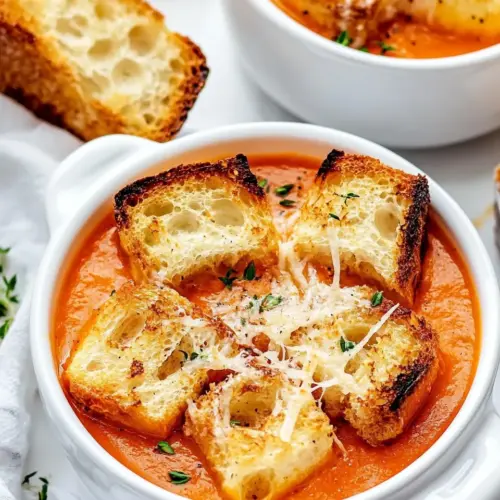
Roasted Tomato Soup
Roasted Tomato Soup delivers a creamy, smoky bowl of warmth with caramelized tomato depth and fresh herb brightness. This easy weeknight dinner feels comforting and elegant, with crunchy toasted baguette for dipping and a silky body from butter and a touch of flour. Perfect for chilly evenings, it is an approachable recipe worth making when you want big flavor with minimal fuss.
Equipment
- 6-quart Dutch Oven
- Aluminum Baking Sheet
- KitchenAid 7-cup Food Processor
Ingredients
- 2 pound tomatoes Provide juicy, ripe sweetness and body to the soup; roast until blistered to concentrate flavor and add natural acidity that balances richness. Pair with herbs during roasting to infuse aromatic notes and create a robust tomato base for blending.
- 4 tablespoon olive oil (divided) Coat tomatoes and vegetables for roasting to encourage caramelization and prevent sticking; reserve part for brushing bread. Use divided portions to create both a silky mouthfeel in the soup and crisp, flavored croutons or crostini.
- 1/2 teaspoons salt (or to taste) Season the vegetables and soup base to enhance natural flavors; adjust amount to personal taste and dietary needs. Dissolve into warm broth toward the end of cooking to uniformly season the finished soup.
- 1/4 teaspoon pepper (or to taste) Add subtle heat and depth to the soup when freshly ground; balance with sugar or cream if desired. Sprinkle sparingly while cooking and taste as you go to avoid overpowering delicate tomato flavors.
- 2 cups vegetable broth (low sodium, divided) Provide savory liquid to simmer the tomatoes and aromatics; use low-sodium to control overall saltiness. Divide between deglazing the pan and thinning the soup while blending to reach desired consistency.
- 1 tablespoon butter (unsalted) Enrich the soup with silky fat and a hint of richness; use unsalted to better control seasoning. Melt at the start to sauté onions and garlic, contributing to a rounded, comforting mouthfeel.
- 1 large onion (chopped) Build aromatic sweetness and texture when browned; chop uniformly for even cooking. Sauté until translucent or caramelized to unlock sugars that deepen the soup’s flavor profile.
- 3 cloves garlic (minced) Impart pungent, savory aroma and enhance overall depth; mince finely to distribute flavor throughout the soup. Add early in cooking to mellow harshness and develop mellow garlicky notes.
- 1/4 cup fresh basil (chopped) Contribute fresh, bright herbal lift when stirred in at the end or used as garnish; chop to release essential oils. Add sparingly to preserve its vibrant green flavor against the roasted tomato base.
- 1 tablespoon fresh thyme (chopped) Introduce earthy, savory herbal undertones and complexity; chop finely for even distribution. Use both in cooking and as a finishing touch to complement basil and roasted tomatoes.
- 2 tablespoon all-purpose flour Thicken the soup slightly and help create a smooth, velvety texture when cooked into a roux; toast briefly to remove raw flour taste. Whisk into melted butter and cook before adding broth to ensure proper thickening.
- 1 tablespoon brown sugar Balance tomato acidity with a touch of sweetness and enhance caramelization; stir in during simmering and adjust to taste. Use sparingly to avoid overly sweet outcomes and to highlight natural tomato flavor.
- 1 teaspoons smoked paprika Add a smoky, warm depth that complements roasted flavors; measure carefully as it can dominate if overused. Stir into the soup during cooking to meld with tomato and herb notes.
- 1 loaf baguette Serve as a vehicle for the soup and provide crunchy contrast when toasted; slice and optionally rub with garlic. Brush with oil and toast until golden to create perfect dipping bread or croutons.
- 2 tablespoon olive oil Brush or toss with bread to promote even toasting and golden crispness; use for crostini or garlic bread to accompany the soup. Provide additional olive oil for a richer, more flavorful crust when baking.
- 1 tablespoon fresh thyme (chopped) Garnish or flavor the toasted bread with fresh herb brightness; chop to sprinkle over crostini or mix into compound butter. Use to echo the thyme used in the soup for cohesive herb character.
- 1/2 teaspoons salt (or to taste) Season the bread or final dish to harmonize flavors; apply to both soup and crostini as needed. Start with a modest amount and adjust after tasting to achieve balanced seasoning.
Instructions
- Preheat your oven to 400°F.: The instant the oven heats up you will notice a warm, dry air that sets the scene for caramelization, which is essential for that roasted sweetness in Roasted Tomato Soup . Make sure the oven reaches the full temperature before you slide the pan in, because starting in a cold oven delays browning and can lead to steamed rather than roasted tomatoes . A common mistake is crowding the pan, so spread the tomatoes evenly to promote even charring and avoid soggy centers.
- Add the tomatoes to a 9×13-inch baking pan, drizzle with 2 tbsp of the olive oil and then season with salt and pepper. Transfer the pan to the oven and bake for about 30 minutes or until the tomatoes start to char. Add the tomatoes with the skin on to a food processor or blender and 1 cup of the vegetable broth. Blend until tomatoes are smooth.: The air will fill with an intense, sweet tomato aroma as the skins blister and the fleshy parts darken, signaling concentrated flavors developing. When you see edges darkened and juices bubbling, the sugars have caramelized and the texture will be softer for blending. Keep an eye on the color rather than strict timing, because the exact minute depends on tomato size. If you wait too long, the tomatoes can become overly dry, so remove when they are richly colored with some char. Blending with 1 cup of vegetable broth helps the blades move and makes a silky puree, but be cautious of hot splatter; pulse to start, and hold a towel over the lid until pressure eases.
- In a large Dutch oven or heavy soup pot, heat the remaining 2 tbsp of olive oil and melt the butter over medium heat. Add the onion and cook for about 5 minutes, or until onion is translucent. Stir in the garlic and cook for another 30 seconds until aromatic.: You will hear gentle sizzling and smell the sweetening onion aroma as it softens, which builds the savory foundation for the soup. The butter adds a glossy finish and helps carry flavors, while not browning keeps the base mild and sweet. Avoid high heat here because burnt garlic turns bitter quickly; lower the heat if things color too fast. Stirring occasionally ensures even cooking and prevents sticking.
- Add the fresh basil, thyme and stir. Sprinkle the flour over the onion mixture and stir again. Cook for about 1 to 2 minutes to get rid of the raw flour taste. Stir in the remaining 1 cup of vegetable broth or whisk if necessary to remove any flour lumps. Next, pour the blended tomatoes and stir. Finally, stir in the brown sugar, smoked paprika, and if needed, season with salt and pepper.: The herbs release bright top notes that contrast the roasted tomatoes , and incorporating the flour here creates a roux-like body to give the soup a velvet texture. You will notice the mixture thicken slightly as the flour cooks; whisking while adding the remaining vegetable broth prevents lumps. Once the blended tomatoes go in, the pot will steam up and the aroma will turn rich and layered; taste for seasoning because the concentrated tomatoes may need that little touch of brown sugar or salt to round them out. A misstep is failing to cook the flour enough, leaving a raw starchy taste, so give it the full minute to two.
- Let the soup simmer, while uncovered, for 20 – 30 minutes. Serve with grated parmesan cheese and toasted bread.: As the soup simmers gently you will see it thicken and the flavors meld, with the surface offering occasional small bubbles and a fragrant steam full of roasted tomato and herb notes. Simmering uncovered concentrates flavors and allows any excess liquid to evaporate, improving texture. Stir periodically to prevent a skin from forming and to check for seasoning. If the soup seems too thick, add a splash more vegetable broth . Avoid a rolling boil, which can break down the texture and dull the flavors; keep it at a lively simmer.
- Cut your bread into thin slices and brush with olive oil. Next, sprinkle with thyme and then season with sea salt.: The final act is about contrast and comfort, where hot, silky Roasted Tomato Soup meets crunchy, savory baguette . Grated cheese adds a salty umami lift that pairs beautifully with the roasted profile. When plating, taste once more for seasoning, and spoon into warmed bowls to maintain temperature. A typical error is serving on cold plates or with under-toasted bread; warm everything so the textures and temperatures sing together.
- Place the bread on a baking sheet and place under the broiler for 2 minutes. Then turn the bread over, and repeat on the other side for about 1 minute – keep an eye on it as you don't want it to burn!: While the soup simmers the kitchen fills with toasting aromas, and brushing each slice with olive oil ensures an even, golden result. The oil promotes crisping and helps the thyme and salt to adhere. Slice uniformly so each piece toasts at the same rate, and resist the urge to use too much oil which will make the bread soggy instead of crisp.
- Next, sprinkle with thyme and then season with sea salt: The fresh thyme releases its fragrance when warmed on the bread, creating an herbal note that matches the soup. A light sprinkle of salt brightens the flavor and balances the olive oil. Over-seasoning at this stage can overshadow the soup, so use a light hand and taste one slice before finishing the batch.
- Place the bread on a baking sheet and place under the broiler for 2 minutes. Then turn the bread over, and repeat on the other side for about 1 minute – keep an eye on it as you don't want it to burn: Under the broiler the surface will bubble and take on golden brown spots quickly, filling the kitchen with toasty, nutty smells. Because broilers vary, watch closely and remove slices as they reach a deep golden color to avoid bitterness from burning. Use an aluminum baking sheet and position the rack appropriately so the bread crisps without charring too fast. A common pitfall is leaving the oven unattended during broiling, which can result in blackened edges in seconds.
Notes
- Tomato variety matters: Use roma or plum tomatoes for less watery soup and more concentrated flavor, but if you have vine ripe or heirloom, they will work beautifully as long as they are ripe and meaty.
- Control the smoky element: Adjust the amount of smoked paprika to your preference, starting small and adding more if you want a pronounced smoky character that complements the char on the tomatoes.
- Herb timing: Add most of the fresh basil and thyme toward the end of the sauté to preserve their fresh aroma, otherwise their brightness will fade with extended cooking.
- Broth choice: Low sodium vegetable broth gives you control over final seasoning; if you use regular broth, taste early and skip extra salt until the end.
- Toast technique: For uniform toast, align the baguette slices in a single layer and watch them under the broiler closely, turning once for even color and crispness.
- Make-ahead strategy: The soup keeps well refrigerated for several days, and flavors often deepen overnight; reheat gently on the stove, adding a splash of broth if it thickens too much.