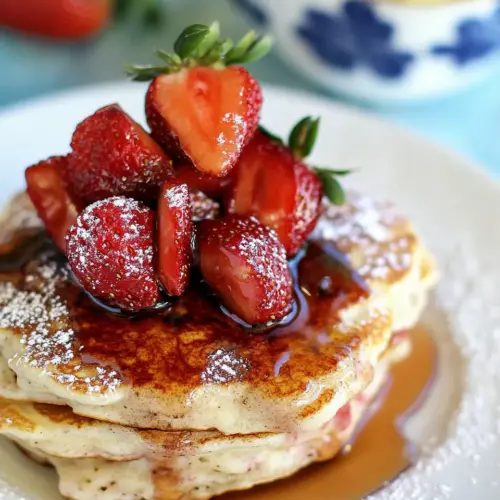
Roasted Strawberry Pancakes
Roasted Strawberry Pancakes are a fluffy, fruity breakfast that pairs jammy, caramelized strawberries with a tender buttermilk pancake base. This easy spring recipe is full of bright flavor and pleasing texture, perfect for an easy weekend brunch or special occasion morning. Make them for guests or a cozy family breakfast, they are simple to prepare and irresistibly comforting.
Equipment
- Oven
- Baking Sheet
- Parchment Paper
- Griddle or skillet
- Spatula
Ingredients
- 12 strawberries, cleaned and hulled and cut in half lengthwise Cleaned, hulled, and halved to concentrate sweetness and reduce moisture; roasting intensifies natural sugars and creates tender, jammy pieces that fold into pancakes for bursts of bright flavor. Serve warm or cool slightly so the fruit retains shape while still releasing juices that meld into the batter and form syrupy pockets. Use evenly sized halves to ensure uniform roasting and consistent texture throughout the pancake stack.
- 1 perfect buttermilk pancake recipe Perfectly prepared buttermilk pancake batter provides structure, lift, and a tender crumb thanks to its acidic tang reacting with leavening agents. Pouring batter onto a hot griddle yields golden pancakes that soak up roasted strawberry juices, balancing richness with delicate acidity. Adjust thickness slightly if needed to accommodate added fruit and maintain even cooking.
Instructions
- Preheat oven to 400º F. Line a small baking sheet pan with parchment paper and place strawberries on the sheet pan. Bake for 10-12 minutes, taking care not to overcook.: When you step into the kitchen and set the oven to 400º F , you should notice a warm hum as the oven begins to wake up, and the air will feel slightly toasty near the oven door. This temperature is high enough to encourage the surface of the strawberries to caramelize, creating flecks of deep red and brown, while still preserving their interior juiciness. The why here is simple, caramelization adds complexity and reduces raw berry sharpness. A common trap is rushing this phase, opening the oven frequently; that will drop the temperature and prevent proper roasting, so resist peeking more than once or twice.
- Make pancake batter according to directions. Stir in roasted strawberries and cook according to directions. Serve immediately.: Lining the pan makes cleanup effortless, and arranging the halved strawberries cut side up or down depending on how much caramel you want will affect the texture. You should see glossy fruit and hear a faint settling sound as they sit. The parchment protects the pan and helps the berries to brown rather than stick. Avoid crowding the pan, as touching pieces will steam rather than roast, so give each berry some breathing room.
- Bake for 10 to 12 minutes, taking care not to overcook: As the strawberries roast, they will soften and emit a fragrant, sweet aroma that thickens into a jamlike scent, while small edges may blister and darken. Listen for gentle bubbling as juices release, and look for edges that deepen in color while centers remain supple. This timing concentrates flavor without turning the berries into mush, which preserves their texture in the pancakes. If you overcook them, they will lose shape and become overly syrupy, making the pancakes soggy, so remove them when they are tender but still holding form.
- Make pancake batter according to directions: Preparing the buttermilk pancake batter will bring a cool, smooth texture, and when whisked you should see a mixture that is thick but pourable, with tiny bubbles forming on the surface. The acidity from the buttermilk activates leaveners, so mixing just until combined preserves those air pockets. Vigorous overmixing will break down the batter and result in dense pancakes, which is a common error I warn against; gentle folding ensures lightness.
- Stir in roasted strawberries: When you fold in the warm or cooled roasted strawberries , their juices will marble through the batter, leaving streaks of rosy color and little pockets of concentrated fruit. The sensory experience includes a sweet, roasted scent and a slightly glossy batter. The reason this step matters is it distributes bursts of flavor evenly across pancakes rather than concentrating them in one place. A frequent mistake is adding berries that are too hot, which can thin the batter excessively, so let them cool briefly if they are steaming.
- Cook according to directions: As you pour batter onto a hot griddle or skillet, you'll hear a gentle sizzle and see edges set while the center fills with tiny bubbles, a visual cue that it is time to flip. The goal is golden brown surfaces and a tender interior, and that comes from steady medium heat and patient timing. If the heat is too high, the outside will brown too quickly leaving the inside undercooked, so monitor your pan and adjust as needed. Using a nonstick surface or a lightly greased pan helps achieve even browning and an easy flip.
- Serve immediately: Fresh from the griddle, the pancakes will steam slightly and release a warm, fruity perfume, while the roasted strawberries will glisten and offer bursts of flavor. Serving right away preserves the contrast between the warm pancakes and the jammy fruit. If you wait too long, the pancakes can cool and lose fluffiness, so plan to serve as they finish cooking for the best sensory experience.
Notes
- Roast for deeper flavor: Increase roasting time by a couple of minutes for more caramelization, but watch carefully because the sugars can burn quickly and become bitter.
- Pan temperature control: Keep your griddle at medium heat so edges brown slowly while centers cook through, since too much heat leads to dark exteriors and raw middles.
- Drain excess juices: If your roasted strawberries release a lot of syrup, spoon off the extra and reserve it as a drizzle, because too much liquid can thin the batter.
- Use room temperature ingredients: Let wet ingredients reach room temperature for better emulsification and more tender pancakes, as cold components can inhibit proper rise.
- Serve immediately: For best texture and aroma, stack and serve the pancakes right away, as they lose loft and warmth if held too long.