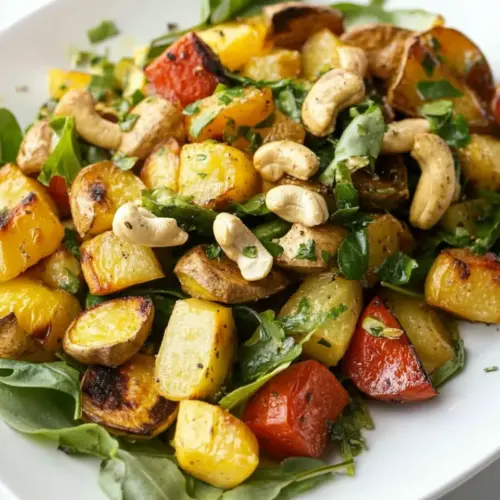
Roasted Root Vegetable and Cashew Salad
Roasted Root Vegetable and Cashew Salad is a cozy, seasonal bowl of caramelized potatoes, carrots, and parsnips with crunchy cashews and tangy feta cheese. This easy weeknight dinner or fall side balances creamy yogurt dressing and bright lemon for a flavorful, textured dish you will want to make again and again.
Equipment
- Baking Sheet
- Mixing Bowl
- Whisk
- Oven
Ingredients
- 1 tablespoon olive oil extra virgin Drizzle with a fruity, peppery oil that helps roast and dress the vegetables while adding healthy fats and depth of flavor to the salad.
- 1 teaspoon salt Season generously to enhance the natural flavors of the roasted roots and to help balance the tangy dressing components throughout the dish.
- 1 teaspoon oregano Sprinkle aromatic Mediterranean herb to introduce an earthy, slightly bitter note that complements roasted vegetables and brightens the overall profile.
- 1 teaspoon lemon pepper Season zesty, citrusy spice blend to give a bright, peppery citrus kick that lifts the richness of roasted vegetables and complements the dressing.
- 1/2 teaspoon garlic powder Season powdered garlic to add an evenly distributed savory note without the moisture of fresh garlic, helping to infuse flavors during roasting.
- 2 pounds new potatoes washed and quartered Toss starchy, tender new potatoes that provide a creamy interior and hold up well to roasting, forming the hearty base of the salad.
- 3 carrots medium, peeled and cut into 1" pieces Roast sweet, tender carrots cut into uniform pieces to contribute natural sweetness, color, and a pleasant texture contrast to the other roots.
- 3 parsnips medium, peeled and cut into 1" pieces Roast earthy parsnips cut to match the carrots, offering a sweet, nutty flavor and slightly firmer bite that pairs well with potatoes and carrots.
- 1 red onion cut into 1" pieces Roast pungent red onion cut into pieces to add sharpness that softens and caramelizes with heat, providing savory-sweet complexity to the salad.
- 4 cups arugula Layer peppery arugula as the fresh leafy base that adds a bright, slightly bitter bite and contrasts the warm roasted vegetables.
- 1/2 cup cashews raw, halved Toast or scatter raw cashews halved to contribute crunchy texture, rich buttery notes, and a satisfying contrast to the creamy components.
- 1/2 cup feta cheese diced Crumble tangy feta cheese diced to bring a salty, creamy element that complements the roasted vegetables and balances the lemony dressing.
- 1/4 cup plain greek yogurt Whisk creamy plain Greek yogurt to create a tangy, silky element for the dressing that brings body and a cooling contrast to roasted roots.
- 3 tablespoons olive oil extra virgin Drizzle extra virgin olive oil as part of the dressing to add richness, help emulsify the yogurt and lemon, and carry flavor across the salad.
- 1 lemon juiced and zested Squeeze and zest lemon to deliver bright acidity and aromatic citrus oils that brighten the dressing and cut through richer components.
- 1 teaspoon ground black pepper Crack ground black pepper to add warm, pungent heat that enhances other seasonings and provides a subtle background spiciness.
- 1/4 teaspoon salt Pinch fine salt to adjust and finish the dressing, bringing out flavors and balancing the acidity and creaminess in the salad.
Instructions
- Preheat the oven to 425°F: When the oven reaches 425°F you should notice the air feels noticeably hot as you open the door and the racks radiate warmth. This high heat is essential for rapid caramelization, producing golden brown edges rather than pale, steamed surfaces. Preheating fully avoids uneven cooking. A common mistake is placing vegetables into an oven that has not fully heated, which leads to longer cook times and less browning. Use an oven thermometer if your oven runs cool.
- Toss the new potatoes, carrots, parsnips, and red onion with oil and seasoning: As you toss, feel the vegetable pieces take on a glossy sheen from the extra virgin olive oil . The seasonings should coat each surface so the aroma of oregano and lemon pepper becomes noticeable. This oil coating encourages Maillard reaction, giving the vegetables a sweet roasted smell. Avoid overcrowding the bowl while tossing, because uneven coating leads to patchy browning.
- Spread the mixture evenly on a baking sheet and roast for 25 minutes: Arranging the vegetables in a single layer ensures hot air circulates and edges crisp. After ten to fifteen minutes you will start to hear gentle sizzling and smell sweet caramel notes. The visual cue to watch for is developing golden patches on the exposed surfaces. A frequent error is packing the tray too tightly, which traps steam and prevents the crisp texture you want.
- Flip the vegetables and roast for 10 more minutes, or until everything is golden brown: When you turn the pieces, they should release readily from the pan and reveal deepening golden brown caramelization. The second roast helps even out color and finishes softening the centers to a tender bite. Listen for renewed sizzle as moisture escapes. If pieces look pale after the full time, leave them a bit longer, checking every five minutes so they do not burn.
- Meanwhile, mix together the dressing ingredients until smooth: Whisk the plain greek yogurt , extra virgin olive oil , lemon juice and zest, ground black pepper, and the small pinch of salt until the texture is glossy and emulsified. The dressing should smell bright and tangy, with a creamy texture that will cling to roasted surfaces. If it is too thick, thin with a touch of water. A common slip is adding too much salt early, so taste and adjust near the end.
- Remove the roasted vegetables from the oven and let cool: As the vegetables rest, they continue to release steam and mellow in flavor. Cooling for a few minutes prevents the arugula from wilting and helps the dressing adhere rather than run off. The residual warmth is perfect for slightly softening the feta cheese without melting it. If you toss immediately while piping hot, the greens will collapse and textures will be lost.
- Toss together the cooled vegetables, arugula, cashews, feta, and dressing and serve!: When combining, you should hear a gentle rustle from the arugula and notice the creamy dressing lightly coating each root piece. The contrast of warm roasted vegetables against cool greens and creamy feta cheese is delightful. Toss gently to keep the cashews intact and the leaves fresh. Overmixing can bruise the greens and break up the cheese, so fold carefully until everything is just combined.
Notes
- Oven temperature matters: Preheat to a steady 425°F to achieve those golden, caramelized edges that give the salad its roasted character. An oven that runs cool will produce pale, soft vegetables rather than crisp, caramelized pieces.
- Even sizing: Cut the potatoes, carrots, and parsnips into similar sized pieces to ensure everything finishes at the same time, avoiding overcooked or undercooked chunks.
- Dress at the right moment: Let roasted vegetables cool slightly so the dressing clings instead of melting the greens, preserving texture and brightness.
- Balance salt carefully: Because the salad includes salty feta cheese, taste before adding more salt to the dressing, and adjust gradually to avoid over-salting.
- Nut handling: If you want added depth, toast the cashews in a dry skillet until fragrant, then let them cool before folding into the salad so they retain crunch.