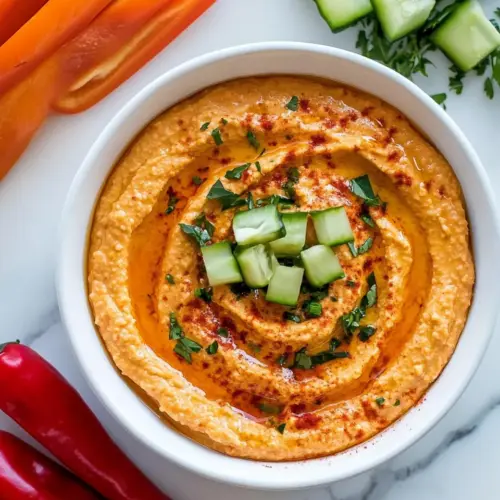
Roasted Red Pepper Hummus
Roasted Red Pepper Hummus is a creamy, smoky dip that bursts with bright lemon and savory garlic notes, blended into silky chickpeas and crowned with a drizzle of extra virgin olive oil. Perfect for easy weeknight snacks or party spreads, this colorful hummus is quick to make and irresistibly scoopable, a great reason to make it again and again.
Equipment
- Food Processor
- Spatula
- Can opener
Ingredients
- 1 15-ounce can chickpeas drained and rinsed (save some liquid for blending) Provide creamy, protein-rich body and a slightly nutty flavor; mashed and blended to form the hummus base while reserved liquid helps adjust consistency during processing.
- 2 tablespoons Tahini Add a rich, sesame-based creaminess and depth; whisked into the blend to contribute silkiness and a subtle, slightly bitter undertone that balances acidity.
- 7 ounces jarred roasted red peppers drained Bring smoky-sweet flavor and vibrant color; pureed with the chickpeas to impart roasted pepper character and visual appeal while contributing moisture.
- 1/4 cup lemon juice Lend bright acidity and fresh citrus notes; squeezed and added to brighten flavors, balance richness, and help preserve the hummus for a fresher taste.
- 2 teaspoons garlic minced Introduce pungent, aromatic heat and savory bite; minced and incorporated to enhance overall flavor complexity and provide a sharp contrast to creamy elements.
- 3 tablespoons extra virgin olive oil plus more for serving Contribute fruity, peppery richness and smooth mouthfeel; drizzled into the puree and used for finishing to add shine and enhance richness of the spread.
- 3 tablespoons aquafaba (reserved liquid from canned chickpeas) Provide viscous binding and egg-white-like emulsification; stirred or blended in to boost creaminess and help stabilize texture without altering flavor.
- 1/2 teaspoon Kosher salt plus more for taste Season and amplify flavors while controlling salinity; measured and adjusted to taste to ensure the hummus is properly seasoned and balanced.
Instructions
- Before you drain and rinse the chickpeas, save some of the liquid from the can. This is called aquafaba and will help give a creamy texture to the hummus.: The jar or can liquid, called aquafaba , carries starches and proteins that help create a mousse like texture when blended. As you open the can you may notice a slightly viscous liquid, and that is what you want to reserve in a small cup. The scent is mild and slightly beany, and keeping a tablespoon or three makes it simple to adjust consistency later. Why this matters, the aquafaba mimics the emulsifying effect of extra oil, so you can achieve creaminess with less fat. Troubleshooting tip: a common mistake is discarding all the liquid, which can result in a dense, pasty hummus; if that happens, stir in small amounts of aquafaba to loosen the texture.
- To a food processor or blender, add the drained chickpeas, drained roasted red peppers, lemon juice, tahini, garlic, olive oil, aquafaba, and salt.: Once everything is in the bowl, you will notice a colorful, roughly textured assembly that smells of citrus and roasted pepper. Work in pulses to break down the solids, and stop periodically to scrape the sides with a spatula so no pockets of ingredients remain. The initial sound is a coarse rhythmic grinding that gradually smooths into a steady hum as the blades work. This technique matters because pulsing prevents overworking and helps incorporate air gradually for a lighter result. Troubleshooting tip: if your motor strains or the mixture clings to the sides, add a teaspoon of aquafaba or lemon juice to help the blades grab the mixture.
- Blend until smooth making sure to scrape the sides throughout the blending process. Add more aquafaba if the hummus is too thick.: As you blend the hummus, watch for visual cues like a glossy surface and a consistent, lump free texture. Pause every few pulses to scrape down the bowl so small bits of chickpea and peppers are reincorporated. The aroma will become more unified and the color will even out into a vivid coral. Why this helps, continuous scraping ensures even blending and prevents overheating localized bits, preserving fresh flavors. Troubleshooting tip: if you see tiny flecks of tahini that do not integrate, stop and scrape, then blend again in short bursts to avoid a grainy mouthfeel.
- Blend for about 30 seconds to get a smooth and creamy consistency. If you prefer your hummus thicker, leave this step out.: After an initial blending, test the texture by scooping with a spoon; it should hold shape but be spreadable. Add small increments of aquafaba , about a teaspoon at a time, blending between additions until you reach the desired silkiness. You will notice the hummus become glossier and lighter, and the sound of the blender will change to a smoother tone. This incremental method matters because it prevents overshooting into a runny sauce. Troubleshooting tip: avoid adding large amounts at once which can thin the hummus too much; correct by folding in a bit more mashed chickpea if available.
- Serve with veggies, crackers, or pita bread.: A final short burst polishes the texture and brings the flavors together, leaving a uniform sheen and a velvety mouthfeel. Pay attention to the sound and the way the blades move; when the hummus no longer slaps against the bowl and moves in a steady stream, it is likely ready. This finishing burst helps emulsify the olive oil and tahini with the liquids, creating a cohesive texture. Troubleshooting tip: if you prefer thicker hummus, skip this final smoothing step and reserve some texture; over blending can eliminate pleasant body.
- Serve with veggies crackers or pita bread: Present the hummus in a shallow bowl, drizzle a little extra virgin olive oil on top, and add a sprinkle of salt if desired. The aroma of citrus and roasted pepper will be inviting, and the color will pop against fresh vegetables or warm pita. Serving temperature matters, slightly chilled hummus tends to hold its shape while room temperature elevates the aroma. Troubleshooting tip: avoid leaving the hummus out too long in warm conditions; refrigerate any leftovers promptly to preserve freshness and flavor.
Notes
- Reserve aquafaba: Keep at least three tablespoons of the can liquid before rinsing the chickpeas; add gradually to reach the perfect silky consistency without over thinning.
- Measure tahini: Stir your tahini first and level it in the tablespoon so it blends smoothly, preventing clumps and ensuring even sesame flavor.
- Drain peppers well: Pat or gently press the jarred roasted red peppers to remove excess liquid, unless you want a looser texture, in which case reserve a touch of the pepper liquid for thinning.
- Taste for salt at the end: Add the initial Kosher salt amount, then sample after blending; canned and jarred items differ in salt so small adjustments are common.
- Finish with olive oil: A thin ribbon of extra virgin olive oil on the surface before serving adds gloss and a fruit forward aroma that complements the peppers.
- Make ahead: The hummus benefits from resting for a few hours in the fridge, allowing the flavors to integrate for a slightly mellower, more unified profile.