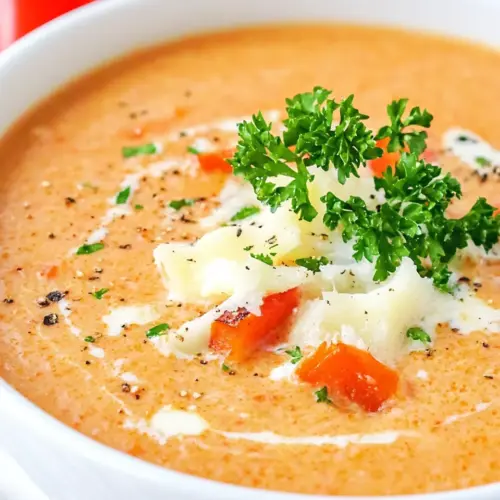
Roasted Red Pepper Gouda Soup
Roasted Red Pepper Gouda Soup is a creamy, smoky bowl of comfort that combines roasted red bell peppers, silky heavy whipping cream, and melty gouda cheese. This easy weeknight dinner recipe yields a rich, velvety texture and bright pepper flavor, perfect for chilly evenings or casual entertaining. Make it for a cozy meal that feels indulgent yet effortless to prepare.
Equipment
- Oven
- Baking Sheet
- Parchment paper or foil
- Large Stockpot
- Immersion Blender
Ingredients
- 5 fresh red bell peppers roasted Roasted to deepen sweetness and add smoky complexity, provides the soup’s primary red pepper flavor and vibrant color while blending smoothly into the base for body and richness.
- 4 stalks celery diced Diced to add subtle crunch and aromatic vegetal notes, contributes a mild savory backbone that balances the sweetness of roasted peppers and supports the soup’s texture.
- 1 small onion diced Diced to build savory depth and aromatic foundation when sautéed, softens into the broth to enhance umami and meld flavors with the other vegetables.
- 3 tbsp butter Melted to sauté the diced vegetables and carry flavors, offers a rich mouthfeel and helps develop a glossy, tender base for the soup.
- 1 tsp salt Added to season and enhance overall flavor, draws out natural tastes from vegetables and balances sweetness while preventing the soup from tasting flat.
- 1/2 tsp dried basil Sprinkled to impart a gentle herbal note reminiscent of basil leaves, complements tomato-like flavors of red peppers and adds an aromatic layer to the broth.
- 1/2 tsp dried thyme Used to introduce earthy, slightly minty undertones, pairs with basil to create a rounded herb profile and supports the savory components of the soup.
- 1/2 tsp ground black pepper Ground to provide warmth and subtle heat, brightens flavors and adds a mild piquant contrast that lifts the creamy and smoky elements.
- 1/4 tsp cayenne pepper Measured sparingly to introduce a sharp, lingering heat, contrasts the creaminess and sweet peppers for complexity without overwhelming the palate.
- 4 cups chicken broth Poured as the liquid base to simmer the vegetables and meld flavors, supplies savory depth and body while thinning the mixture for blending.
- 1/4 cup gouda cheese shredded – per bowl Shredded per bowl to add a smoky, nutty richness at serving, melts into the hot soup to create creamy pockets of flavor and elevate the cheese profile.
- 8 oz . heavy whipping cream Poured to enrich texture and create a luxurious, silky mouthfeel, binds flavors and smooths acidity while adding caloric richness to the final soup.
- fresh parsley for topping, optional Chopped and sprinkled as an optional garnish to add fresh, herbaceous brightness, provides color contrast and a light, clean finish to each bowl.
Instructions
- Preheat the oven to 450 and line a baking sheet with parchment paper or foil for easy clean-up. Cut peppers in half and remove seeds and stems.: The kitchen will fill with an anticipatory warmth when you preheat the oven, and preparing the sheet with parchment or foil keeps cleanup simple. When you slice and seed the red bell peppers , run your fingers along the inside to remove membranes and any stray seeds, which prevents any bitter notes in the soup. A common mistake is leaving too many seeds, which can cause tiny crunchy bits in the smooth soup. Work carefully but efficiently because once the oven is hot you want the peppers to go in immediately so they blister evenly.
- Place red bell peppers, cut side down, onto the prepared baking sheet.: Laying the peppers cut side down concentrates the heat on the skins, helping them blister and separate cleanly. You should hear a faint sizzle when the peppers hit the hot sheet, and after a little time you will see the skins darken and bubble. If peppers are crowded they steam rather than roast, so give them enough space. If you notice uneven blistering, rotate the sheet midway through roasting for consistent results.
- Roast for 25-30 minutes or until skins are bubbly and separating from the peppers. Remove sheet pan from oven and cool peppers.: The aroma of caramelizing peppers is immediate and deeply satisfying, smelling slightly sweet with a light smoky edge. The skins should appear blistered and in some spots darkened, and you will be able to see the skin pulling away from the flesh. Let the peppers cool enough to handle safely, because trying to peel them while too hot can be messy and burns are possible. Over roasting can lead to too much bitterness, so watch for blistering without long segments of blackened flesh.
- Peel and remove skins and set peppers aside.: Once cooled, the skins should slide off with gentle pressure, leaving the sweet flesh intact. If some areas are stubborn, a small paring knife can help lift the edge, but avoid scraping too aggressively which can remove flesh. A common pitfall is not allowing peppers to cool enough, making peeling difficult and leading to torn flesh. Set them aside in a bowl to keep the process organized while you move to the stovetop.
- In a large stockpot, add diced celery, diced onion, and butter. Heat vegetables over medium heat until onions are tender.: As the butter melts and the diced onion and celery soften, you will smell a gentle vegetal sweetness and savory aroma. The onions should go translucent and the celery should lose its raw edge, which takes a few minutes and lays a flavorful foundation for the soup. If the pan gets too hot the onion may brown too quickly and change the flavor profile, so keep the temperature moderate. Stir frequently to ensure even cooking and prevent sticking.
- Add spices, chicken broth, and peeled red peppers. Continue to heat over medium high heat until boiling. Reduce heat on the stove and simmer soup, covered with a lid, for 20 minutes.: When you add the herbs, chicken broth , and the roasted peppers, the pot emits a rounded, savory perfume as the flavors begin to marry. Bringing the mixture to a boil helps extract flavor from the vegetables, then reducing to a simmer and covering for 20 minutes allows the aromatics to fully meld and soften any remaining pepper fibers. A frequent mistake is simmering at too high a temperature which can reduce the liquid too quickly, so maintain a gentle simmer and check occasionally to ensure the heat is steady.
- Stir soup and use a spoon to smash and break up peppers as best as you can.: As you stir, the texture will shift from chunky to approaching a uniform body, and the smashed peppers release additional juices that enrich the broth. Use the back of a sturdy spoon to press and shred the peppers against the pot, which makes the later blending step smoother. A common misstep is skipping this manual break up, which forces the blender to do extra work and can lead to uneven texture. Take time here so the immersion blending will be efficient.
- Use an immersion blender in the stockpot to carefully blend the remainder soup smooth and creamy.: Blending in the pot releases a deep, sweet aroma and transforms visible pieces into a velvety, cohesive soup. Move the blender slowly and pulse in short bursts if needed, lifting occasionally to allow steam to escape. Hot splatters can burn, so keep the blender head submerged and use caution. Overblending can make the soup overly thin, while under blending leaves unwanted chunks, so aim for a smooth but still bodyful texture.
- Slowly stir in heavy whipping cream.: As you stream in the heavy whipping cream , the soup will lighten in color and take on a glossy, luxurious sheen. The cream rounds out any sharpness and creates a silky mouthfeel that carries the pepper flavor beautifully. Stir steadily to incorporate so the temperature evens out and the cream does not separate. Adding the cream too quickly or at too high temperature risks curdling, so temper gently and keep the heat low.
- Serve red pepper soup topped with lots of shredded gouda cheese and chopped fresh parsley.: The final flourish of shredded gouda cheese melts into molten, smoky ribbons while the chopped fresh parsley provides a bright, herbaceous contrast. The melted cheese forms little glossy pools that add richness to each spoonful, and the parsley lifts the overall flavor so the soup does not feel overly heavy. A common mistake is adding too much salt at the end, so taste before seasoning further, especially because the chicken broth and gouda cheese already contribute sodium.
Notes
- Roasting patience pays off Allow the skins to blister fully so they peel easily, which deepens the pepper flavor and produces a smoother final soup.
- Adjust the heat Reduce the cayenne pepper if you prefer milder warmth, or add a pinch more for a livelier finish that contrasts the cream.
- Cheese choice matters Use shredded gouda cheese as specified for that smoky, melty richness; add it to each bowl so the heat melts it into ribbons.
- Mind your broth Choose a well seasoned chicken broth or adjust salt carefully at the end, because the broth and cheese influence final salinity strongly.
- Texture control If you prefer a chunkier bite, pulse briefly with the immersion blender rather than fully smoothing the soup.
- Fresh garnish Sprinkle chopped fresh parsley just before serving to add color and a refreshing herbal note.