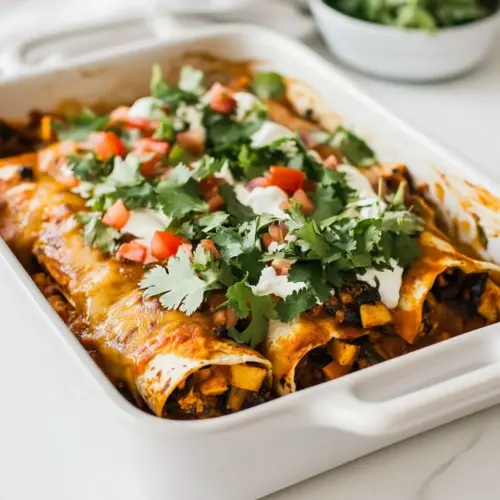
Roasted Ratatouille Low FODMAP Vegetarian Enchiladas
Roasted Ratatouille Low FODMAP Vegetarian Enchiladas showcase caramelized tomatoes and tender roasted vegetables in a creamy, tangy sauce. This easy weeknight dinner blends smoky roasted flavors with melty cheddar cheese and bright cilantro, creating a satisfying vegetarian meal that reheats well, perfect for feeding a family or meal prepping for the week.
Equipment
- Oven
- Sheet Pan
- Parchment Paper
- Blender or food processor
- 9 by 13 inch baking dish
- Mixing Bowl
Ingredients
- 2 pounds vine or Roma tomatoes, quartered Quartered and roasted to concentrate sweetness and reduce moisture, adds a rich, tangy base for the enchilada filling and sauce while providing body and depth of flavor.
- 1 jalapeño, halved (ribs and seeds optional) Halved and roasted or toasted briefly to add a bright, sharp heat and aromatic kick; remove ribs and seeds to control spiciness for a low-FODMAP profile.
- 1/2 teaspoon ground cumin Measured and toasted briefly to bloom warm, earthy notes that complement the vegetables and add a subtle smoky warmth to the sauce.
- 1/2 teaspoon ground coriander Measured and toasted briefly to release citrusy, floral undertones that brighten the filling and complement the cumin and roasted vegetables.
- Olive oil Used sparingly for sautéeing and roasting to facilitate caramelization and prevent sticking while contributing a mild fruity richness to the dish.
- Sea salt Sprinkled to taste during roasting and seasoning to enhance and balance the dish’s flavors, drawing out sweetness from the vegetables and rounding the sauce.
- 1 large eggplant, cut into 1/2 inch cubes Cubed and roasted to develop a creamy interior and slightly charred exterior that provides a meaty, hearty texture and absorbs the sauce.
- 1 medium zucchini, 1/2 pound, cut into 1/2 inch cubes Cubed and roasted to retain a tender-crisp texture that adds freshness and mild sweetness, balancing the richer roasted vegetables.
- 1 medium patty pan or summer squash, cut into 1/2 inch cubes Cubed and roasted to contribute a slightly sweet, nutty flavor and firm bite that complements the other summer squashes and adds visual interest.
- 1 red bell pepper, diced Diced and roasted or sautéed to add a sweet, fruity pepper flavor and bright color, contributing to the overall balance and texture in the filling.
- 1 cup chicken or vegetable stock Added to the sauce to deglaze the pan and create a silky consistency while imparting savory depth; choose vegetable stock to keep the dish vegetarian.
- 2 tablespoons fresh lime juice Squeezed in at the end to provide zesty acidity that lifts the roasted flavors, balances richness, and adds a fresh citrus note to the filling.
- 2/3 cup coarsely grated cheddar cheese Coarsely grated and sprinkled into the filling and on top before baking to add creamy, salty tang and a golden, melty topping.
- Eight 6-inch corn or almond flour tortillas Wrapped or rolled with the filling as the vehicle for serving; lightly warmed to remain pliable without overpowering the filling’s flavors.
- 1/2 cup cilantro leaves Torn and sprinkled over the finished enchiladas to add fresh herbal brightness and a clean, slightly citrusy finish that complements the lime juice.
Instructions
- Preheat your oven to 425°F. Line two sheet pans with parchment paper.: Warmth fills the kitchen as the oven reaches 425°F , and that initial heat is what will coax moisture out of the vegetables so they caramelize rather than steam. You should feel the slight increase in air temperature and hear a low hum from the oven. Use parchment to prevent sticking and to make cleanup effortless, which lets you focus on the food rather than scrubbing later. A common mistake is not waiting for the oven to fully preheat, which can lead to uneven roasting. If you put vegetables in too soon they will take longer to brown and may become limp instead of caramelized.
- Place the tomatoes and the jalapeño on one of the sheet pans. Drizzle with olive oil and season with the cumin, coriander and 1/2 teaspoon salt. Arrange cut-side down and roast in the oven until slightly charred, about 40 minutes.: When you roast the tomatoes cut side down, their skins blister and the sugars concentrate, releasing a deep, slightly sweet aroma. You will notice sizzling and a bubbling as juices caramelize against the pan, and the jalapeño will darken and soften, its heat mellowing. This step builds the sauce foundation, giving it smoky complexity and natural sweetness. If the tomatoes are not arranged in a single layer they can steam instead of roast, so give them space. Watch for excessive charring, which can taste bitter; a few dark spots are desirable, but avoid burning.
- On the second sheet pan, toss the eggplant, zucchini and peppers with 2 tablespoons olive oil and 1/2 teaspoon salt. Arrange in an even layer and roast alongside the tomatoes in the oven for about 45 minutes, until nicely caramelized. Set aside to cool.: Tossing the cubed eggplant , zucchini , and red bell pepper in oil ensures they brown evenly, giving crunchy edges and soft interiors. As they roast, you will smell the savory, almost nutty notes of eggplant and the sweet perfume of pepper. Letting them cool slightly helps the filling bind without steaming the tortillas during assembly. The pitfall here is overcrowding, which leads to steaming; spread the vegetables so air can circulate and achieve golden caramel spots.
- Transfer the tomatoes and jalapeño to a blender or food processor and add any cooking juices from the sheet pan, along with the stock, lime juice and 1/2 teaspoon salt. Process until smooth. You should have about 3 cups sauce.: Blending the roasted pieces with the pan juices and stock creates a silky sauce that tastes concentrated yet balanced by the lime juice . The motor sound of the blender will transform the chunky roasted bits into a glossy, aromatic liquid, the color deepening as air is incorporated. This emulsified sauce clings to the filling and tortillas, ensuring each bite is saucy. A common error is adding too much stock, which thins the sauce excessively; add gradually and stop when you reach a spoonable consistency.
- In a large mixing bowl, toss the ratatouille filling with a third of the sauce and 1/3 cup of cheese.: The first coating of sauce seasons the roasted vegetables and helps the cheese adhere, creating cohesive filling. You will feel the warmth from the roasted pieces, and the cheese will begin to soften and meld as it meets the residual heat, adding a creamy binding element. Mixing at this stage lets flavors marry so the filling is already seasoned before assembly. Avoid overmixing into a paste; you want distinct chunks for texture, not a puree.
- Pour another third of the tomato sauce in the bottom of a 9-by-13-inch baking dish. Spread the sauce to cover the bottom.: A base layer of sauce prevents the tortillas from sticking and creates a moist environment that finishes the enchiladas in the oven. Spread it so there are no dry spots, and notice the glossy sheen as the sauce levels out. This step ensures the bottom row of enchiladas absorbs flavor and does not dry out. Skipping this can cause the dish to cling to the pan and lose sauce on the plate instead of the tortillas.
- Wrap the tortillas in a dish towel and warm them in the microwave for 30 seconds until pliable. Alternatively you can warm them in the oven.: Warming makes the tortillas supple and easy to roll, and you will instantly notice the steamy softness when you unwrap them. Be cautious not to overheat, which can make them brittle; a short burst in the microwave or a few minutes in a warm oven is enough. If they are too cool they will crack when rolled, so this step prevents tearing. A common slip is overheating then wrapping too long, which creates soggy wrappers, so keep the warm time short.
- Divide the veggies evenly among the tortillas. Roll up the tortillas tightly around the ratatouille and line them up, seam-side down, in the baking dish. Pour the remaining tomato sauce evenly over the stuffed tortillas and sprinkle with the remaining cheese.: As you fill each tortilla it should feel balanced, not overstuffed, so it rolls neatly. The tactile sensation of tucking the filling and feeling the tortilla hold shape is satisfying, and placing them seam-side down helps them stay closed while baking. Pouring sauce over the top creates a glossy coat that will bubble and caramelize, and the remaining cheddar cheese melts into a golden crown. Avoid overfilling, which leads to open seams and spilled filling during baking.
- Bake the enchiladas until the cheese is melted and golden brown and the sauce is bubbling, about 20 minutes. Sprinkle with the cilantro and serve immediately.: The oven will fill with an inviting roasted aroma as the sauce bubbles and the cheese browns; listen for gentle bubbling and watch for a warm golden top. Baking melds flavors and gives the tortillas a slightly toasted edge while keeping the centers tender. Finish with fresh cilantro to add brightness against the warm, savory backdrop. One mistake is leaving them too long, which can dry the tortillas and dull the fresh herbs, so watch closely in the final minutes.
Notes
- Switch the cheese by using a sharper or milder melting cheese to vary richness and salt level, keeping the texture similar while dialing flavor up or down.
- Tortilla choices let you tailor the dish to dietary needs, with corn for tradition or almond flour for a gluten free option that stays tender when warmed properly.
- Adjust the heat by removing jalapeño seeds and ribs for milder flavor or leaving them in for more kick, roasting it whole to develop a smoky warmth.
- Make it ahead by roasting and blending the sauce a day early, storing components separately and assembling just before baking to keep textures optimal.
- Boost herb notes by stirring chopped cilantro into the filling for extra freshness, or sprinkling more on top after baking for visual contrast and bright flavor.
- Reserve pan juices and add them to the blender for maximum flavor, but strain if you prefer a smoother, less pulpy sauce texture.