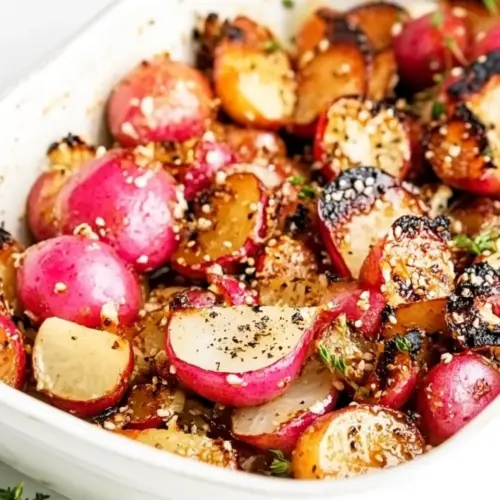
Roasted Radishes
Roasted Radishes are a simple, crispy roasted vegetable with a savory soy glaze and nutty sesame finish. The radishes transform from peppery to mellow, offering tender insides and caramelized edges, perfect for an easy weeknight side or spring dinner. Make this quick, flavorful dish to add a surprising and delightful element to your meal.
Equipment
- Baking Sheet
- Brush
- Oven
- Mixing Bowl
Ingredients
- 25 medium radishes, washed, trimmed and cut into fourths or halves (same-size pieces) Provide a crisp, peppery bulk to the dish and contribute moisture when roasted; cutting into fourths or halves ensures even cooking and tender centers while maintaining a slight bite. Offer visual contrast with bright color and a fresh, radish-specific sharpness that mellows and caramelizes under high heat.
- 1 1/2 T roasted peanut oil Add a neutral, high-heat fat for roasting that helps create browned, slightly crispy edges while carrying other flavors; measure carefully to coat the radishes without making them greasy. Contribute a subtle toasty note when heated and promote even heat transfer for consistent texture.
- 1 1/2 T soy sauce (see notes) Provide a savory, salty umami backbone that balances radish sweetness and supports caramelization; use as a finishing or mixing liquid to glaze roasted pieces. Enhance depth of flavor and help bind sesame and green onion flavors to the radishes when tossed together.
- 1 tsp . toasted sesame oil (probably optional, but recommended) Impart a concentrated, toasted aroma and a rounded sesame flavor that complements soy and black sesame seeds; use sparingly because of its potency. Accent small amounts into the dressing or oil to introduce nutty complexity without overpowering the dish.
- 2 green onions, sliced Contribute a fresh, oniony sharpness and bright green color that livens the finished plate; slice thinly to distribute bites of pungency throughout. Provide a textural contrast with crispness if added raw at the end or slight softness if warmed briefly with the hot radishes.
- 2 tsp . black sesame seeds (see notes) Deliver a crunchy, nutty garnish that reinforces sesame flavor and adds visual contrast; toast or use as-is to sprinkle over the finished dish. Offer small pops of texture and a deepened sesame aroma that pairs well with the oils and soy glaze.
Instructions
- Preheat oven to 425 F.: Warmth is essential for good browning, so you want the oven fully up to temperature before the radishes go in. When the oven reaches 425 F , the surface of the radishes will sizzle as soon as they hit the tray, encouraging a crisp outer crust while the interior steams tender. You should hear a faint pop or hiss when they first enter, and you will smell a toasty aroma as sugars begin to caramelize. A typical mistake is putting the pan in before the oven is hot, which leads to pallid, uneven browning. Give the oven time, and if you use a baking stone or heavy sheet it will hold heat better for consistent results.
- Wash radishes, trim ends, and cut into halves or fourths to make same size pieces.: After washing, trimming, and cutting, the radishes should look uniform so they roast at the same pace. The exposed cut surfaces will turn golden as they caramelize, while the rounded sides will hold a tender snap. As you cut, notice the fresh, peppery scent shift to a milder aroma when a piece is bitten; that raw intensity will mellow in the oven. Avoid leaving very small fragments that can burn quickly, and do not overcrowd the pan, or pieces will steam instead of crisping.
- Spray a large baking sheet with non-stick spray, put radishes on the baking sheet and brush all sides with the peanut oil, then arrange radishes cut side down for best browning.: Coating the sheet and brushing the radishes with peanut oil ensures even contact with the hot surface and promotes attractive browning on the cut sides. Placing them cut side down maximizes that caramelized surface, creating a golden face that is full of flavor. You should hear a soft sizzle as they settle, and the oil will shimmer under heat. A common error is skimping on the oil brush, which prevents the cuts from achieving a beautiful mahogany color. Take the time to arrange them with space between pieces to allow hot air to circulate freely.
- Roast the radishes about 20 minutes, stirring one or two times.: During this initial roast period, the radishes will soften and begin to brown at the edges, emitting a warm, nutty scent. Stirring once or twice helps them brown more evenly and prevents any single cluster from overcooking. Listen for an audible change as they shift from firm to tender, and watch for the cut sides to deepen in color. The main pitfall here is stirring too often, which interrupts browning; instead, give them space to form a crust and only turn them when you see the edges starting to caramelize.
- While radishes cook, slice the green onions, and measure the sesame seeds (and toast if needed).: Use this quiet window to prepare the finishing elements so they are ready the moment the radishes emerge. Slicing the green onions releases a fresh, oniony scent that will cut through the roasted richness, and toasting the black sesame seeds for thirty seconds in a dry pan will amplify their aroma and crunch. Keep an eye on the seeds while toasting, since they can go from fragrant to burnt in seconds. A frequent oversight is waiting until after the radishes are done, which can cool the dish while you prepare garnishes.
- If you’re using the toasted sesame oil, mix with the soy sauce in the same bowl you used for the peanut oil.: Combining toasted sesame oil with soy sauce in a small bowl creates a glossy, aromatic glaze that is easy to brush on. The mix will smell nutty and savory, and a little goes a long way, so measure carefully. This step matters because it tempers the soy sauce and disperses moisture evenly, ensuring a balanced coating rather than a salty puddle. One mistake to avoid is adding this mixture too early, which can lead to burned sugar and acrid notes; reserve it for near the end of roasting.
- When radishes are tender and starting to brown, remove from oven, brush with soy sauce or soy-sesame oil mixture, and sprinkle with green onion slices.: At this moment you will notice the radishes have a golden cast and yield slightly to the tip of a fork, releasing a sweet, roasted fragrance. Brushing them with the sauce adds a shiny, savory layer that deepens their flavor, while the green onions bring an immediate brightness. Work quickly so the residual oven heat helps set the glaze without burning it. Avoid dousing them in too much sauce, which can make the pan soggy instead of glossy.
- Put back in oven and roast about 5 minutes more, or slightly longer.: Returning the pan to the oven briefly helps the sauce adhere and intensifies caramelization, producing small dark flecks that taste toasty rather than bitter. You should hear a gentle crackle and see the glaze develop a lacquered sheen. Watch carefully in this short phase because the sugars in the sauce can move from caramel to burnt in a minute or two. The typical misstep is leaving them too long, which risks an acrid finish, so aim for a deepened color and fragrant aroma.
- Sprinkle the cooked radishes with black sesame seeds and serve hot.: The final sprinkle of black sesame seeds adds an immediate textural contrast and a toasty, nutlike perfume that complements the roasted radish. Serve them straight from the oven for the best temperature and crunch. Pay attention to plating, since the seeds and green onions look inviting against the browned surfaces. A common error is letting them sit too long before serving, which causes loss of heat and crispness, so bring them to the table promptly.
Notes
- Balance the sauce: Measure your soy sauce and toasted sesame oil carefully, a light brush provides flavor without overwhelming the radishes natural taste.
- Adjust the roast time: For a firmer bite roast toward the lower end of the suggested time, and for deeper caramelization allow a few extra minutes while checking frequently.
- Use room temperature radishes: Allowing them to come closer to room temperature helps them cook more evenly and reduces oven time slightly.
- Keep garnishes fresh: Slice the green onions just before serving to preserve their bright color and crispness.
- Toast seeds last minute: Toast black sesame seeds for thirty seconds in a dry pan right before plating to boost aroma and crunch.
- Serve immediately: These are best hot from the oven, as the contrast between a crisp exterior and tender interior fades as they cool.