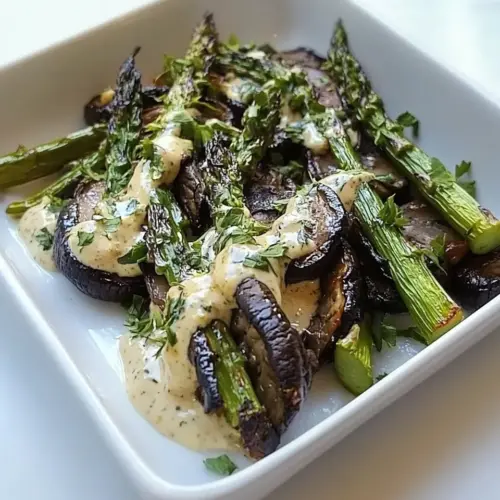
Roasted Portobellos Asparagus with Goat Cheese Sauce
Roasted Portobellos Asparagus with Goat Cheese Sauce is a creamy, savory spring favorite with tender roasted vegetables, tangy goat cheese sauce, and toasted pine nuts for crunch. This easy weeknight dinner or elegant vegetarian main delivers bold, layered flavors and simple technique, making it ideal for casual meals and small dinner parties. Try it to enjoy a satisfying meat free dish that feels special.
Equipment
- Oven
- Baking Sheet
- Aluminum Foil
- Small Saucepan
- Skillet
Ingredients
- 1 pound asparagus - thicker, larger stalks work best Trim and blanch to preserve color and crisp-tender texture; thicker, larger stalks hold up well to roasting and provide a hearty mouthfeel. Season lightly and roast alongside mushrooms to develop sweet, caramelized edges and maintain a satisfying bite.
- 4 portobello mushroom caps Clean and remove stems to create shallow caps perfect for roasting or stuffing; cook until tender and slightly charred to concentrate savory, umami flavors. Use as the main vehicle to showcase the goat cheese sauce and pair with asparagus for contrast.
- 3 tablespoons extra virgin olive oil Dress and toss to coat vegetables evenly and promote browning; extra virgin olive oil adds fruity flavor and helps transfer heat during roasting. Use sparingly to prevent sogginess while ensuring the asparagus and mushroom caps develop a golden exterior.
- 1/2 tablespoon butter Melt gently to add silkiness and a touch of richness to the sauce; butter helps carry flavor and adds a glossy finish. Combine with starch to form a roux-like base that will thicken the milk into a creamy goat cheese sauce.
- 1/2 tablespoon cornstarch or potato starch Whisk in to thicken the sauce without altering flavor; cornstarch or potato starch yields a smooth, translucent finish when properly dissolved and heated. Use a small amount to achieve a clingy sauce that coats asparagus and mushrooms.
- 1/2 cup lowfat milk Warm and combine with starch and butter to form the creamy base for the goat cheese sauce; lowfat milk provides body while keeping the sauce lighter than cream. Heat gently to avoid scalding and to properly dissolve the starch before adding cheese.
- 1/4 teaspoon crushed garlic Infuse and mildly aromatize when crushed and incorporated into the sauce or oil; crushed garlic lends a gentle pungency that complements both mushrooms and asparagus. Add early to the warm fat to mellow sharpness and build depth of flavor.
- 3 ounces goat cheese (use cheese made with a vegetarian rennet to keep vegetarian) Soften and melt into the warm milk mixture to create a tangy, creamy sauce; goat cheese contributes bright acidity and a silky texture. Choose a vegetarian-rennet cheese to maintain a vegetarian-friendly dish while enhancing overall richness.
- Dash cayenne Season delicately to introduce a subtle heat that lifts the flavors; a dash of cayenne adds warmth without overpowering the delicate goat cheese. Adjust sparingly to preserve the dish's balance between creamy and earthy elements.
- 1 1/2 tablespoons pine nuts Toast briefly to unlock nutty aromas and crunchy texture; pine nuts add a buttery, resinous note that contrasts with the soft vegetables and cheese. Scatter over the finished dish for flavor complexity and pleasant textural contrast.
- 1 1/2 tablespoons fresh chopped flat leaf parsley Chop and sprinkle to add a fresh, herbal brightness and slight pepperiness; fresh flat-leaf parsley lightens rich components and enhances visual appeal. Add just before serving to preserve color and aroma.
- Salt and pepper Season to taste to bring out natural flavors and balance the dish; salt enhances sweetness in roasted vegetables while pepper adds mild heat and complexity. Adjust at the end to avoid over-salting once the sauce and nuts are combined.
Instructions
- Preheat oven to 425 degrees F. Toast the pine nuts in a skillet over medium heat for a few minutes, stirring continuously, till they turn golden brown and aromatic.: The moment the oven heats to a high, consistent temperature you will feel the anticipation, because that high heat is what creates caramelization and concentrated flavors on both the portobello mushroom caps and the asparagus . You should sense a dry, warm smell from an oven coming up to temperature. If the oven is not fully hot before the vegetables go in, they will steam rather than roast, yielding limp rather than crisp edges. To avoid this, wait until the oven indicates it has reached the full set point.
- Trim off the tough, thick end of each asparagus stalk. Line a baking sheet with aluminum foil for easier cleanup, if desired. Spread asparagus out on ungreased baking sheet. Drizzle extra virgin olive oil evenly over the top of the asparagus; I use about 1 tbsp of oil for each pound of asparagus. Use your fingers to gently rub each stalk evenly with the olive oil. Sprinkle the asparagus with salt and pepper.: As the pine nuts toast you will hear a faint shift in sound, and they will release a warm, nutty perfume that fills the kitchen. Watch closely, and keep stirring so they brown evenly; when they reach a golden hue, remove them immediately to a cool plate to halt cooking. A common error is walking away, which leads to burnt nuts that taste bitter and ruin the dish's finishing crunch.
- Line another baking sheet with foil. Remove the stems from the portobello caps. Rub the tops and bottoms of the caps with 1/2 tbsp of olive oil per cap. Sprinkle the caps with salt and pepper. Place the baking sheets in the oven. Roast the mushrooms and asparagus for about 15 minutes till the vegetables are tender and cooked through. The asparagus may cook faster than the mushroom caps depending on how thick they are.: When you snap or trim the woody ends of the asparagus , you will notice the texture difference between tender and fibrous parts. Removing the tough ends ensures every bite is pleasant to chew. If you leave them on, the stalks can feel stringy and detract from the roasted tenderness of the remainder.
- While vegetables are roasting, make the sauce. In a small saucepan, melt butter over medium heat. Whisk in the cornstarch or potato starch till a buttery paste forms.: Lining your sheet will make the pan cleanup effortless and will still allow the vegetables to contact heat and roast properly. You will see juices concentrate on the foil surface, and the vegetables will sit in a shallow pool if they release moisture. Avoid foil only if you need direct pan browning on a seasoned baking surface; otherwise the foil is a helpful shortcut.
- Whisk in the milk and garlic, stirring constantly, till the milk gets hot and begins to thicken and bubble around the edges.: Arrange the asparagus in a single layer so each spear gets even heat exposure and browns at the tips and along the edges. Visually confirm they are not overlapping, because crowding traps steam and prevents crisping. If they are piled, you will end up with steamed, soggy stalks.
- Whisk in the goat cheese and cayenne till the goat cheese is melted and the sauce is creamy. Season with salt to taste (I use about 1/4 tsp). Turn the sauce to low and keep it warm till ready to serve.: As the extra virgin olive oil hits the warm vegetables it will spread into a glossy sheen, encouraging even heat transfer and flavor. Use your fingers to rub oil along each stalk so the seasoning adheres. Too much oil will make them limp, while too little will keep them from developing a roasted surface.
- When the vegetables are cooked, remove them from the oven. Drain off any excess liquid from the mushrooms. Slice the mushroom caps into 10-12 slices each. Slice the asparagus spears into 3 pieces each. Place the warm vegetables in a bowl and toss to combine.: The tactile step of rubbing oil ensures uniform coating; you will feel the oil smoothing the fibrous surface. This hands on motion helps the salt and pepper stick, and leads to consistent caramelization. If you skip this, some parts may roast while others remain dry and pale.
- Whisk the sauce again, breaking apart any thin skin that has formed on top. Pour the warm sauce over the vegetables. Sprinkle with toasted pine nuts and chopped parsley. Serve warm. The sauce will only look 'pretty' for a few minutes, so sauce the dish just before serving. Over time the sauce will thin out over the warm vegetables, and will look less opaque-- but don't worry. Though it won't look as pretty, it will still taste amazing.: Light seasoning now penetrates the vegetable as it roasts, enhancing its natural sweetness. You will notice the pepper's aroma when it heats slightly in the oven. Be careful not to oversalt at this stage; remember that the goat cheese sauce will add further seasoning later.
- Line another baking sheet with foil: Preparing a second sheet for the portobello mushroom caps keeps oven timing organized and allows you to manage each vegetable's needs. The foil again catches drips, and you will see juices form on the sheet from the mushrooms as they render. Leaving the pan unlined is fine if you prefer direct contact, but it will mean more scrubbing later.
- Remove the stems from the portobello caps: Taking out the stems creates a uniform surface for rubbing with oil and ensures the caps roast flat. When you remove them, notice the exposed gill area and any trapped dirt; a quick wipe is all that is needed. Forgetting to remove stems can make the caps sit unevenly on the sheet and cook inconsistently.
- Rub the tops and bottoms of the caps with 1/2 tbsp of olive oil per cap: As you oil each portobello mushroom cap , the surface takes on a satin finish that will brown attractively in the oven. That oil is where the Maillard reaction begins, creating deep, savory notes. If you skip sufficient oil, the caps can dry out and not develop that appealing roasted crust.
- Sprinkle the caps with salt and pepper: Seasoning the caps before roasting brings out their umami. You will see the salt dissolve slightly as the mushrooms release moisture, which helps flavor penetrate. Underseasoned caps can taste flat against the bright sauce.
- Place the baking sheets in the oven: Sliding both sheets into the hot space should produce an immediate sense of heat, and within minutes you will smell the beginnings of roasted aroma. Position racks so air circulates freely; stacking trays too close will hinder even browning. If you crowd the oven, one tray may cook slower than the other.
- Roast the mushrooms and asparagus for about 15 minutes till the vegetables are tender and cooked through: During roasting you will observe the asparagus tips darken and the portobello mushroom caps release glossy juices and slightly caramelize at the edges. The asparagus may show a little snap when tested, and the mushrooms will feel tender when pierced. If either is underdone, add a few minutes; overcooking will make asparagus limp and mushrooms rubbery.
- The asparagus may cook faster than the mushroom caps depending on how thick they are: Watch for visual cues rather than the clock alone, since thickness varies; the thinner the asparagus the sooner it will be tender. If the asparagus finishes early, remove it to rest while the mushrooms finish so nothing overcooks. Leaving finished asparagus in the oven will dry it out and mute its brightness.
- While vegetables are roasting, make the sauce: Standing at the stove, you will hear gentle bubbling as the sauce comes together and smell the garlic bloom in warm fat. The saucepan method allows precise control so the sauce thickens just enough to coat the back of a spoon. A common mistake is rushing the heat, which can create lumps or curdling.
- In a small saucepan, melt butter over medium heat: When the butter melts it should foam briefly and then calm, releasing a faint, creamy aroma. Melting gently prevents browning, which would alter the flavor of the eventual sauce. If the butter browns, start over so the sauce remains bright.
- Whisk in the cornstarch or potato starch till a buttery paste forms: The paste should be smooth and glossy; this step ensures the starch is evenly distributed and will hydrate without clumping. You will feel a slight resistance as you whisk and see the mixture thicken. Adding milk too quickly here can create lumps, so form the paste first.
- Whisk in the milk and garlic, stirring constantly, till the milk gets hot and begins to thicken and bubble around the edges: As the lowfat milk heats, steam will rise and the mixture will show tiny bubbles at the pan edge, signaling the beginning of thickening. The garlic will infuse a warm savory note, but keep stirring so nothing sticks and scorches. Letting the milk boil vigourously can break the emulsion, so maintain medium heat.
- Whisk in the goat cheese and cayenne till the goat cheese is melted and the sauce is creamy: When the goat cheese melts into the warm milk, the sauce will become velvety and fragrant, with a slightly tangy perfume. Stir until the texture is glossy and smooth. If the cheese is added to a pan that is too cool, it may clump rather than melt evenly; if too hot, it can separate.
- Season with salt to taste: Taste the sauce and adjust with a pinch of salt and pepper because the goat cheese may already supply some seasoning. Doing this at the end ensures balance. Oversalting is hard to reverse, so add incrementally.
- Turn the sauce to low and keep it warm till ready to serve: Keeping the sauce on low will maintain silkiness and prevent a skin forming. You may see a thin surface film develop; if so, a vigorous whisk before saucing will reincorporate the top layer. Letting it sit too long off heat will cool and thicken it beyond the desired coating texture.
- When the vegetables are cooked, remove them from the oven: The first sensory cue is the intensified roasted aroma, and visually you will note browned edges and glossy mushroom caps. Transfer them to a bowl while still warm to keep heat for the sauce to cling. Leaving them in the hot baking sheet can lead to continued cooking and overdone texture.
- Drain off any excess liquid from the mushrooms: Pouring away or blotting excess mushroom juices prevents the final dish from becoming watery. You will see a distinct pool of liquid if the mushrooms were particularly juicy; remove it so the sauce will coat rather than dilute. Forgetting this can make your sauce runny and thin.
- Slice the mushroom caps into 10-12 slices each: Slicing the portobello mushroom caps into uniform pieces creates consistent bites and helps them better absorb the warm sauce. You will notice the meaty interior and tender exterior; aim for even thickness so every slice heats similarly. Uneven slices lead to some pieces that are overly soft while others remain too firm.
- Slice the asparagus spears into 3 pieces each: Cutting the roasted asparagus into shorter segments makes the dish easy to toss and serve, and you will see the green color and roasted edges in every piece. Keep the pieces proportional so the mouthfeel is balanced. If pieces are too small they can become lost in the sauce.
- Place the warm vegetables in a bowl and toss to combine: Tossing while warm helps the vegetables slightly absorb and carry the sauce later. You will feel the heat and see the glossy sheen as they mingle. Avoid vigorous tossing that breaks delicate asparagus tips.
- Whisk the sauce again, breaking apart any thin skin that has formed on top: Rewhisking restores a uniform, glossy texture and releases any trapped steam so the sauce is smooth. If a skin remains, forcing it through a fine sieve will help, but usually a brisk whisk is sufficient. Serving without rewhisking can leave an unappealing film that detracts from the sauce's silkiness.
- Pour the warm sauce over the vegetables: As the warm sauce meets the hot vegetables, it will cling and shimmer, coating each slice and piece. Pour slowly so it settles evenly rather than pooling in one spot. If you pour too early and let it sit, the sauce can thin out from residual heat, which changes the glossy appearance.
- Sprinkle with toasted pine nuts and chopped parsley: The final toss of toasted pine nuts and fresh flat leaf parsley adds crunch and color contrast. As you sprinkle them, the kitchen will fill with nutty scent and herbal brightness. Adding them too early will soften the nuts and wilt the parsley, so do this just before serving.
- Serve warm: Serve the dish while the sauce is still opaque and glossy, because over time it will thin slightly on warm vegetables; it will still taste wonderful, but the initial presentation is best immediately. Encourage guests to dig in right away for the optimal texture balance.
Notes
- Choose thick asparagus, thicker stalks hold up in the oven and maintain a pleasant bite rather than turning mushy during roasting.
- Oil the mushrooms well, massaging 1/2 tablespoon of extra virgin olive oil into each cap encourages even browning and prevents dryness.
- Form a smooth starch paste by whisking the cornstarch into melted butter first; this prevents lumps when milk is added.
- Keep an eye on pine nuts while toasting, because they can go from golden to burnt quickly and you want a uniform, nutty crunch.
- Drain mushroom liquids if there is excess moisture, this keeps the final dish from becoming watery and helps the sauce cling.
- Rewhisk the sauce just before serving to break any skin and restore a glossy, saucy texture for the best presentation.