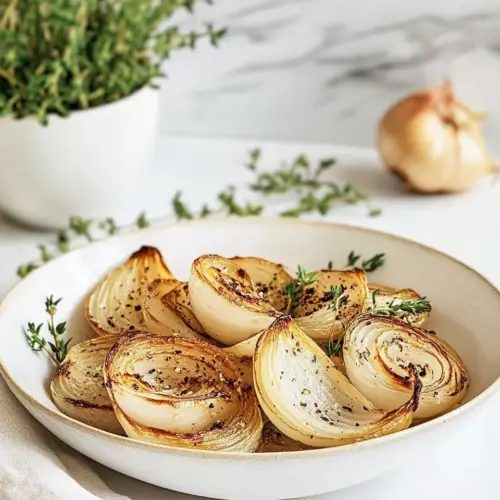
Roasted Onions
Roasted Onions produces sweet, caramelized layers of onion with a glossy, savory finish. This easy, oven roasted side is perfect for an easy weeknight dinner or to dress up a grain bowl, offering deep tastes and minimal effort, making it a must make when you want flavor without fuss.
Equipment
- Oven
- Baking Sheet
- Parchment Paper
Ingredients
- 4 medium, yellow onions Peel and halve before roasting to develop sweet, caramelized layers; provides the primary body and texture for the dish. Transform when exposed to heat, concentrating sugars and yielding a rich, savory-sweet flavor that defines the recipe.
- 2 tablespoons olive oil Drizzle evenly over onions to promote browning and prevent sticking; supplies healthy fat that conducts heat and enhances mouthfeel. Coat pieces lightly to help seasonings adhere and to encourage crisp edges and tender interiors during roasting.
- 1 teaspoon ea salt Season generously to elevate and balance flavors; brings out the natural sweetness of roasted onions and enhances overall savory depth. Dissolve into the surface during cooking to amplify taste and make the dish more savory and satisfying.
- 1/2 teaspoon black pepper Sprinkle to add mild heat and a subtle bite; contributes a contrasting note that brightens the caramelized sweetness. Disperse uniformly to highlight other flavors and provide a gentle peppery finish without overpowering the dish.
Instructions
- Preheat your oven to 425°F.: The oven should breathe a steady, dry heat that encourages caramelization. You will sense a warm, even air when you open the door, and that consistent temperature is what browns edges while keeping centers tender. If your oven runs hot, check with an oven thermometer to avoid overbrowning, a common issue. Why this matters, the high heat speeds Maillard reactions on the onion surface, building deep savory notes.
- Peel the onions and slice off the ends. Cut into halves or quarters, depending on size.: As you cut, the sharp scent of fresh onion will make your eyes water slightly, and you can see the concentric layers clearly. Even, sized pieces allow uniform cooking; uneven chunks cause some to char while others stay underdone, a frequent mistake. This technique gives consistent texture, so the larger pieces become tender and the thinner edges caramelize beautifully.
- Arrange the onion pieces on a baking sheet lined with parchment paper.: When you place the pieces, you will notice a pleasing visual order, and the parchment will catch drips while promoting even browning. Spread them with space between pieces so hot air can circulate; overcrowding traps steam and softens edges instead of browning them. The right arrangement leads to crisp edges and soft centers, producing texture contrast.
- Drizzle olive oil over the onions and sprinkle with sea salt and black pepper.: The oil will glisten on the surfaces, and the salt will start to dissolve into the onions, drawing out moisture. Rub or toss briefly so each piece wears a light coating; too much oil makes them greasy, too little prevents caramelization. This step enhances flavor through even seasoning and helps achieve those golden, slightly crisp edges you want.
- Roast in the preheated oven for 25-30 minutes, or until onions are tender and edges are caramelized.: About midway through, you may hear gentle sizzling and smell a sweet, savory perfume as sugars darken. Look for translucent centers and deep golden rims; they should yield when prodded with a fork. If they are browning too quickly, rotate the pan or lower the temperature slightly, a common fix. This slow transformation concentrates sugars and creates a texture that combines melting softness with crisped edges.
Notes
- Room temperature pieces: Letting the cut onion sit briefly at room temperature helps it roast more evenly and reduces the cold center effect.
- Use good parchment: A high quality lining prevents sticking and avoids burned bits that can taint the flavor.
- Even spacing matters: Arrange pieces with breathing room to promote crisp edges instead of steaming.
- Monitor for carryover cooking: They will continue to soften after you remove them, so pull them when centers are just tender to avoid mushiness.
- Adjust seasoning at the end: Taste after roasting and add a light pinch of salt if needed, as flavors concentrate during cooking.