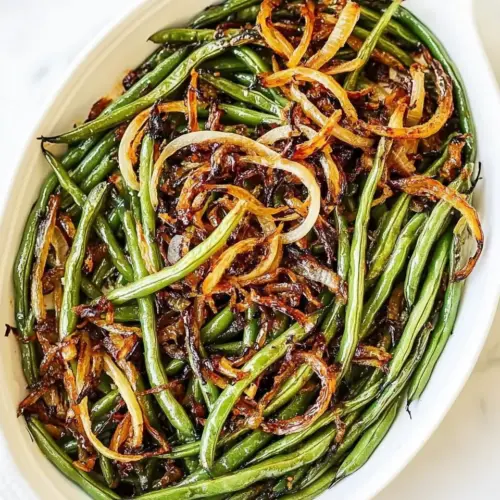
Roasted Green Beans with Caramelized Onions
Roasted Green Beans with Caramelized Onions brings together crisp blistered beans and sweet, slow cooked Vidalia onions for a simple, flavorful side. The contrast of textures and deep savory sweetness makes it an easy weeknight dinner addition or a potluck favorite, delivering big taste with minimal fuss. Try it to elevate your vegetable game and please a crowd.
Equipment
- Sheet Pan
- Large Nonstick Skillet
- Olive oil spray
Ingredients
- 1 tablespoon extra virgin oil Enhance flavor and provide a fruity, peppery base for roasting; use to coat green beans lightly so they crisp without burning. Add at the start to help caramelized onions develop golden color and deepen overall savory notes.
- 2 large Vidalia Onions, about 1 1/4 lbs, peeled and sliced Help create a sweet, deeply flavored topping when slowly cooked; slice evenly to ensure uniform caramelization and prevent burning. Add to the pan with a bit of oil and patience, stirring occasionally until soft, golden, and richly aromatic.
- kosher salt and black pepper to taste Season to taste and balance flavors; sprinkle gradually during cooking to accentuate natural sweetness of onions and to draw out moisture for better caramelization. Use black pepper to add mild heat and complexity, adjusting both to suit personal preference.
- 2 pounds green beans, trimmed Provide the main vegetable body of the dish and offer a crisp-tender texture when roasted; trim to remove fibrous ends for pleasant eating. Toss with oil and seasonings before roasting so beans brown evenly and retain bright color.
- olive oil spray Lightly coat baking surfaces and vegetables to prevent sticking and promote even browning without adding excess fat. Spray sparingly to create a fine, controllable layer that helps achieve roasted textures while minimizing pooling oil.
Instructions
- Preheat oven to 425 F.: The air in the oven should feel distinctly hot, and you will often notice an immediate dry heat when you open the door. This high temperature encourages the green beans to blister and brown on the edges while retaining tenderness inside. If your oven runs cool, expect slightly longer roasting time, and use visual cues, not the clock alone. A common mistake is to skip preheating, which causes uneven browning and limp beans.
- Heat a large nonstick skillet over medium-high heat and add the oil. Add onions, season with 1/4 teaspoon salt and pepper.: As the skillet warms, the oil will shimmer and release a faint aroma. When you add the sliced Vidalia Onions , they will hiss softly, a satisfying sound that signals moisture leaving the onions . That initial sizzle helps to start browning, and seasoning early helps draw out sweetness. Avoid crowding the pan at this stage, which can steam the onions rather than brown them.
- Cook, stirring often until they begin to brown, about 10 minutes. Reduce heat to medium low and cook stirring until the onions are deep golden brown and soft, about 30 minutes.: You will notice the onions soften and edges turning pale gold. Stirring often prevents hot spots and ensures even color. The smell shifts from sharp oniony to warm and mellow. If they are browning too rapidly, lower the heat so the interior softens without charring the surface. A typical error is leaving them unattended, which leads to quickly burnt edges that taste acrid.
- Meanwhile place the green beans on a sheet pan and spritz all over with olive oil spray, 1/2 teaspoon salt and black pepper, to taste.: At this stage the kitchen fills with a rich, sweet aroma as natural sugars caramelize. The texture changes to silky ribbons that glide on the spoon. Gentle, patient stirring encourages even color without burning, and pushing the onions against the pan helps create fond which enhances flavor. Rushing this step by increasing heat risks bitterness, so resist the urge to speed up the process.
- Bake until tender crisp, about 16 to 18 minutes, turning halfway.: When you toss the green beans on the pan and mist them, they take on a light sheen that promotes crisping. The sprinkle of salt seasons through the thin skins, and the pepper adds a subtle bite. Arrange them in a single layer so air circulates; piling them causes steaming. A frequent misstep is using too much oil which makes the beans soggy rather than blistered.
- Transfer to a platter and top with caramelized onions. Serve hot.: In the oven the green beans will soften and develop tiny browned spots and a faint popping as moisture escapes. Turning them halfway ensures even caramelization, and the timing gives you a snappy interior with a roasted exterior. Look for bright color and a slight give when pierced. Overbaking results in mushy texture, so check at the lower end of the range.
- Transfer to a platter and top with caramelized onions. Serve hot.: The final assembly is gratifying, the glossy deep golden onions draped over the vibrant roasted green beans creates contrast in color and texture. Serve immediately to enjoy the contrast of warm, silky onions and tender crisp beans. If you wait too long, the beans will cool and lose that snap, so plan plating near the end of roasting.
Notes
- Roast longer for deeper browning If you prefer more char, extend roasting by a few minutes, watching closely so the beans do not become limp. The color becomes darker and the flavor gains a smoky edge.
- Make onions ahead Cook the Vidalia Onions fully, cool and refrigerate. Rewarm gently in a skillet before serving so the dish comes together quickly.
- Use a rimmed sheet pan A rimmed pan contains any juices released during roasting, and helps you turn the green beans easily halfway through without dropping them.
- Spritz with oil instead of tossing An oil spray keeps the beans lightly coated which reduces calorie load while still achieving crisp edges, especially helpful when cooking a large batch.
- Season after roasting for brightness Add a final pinch of salt and pepper right after removing the beans from the oven to preserve texture and enhance the fresh roasted flavor.
- Serve immediately This dish shines hot, as the contrast between warm onions and crisp beans is most vivid right out of the oven, so time plating to finish roasting.