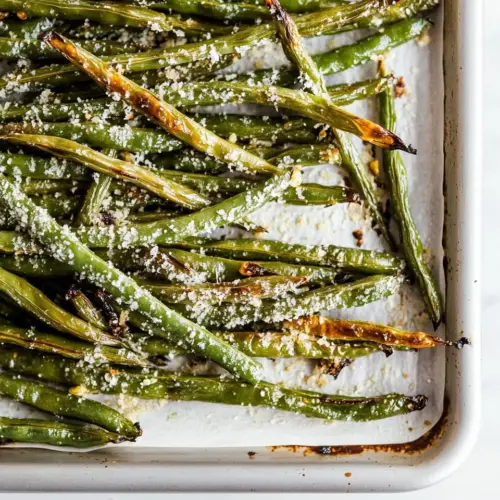
Roasted Green Beans
Roasted Green Beans are a crispy, easy side with blistered edges and a tender interior, perfumed with olive oil and finished with toasted almonds and freshly grated Parmesan. This quick recipe makes an ideal easy weeknight dinner companion or a bright holiday side, delivering satisfying texture and deep roasted flavor in minutes. Make them whenever you want a no fuss, crowd pleasing vegetable.
Equipment
- Oven
- Rimmed Baking Sheet
- Small Saucepan
- Tongs
Ingredients
- 1 pound fresh green beans or haricots verts trimmed and patted VERY dry Trimmed and patted VERY dry to ensure even roasting and prevent steaming; provides the primary vegetable body with crisp-tender texture and bright flavor when roasted at high heat.
- 1 1/2 teaspoons extra-virgin olive oil Coats the beans lightly to promote browning and prevent sticking; contributes a subtle fruity richness and helps toasted almonds and parmesan adhere to the green beans.
- 1/4 teaspoon kosher salt Seasons the beans to enhance natural flavors and balance bitterness; distributes evenly during roasting to bring out savory notes and improve overall taste.
- 1/8 teaspoon ground black pepper Adds a touch of heat and depth to the seasoning; dispersed sparingly to complement salt and bring mild aromatic contrast without overpowering the fresh beans.
- 3 tablespoons sliced almonds optional Provides a toasted crunch and nutty flavor when added either before or after roasting; optionally used to introduce textural contrast and deepen the savory profile.
- 2 tablespoons freshly grated Parmesan cheese optional Sprinkles bright umami and salty richness when added just before serving; optionally used to finish the dish with a nutty, savory accent that elevates roasted flavors.
Instructions
- Place a rack in the center of your oven and preheat the oven to 425 degrees F. Place the green beans in the center of a large, rimmed baking sheet. Drizzle with the oil and sprinkle with salt and pepper and toss to coat evenly. Spread the green beans into a single layer. It's OK if the sides touch, but make sure none of them are stacked on top of each other (if they do not all fit in a single layer, divide them between two baking sheets and bake on the upper- and lower-third over racks). I find if I put my mind to it, I can get 1 pound on an 11×17-inch baker's half sheet.: The oven needs to be fully hot before the green beans go in, because immediate, even heat encourages surface caramelization rather than slow cooking, which preserves that crisp tender texture. You will notice the oven sound settle into a steady hum and the air feel noticeably hot when you open the door. A common error is slipping the beans into an oven that is still warming, which produces limp, pale beans instead of ones with attractive dark spots. If your oven runs hot or cool, adjust slightly and check early so you do not overbrown.
- Roast the green beans for 15 minutes without disturbing them, then likely shake the pan to turn them a little bit and expose the browning undersides. Return to the oven and continue roasting for 5 to 7 minutes more, until they are crisp-tender when pierced with a fork and have dark spots.: Give the green beans space on a roomy, rimmed sheet so air circulates and heat reaches each surface. When you spread them onto the pan you should hear a dry rustle rather than a wet clump. Visual cues to look for include individual beans touching but not layered. If they are stacked you will see steam instead of blistering. Using a rimmed sheet also prevents juices from pooling, which would dampen crisping. A frequent slip up is choosing a small pan that forces layering, which ruins the texture.
- If using almonds, while the green beans roast, toast them in a small, dry saucepan over low heat, stirring often, until they are lightly golden and fragrant, about 5 minutes. Once they are toasted to your liking, immediately remove to a plate or bowl to stop their cooking.: Coating the green beans ensures every bean browns and tastes seasoned. As you toss them you will see the oil glisten and the seasonings adhere, and the pan will carry a faint olive oil scent. Tossing by hand or with tongs is fine, but do it gently so you do not bruise the beans. If you over oil the pan you will end up with greasy beans and less desirable charring. A good fix is to blot excess oil with a paper towel before roasting.
- Sprinkle the Parmesan and toasted almonds over the green beans. Enjoy immediately, with additional salt and pepper to taste.: Laying the green beans flat ensures even browning, and when they are properly arranged you can see most of each bean exposed to air. During roasting you want a little contact with the pan to create those dark caramelized spots. If the beans are crowded, they will steam, losing that crisp exterior. An easy method is to rotate the pan once midway if your sheet is slightly crowded, or split onto two sheets for consistent results.
- Roast the green beans for 15 minutes without disturbing them: Leaving them undisturbed at first allows concentrated heat to form those savory brown patches that define the flavor, and you will start to smell a sweet roasted aroma around this time. The surface will begin to blister and the beans will darken in spots. Avoid the temptation to stir too soon, because interrupting this stage prevents good caramelization. If the beans are not showing any color after this period, your oven may be cooler than expected, so extend in small increments while watching closely.
- Then likely shake the pan to turn them a little bit and expose the browning undersides: A gentle shake or a careful turn with tongs helps expose any browned undersides so they can brown evenly on other sides. You will hear a soft clatter as the beans shift and see more even speckling appear. This motion also helps redistribute any oil or seasonings that may have collected. Be cautious when handling the hot pan, use oven mitts, and avoid abrupt tosses which can spill. If you find uneven browning, rotate the pan to a different oven position to even out heat differences.
- Return to the oven and continue roasting for 5 to 7 minutes more, until they are crisp-tender when pierced with a fork and have dark spots: In this finishing stage the beans reach the ideal balance, tender inside with small dark charred areas outside. When you pierce a bean with a fork it should have a slight resistance but not be hard. You will also notice a deeper, nuttier aroma at this point. Overcooking here will lead to shriveled and dry beans, while undercooking leaves them too firm. If you prefer them softer, extend roasting by a few minutes, watching carefully to avoid burning.
- If using almonds, while the green beans roast, toast them in a small, dry saucepan over low heat, stirring often, until they are lightly golden and fragrant, about 5 minutes: Toasting sliced almonds in a dry pan releases oils and transforms their flavor into warm, nutty notes that pair beautifully with the beans. You will hear a faint crackle and smell a toasty aroma as they take on color. As soon as they reach light golden they should be removed to a cool plate to stop cooking, because residual heat keeps them browning. A common mistake is walking away and burning them, which creates bitter off flavors; stand close and stir frequently.
- Once they are toasted to your liking, immediately remove to a plate or bowl to stop their cooking: Transferring the hot sliced almonds away from the pan prevents carryover browning and preserves the perfect crunchy texture. The contrast between the warm roasted beans and the crisp cool almonds is satisfying. Let them cool slightly before sprinkling so they do not melt any finishing cheese. If you leave them in the pan they will continue to cook and may become too dark.
- Sprinkle the Parmesan and toasted almonds over the green beans: Adding the Parmesan cheese and toasted sliced almonds at the end layers in savory depth and crunchy contrast. The heat from the beans will lightly soften the cheese so it adheres without turning greasy, and the almonds provide a bright textural pop. When plated you should see flecks of cheese and scattered almond slices, and the smell will be rich and nutty. If you prefer a simpler presentation, omit one or both, but I find both elevate the overall experience.
- Enjoy immediately, with additional salt and pepper to taste: Serve the beans right away so they retain their crisp tender texture and vibrant color. As you eat, you may want a tiny extra pinch of kosher salt or a touch more ground black pepper to sharpen flavors, but taste first. Leftovers will still be good reheated, though they will be softer. A mistake is letting them sit too long before serving, which dulls their flavor and texture; quick service is the key to maximum enjoyment.
Notes
- Adjust oven time for bean size: Thinner haricots verts need less time, watch them closely around the 15 minute mark to avoid burning, while thicker green beans may need the full 22 to 25 minutes to reach a crisp tender center; rely on the fork test rather than the clock.
- Control oil for crisper beans: Use just enough extra-virgin olive oil to coat without pooling, excess oil causes steaming and sogginess; if you see pooling blot with a paper towel before roasting.
- Make ahead strategy: You can trim and dry the green beans a few hours ahead and refrigerate them uncovered for improved dryness, then toss with oil and roast just before serving for the freshest texture.
- Toasting almonds perfectly: Keep the heat low and stir constantly when toasting sliced almonds; they can turn from golden to burnt in seconds, so transfer to a cool plate the moment they show light color.
- Parmesan finish for flavor lift: Grate the Parmesan cheese fresh and add right before serving so its savory saltiness complements the roasted beans without melting into grease.