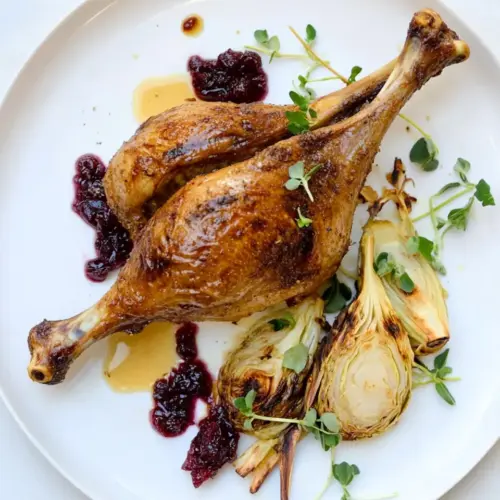
Roasted Duck Legs with Roasted Napa Cabbage Cranberry Jam
Roasted Duck Legs with Roasted Napa Cabbage Cranberry Jam is a comforting, crispy skinned, and tender meat recipe with bright jam contrast, perfect for an easy weeknight dinner or an intimate holiday meal. The slow roast yields melt in your mouth texture while a quick high heat finish creates a golden brown crust. Make it for a cozy autumn dinner and enjoy a restaurant quality result at home.
Equipment
- Oven
- Baking Tray
- Aluminum Foil
- Baking paper
Ingredients
- 2 duck legs Roast to render fat and crisp the skin while keeping the meat moist; use high heat followed by lower roasting to achieve tender, flavorful legs. Score the skin and season well to promote even browning, and collect rendered fat for cooking the cabbage or basting.
- 1/2 Napa (Chinese) cabbage Quarter and separate leaves to allow even roasting and caramelization, then toss with rendered duck fat or butter to enhance sweetness and mouthfeel. Cook until outer leaves are browned and inner leaves remain tender, providing a delicate, slightly sweet contrast to the rich duck.
- 80 g butter Melt to create a glossy, rich coating for the cabbage or to baste the duck, adding silkiness and depth to the dish. Use for finishing the sauce or combining with pan juices to enrich flavor and provide a luxurious texture.
- 2 tbsp cranberry jam Spoon to introduce bright, sweet-tart fruitiness that balances the richness of duck and butter, melting slightly into pan juices for a glossy accompaniment. Incorporate into the finished dish or warm briefly to loosen before serving so the jam melds with savory flavors.
- salt Season lightly to enhance the natural flavors of the duck and cabbage, drawing out savory notes without overpowering the dish. Sprinkle before and after cooking as needed, tasting and adjusting to maintain balance across rich, sweet, and savory elements.
- pepper Grind freshly to provide sharp, aromatic heat that complements the fatty richness and sweet jam, balancing flavors with subtle spice. Add to taste during seasoning and finish with a final crack over the plated dish for brightness.
Instructions
- Clean the duck legs of excess skin and fat and season with salt and pepper. Wrap them in baking paper, then in aluminum foil and cook in the oven for 2 hours at 180°C (356°F). Just make sure to add a little water in your pan/tray.: The aroma when you first season the duck should be bright and slightly metallic from the salt , and the texture of the skin will feel drier after patting it. This step helps render fat evenly during the long cook, preventing greasy pockets, and allows seasoning to penetrate. A common mistake is leaving wet skin, which steams instead of crisping later. If you notice excessive loose fat, trim carefully with a sharp knife to avoid tearing the skin.
- Cut the cabbage into two pieces, spread with soft butter and season with salt and pepper.: As the duck slow roasts the smell will turn richer and nutty, with rendered fat pooling gently. Wrapping seals moisture, creating tender meat that pulls away from the bone. This method prevents rapid drying while allowing connective tissue to break down into silky gelatin. Avoid skipping the foil, otherwise the exterior can overbrown before the interior is ready. Make sure the oven holds a steady temperature, and check that the foil is sealed to keep juices contained.
- Remove the duck thighs from the foil and place them in a baking tray with the Chinese cabbage. Roast for about 10 minutes in a well heated oven until the skin on the duck turns golden brown and crispy, and the cabbage begins to soften and the leaves begin to blacken at the edges.: You will notice steam hissing when the tray warms, and that water creates a humid environment that keeps the duck from getting dry. This moisture is the reason the meat stays succulent during the long cook. The pitfall is adding too much water, which can dilute flavor and prevent proper browning on the final roast. Keep only a few tablespoons, just enough to create a gentle steam around the foil packets.
- To serve, add a little cranberry jam, which goes perfectly with roasted Napa cabbage and tender duck.: When you slice the Napa cabbage you will see layered leaves that catch the butter and heat, turning glossy as they roast. The seasoning draws out moisture and concentrates natural sugars, helping the edges to caramelize. A frequent error is using cold, hard butter ; softened butter spreads evenly and promotes even browning. Be careful not to over-season, as the charred edges will concentrate flavors further.
- Remove the duck thighs from the foil and place them in a baking tray with the Chinese cabbage: The moment you open the foil expect a burst of rich, meaty steam and an intensified aroma of roasted duck . Transfer both the duck and the cabbage to a single tray so they finish together, absorbing shared roasting notes. This final arrangement allows the cabbage to pick up savory drippings without becoming soggy. A common mistake is crowding the tray, which prevents crisping; leave space so air circulates and the skin can brown.
- Roast for about 10 minutes in a well heated oven until the skin on the duck turns golden brown and crispy and the cabbage begins to soften and the leaves begin to blacken at the edges: You should hear a faint sizzle and see bubbling fat around the duck and browned bits forming on the cabbage. This high heat finish renders the last bits of fat and creates that coveted crackle, while the cabbage edges char for smoky complexity. Do not walk away, this stage happens quickly and can tip from perfect to burnt; watch for deep golden color rather than deep brown. If you notice rapid smoking, reduce the temperature slightly to avoid bitterness.
- To serve add a little cranberry jam which goes perfectly with roasted Napa cabbage and tender duck: The spoonful of cranberry jam should shine and smell bright, cutting through the savory richness with fruity acidity. Placing it at the end keeps its fresh character, rather than letting it caramelize too long in the oven. A mistake people make is applying too much jam, which masks the nuanced roast flavors, so use it sparingly as an accent. If your jam is very sweet, consider a slightly smaller portion to maintain balance.
Notes
- Trim for balance Trim visible, floppy fat from the duck, but keep a thin layer so the skin crisps nicely and the meat stays moist.
- Room temperature start Let the duck sit briefly at room temperature before roasting so the cooking is more even and the meat reaches tenderness uniformly.
- Low and slow first The initial wrapped roast at a moderate heat breaks down connective tissue without drying out the duck, producing tender meat that benefits from the final blast of heat.
- Watch the cabbage Cut the Napa cabbage evenly so the layers cook at the same rate, avoiding some leaves burning while others remain raw.
- Adjust jam to taste Taste the cranberry jam before serving and use a smaller amount if it is particularly sweet, preserving balance with the savory duck.