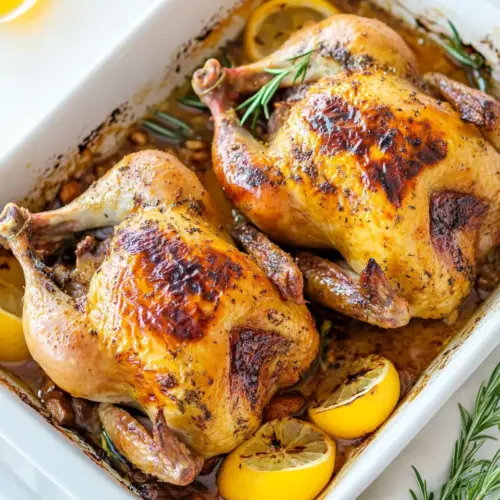
Roasted Cornish Hens
Roasted Cornish Hens are a small format roast with crispy skin, aromatic herbs, and bright lemon notes, perfect for an easy weeknight dinner or intimate Thanksgiving for two. The blend of rosemary, garlic, and smoked paprika creates savory, slightly smoky flavors that pair beautifully with simple sides. Make this when you want an elegant meal without a lot of fuss.
Equipment
- 9x13 casserole dish
Ingredients
- 2 x 1.5 lb whole Cornish hens thawed Roasted to impart rich, caramelized flavor and provide the aromatic base when placed under and around the hens during cooking. Cut into eighths to release juices and help fill the cavity for even roasting and added moisture.
- 2 yellow onions cut into 8 pieces Layered into the roasting pan and tucked into cavities to infuse a woodsy, pine-like fragrance that complements poultry. Use whole sprigs so they can be removed easily after roasting while leaving behind subtle herbal notes.
- 6 sprigs rosemary Sliced in halves to release pungent, savory oils that deepen the overall roast flavor and help create a fragrant crust on the skin. Scatter the garlic around and inside the hens so it browns and mellows into a sweet, nutty profile.
- 6 cloves garlic sliced in halves Squeezed and tucked into the cavity to provide bright acidity that balances the richness of the hens and enhances browning. Cut into eighths so the citrus oils can perfume the meat and produce a subtle freshness.
- 1 lemon cut into 8 pieces Drizzled over or rubbed onto the skin to promote crisping and help herbs and spices adhere; also adds a silky mouthfeel to the finished dish. Measure carefully to avoid excess oil that might cause flare-ups or sogginess.
- 2 tablespoons olive oil Sprinkled over the birds and mixed with other seasonings to reinforce the garlic aroma and add an additional layer of savory depth. Use as a fine seasoning to complement fresh garlic and prevent a single dominant flavor.
- 1/2 teaspoon garlic powder Crumbled into the seasoning blend to contribute a concentrated Mediterranean herb flavor that pairs well with poultry and rosemary. Add a balanced amount to avoid overpowering the other dried herbs.
- 1/2 teaspoon dried oregano Crushed into the dry rub to lend a sweet, slightly peppery herbaceousness that layers with oregano and basil for classic Italian-inspired aromatics. Use sparingly within the blend to maintain harmony among the dried herbs.
- 1/2 teaspoon dried basil Blended with paprika and chili to introduce a warm, slightly sweet herbal note that enhances the roast's overall complexity. Keep proportions moderate so it supports without dominating other seasonings.
- 1/2 teaspoon smoked paprika Sprinkled to provide a smoky, slightly sweet background that deepens the roasted flavor of the skin and meat. Use smoked paprika judiciously to add complexity without overwhelming the herb blend.
- 1/2 teaspoon chilli powder or cayenne Dusting the birds with chili or cayenne to add a controlled heat and subtle smoky spice that elevates the overall flavor profile. Choose cayenne for sharper heat or chili powder for a milder, more rounded spice.
- 1/2 teaspoon salt Rubbing onto the hens and seasoning the cavity to enhance overall taste, promote browning, and draw out natural juices during roasting. Use measured salt to ensure the meat is properly seasoned without becoming too salty.
- 1/4 teaspoon ground black pepper Seasoning the skin lightly to provide a mild, aromatic peppery bite that balances sweetness and acidity in the roast. Grind fresh if possible for brighter heat, and apply sparingly to maintain flavor balance.
Instructions
- Preheat the oven to 350°F/180°C.: The kitchen should already smell neutral and cool before you start; when the oven reaches 350°F/180°C you will notice a faint dry heat that signals even roasting. This temperature helps the skin brown steadily while the interior cooks through. A common mistake is not letting the oven fully stabilize, which can lead to uneven browning. If the oven door is opened frequently, the temperature will fluctuate, so avoid checking too often.
- In a small bowl, combine all of the dry ingredients and set aside.: As you mix the garlic powder , dried oregano , dried basil , smoked paprika , chilli powder , salt , and ground black pepper , inhale the layered aroma; the blend should smell herbal with a smoky warmth. This mix clings to the olive oil on the skin and forms a flavorful crust during roasting. Avoid over mixing with wet hands, which can cause clumping and uneven distribution on the birds.
- Prep the Cornish hens: pat dry with kitchen towels, then stuff each Cornish hen cavity with a piece of onion, garlic, lemon, and a sprig of rosemary. Truss the legs with butcher twine and tuck the wings behind the bird.: The sound of the towels rubbing the skin signals moisture removal, which is critical for browning; dry skin crisps better. When you stuff the cavity, press the aromatics slightly so they nestle inside and release steam into the meat while cooking. Trussing keeps a compact shape for even heat distribution and makes the presentation neat. A frequent mistake is skipping the pat dry step, which prevents the skin from crisping properly and can leave the bird steamed rather than roasted.
- Drizzle with half of the olive oil, then season thoroughly with the dry rub.: As you pour the olive oil , it should shimmer and feel silky on your fingertips; rub the oil into the skin to create a uniform surface for the spice mix to adhere. When you press the dry rub onto the skin, you should see an even, thin layer that will darken into a golden crust. Do not pile on too much rub as it can burn and taste bitter; light, even coverage is best.
- In a 9×13-inch roasting dish, add the onion, garlic cloves, lemon, and rosemary sprigs. Place the Cornish hens on top of the aromatics, and drizzle with the rest of the olive oil.: The pan should have a loose bed of aromatics, which will caramelize and flavor the pan juices; you may hear a soft sizzle when the birds touch the hot dish if it is warm. Positioning the hens on top allows hot air to circulate around them, promoting even skin browning. Avoid overcrowding the pan, which traps steam and prevents proper crisping.
- Add 1/2 a cup of water or chicken stock to the pan.: Pouring liquid into the bottom of the pan creates steam that helps keep the meat juicy and provides a base for the finishing sauce; you should see a shallow sheen of liquid coating the aromatics. Using stock adds depth, but water works fine if you prefer a cleaner flavor. A common oversight is adding too much liquid, which can dilute the flavors and prevent browning of the pan aromatics.
- Roast uncovered in the oven for 1 hour or until the internal temperature reaches 180°F/83°C.: During roasting the scent of rosemary and lemon will intensify and the skin will slowly transform into a deep golden brown that looks slightly glossy. Listen for a faint popping of fat and the gentle bubbling of juices around the aromatics. Use an instant read thermometer to confirm doneness; relying solely on time can be misleading because oven performance varies. A common mistake is removing the hens too early; undercooked poultry will be rubbery and unsafe.
- Remove the Cornish Hens to a plate, and tent with foil to rest. Pour the juices into a small saucepan, and reduce for 5 minutes to create a sauce.: Resting allows the juices to redistribute, so the texture becomes tender and juicy rather than leaking out when you cut into the meat. The pan juices, when reduced, concentrate into a saucy glaze with intensified sweetness and savory notes; you will smell the caramelized aromatics deepen. Take care when transferring hot liquid to a saucepan to avoid splatters, and avoid boiling the reduction too long which can make it overly salty.
- Cut each Cornish hen in half and serve with mashed potatoes, rice, or roasted/steamed vegetables. Drizzle some sauce, and enjoy!: When you slice through a rested hen, the knife should glide easily and the juices that escape should look clear, not pink. Serve each half with your chosen accompaniments and spoon the glossy sauce over the meat to amplify flavor. One mistake is serving immediately without resting, which results in drier meat and a less polished presentation.
Notes
- Add root vegetables: Place small chunks of potato and carrot among the aromatics to roast alongside the hens, they will soak up the savory pan juices and become caramelized, creating a full meal from the same pan.
- Herbed butter under the skin: Slide softened butter mixed with minced garlic beneath the breast skin to add richness and encourage deeper browning; this also bastes the meat from the inside for extra succulence.
- Swap aromatics: Try replacing half the onion with shallots for a sweeter, more delicate base that melts into the sauce and adds subtle complexity.
- Spice level: Adjust the amount of chilli powder or use cayenne if you want a cleaner, sharper heat that livens the palate without altering the overall profile.
- Use stock for depth: Replace water with a low sodium stock to lend a deeper savory note to the pan juices that becomes a richer sauce when reduced.