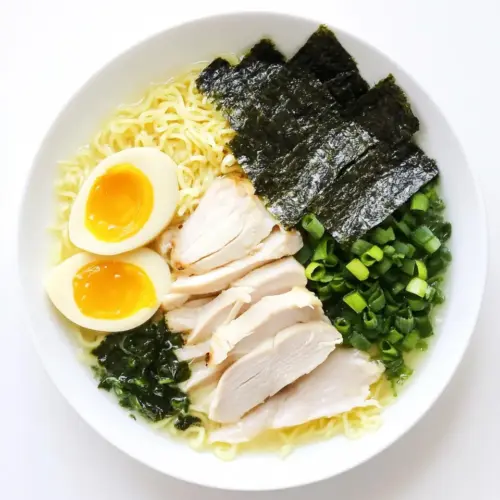
Roasted Chicken Ramen
Roasted Chicken Ramen is a cozy, savory noodle bowl with creamy soft boiled eggs, tender roasted chicken, and a miso enriched broth. It’s an easy weeknight dinner that balances silky ramen noodles with sweet corn and wilted spinach, finished with aromatic sesame oil for an irresistible, quick gourmet meal you will want to make again and again.
Equipment
- Small Saucepan
- Skillet
- Slotted Spoon
- Bowls
Ingredients
- 4 large eggs Boil to a soft or jammy consistency and halve or peel before serving to add rich, silky texture and protein to the broth; eggs help enrich the soup and balance the savory elements with a creamy yolk.
- 1 tablespoon unsalted butter Melt for browning or to add a subtle creamy richness when sautéing vegetables or finishing the ramen; butter adds depth and a mild dairy flavor that enhances roasted chicken notes.
- 1 cup sweet corn Steam or sauté briefly to retain sweetness and pop; corn provides bright, sweet kernels that contrast the savory broth and add textural interest to each bite.
- 1 tablespoon olive oil Heat briefly for sautéing aromatics and preventing sticking while adding a fruity, medium-bodied flavor; olive oil helps build the flavor base and carry seasonings through the broth.
- 8 ounces fresh spinach Wilt quickly in the hot broth or sauté to retain bright color and tender texture; spinach contributes leafy greens, mild vegetal flavor, and a boost of nutrients without overpowering the ramen.
- 1 quart chicken stock Simmer gently as the soup base to concentrate savory umami and body; chicken stock supplies the primary savory backbone and complements miso and roasted chicken for a full-flavored broth.
- 1 teaspoon red miso paste Dissolve into the warm stock to introduce concentrated umami and a hint of fermented complexity; red miso paste deepens savory notes and balances saltiness with subtle sweetness.
- 6 ounces ramen noodles Cook until just tender and slightly springy before adding to the broth to absorb flavors; ramen noodles provide the essential chewy, slurpable carbohydrate component in the dish.
- 6 ounces cooked chicken, I used leftover garlic butter roasted chicken Shred or slice and warm through in the broth to add savory, roasted meat and hearty protein; cooked chicken contributes texture, flavor continuity with the roasted theme, and satisfying substance.
- 4 green onions, thinly sliced Slice thinly and scatter over the finished bowl to impart a fresh, sharp onion bite; green onions add aromatic brightness and a crisp contrast to the richer broth and ingredients.
- toasted sesame oil for drizzling Drizzle sparingly over the finished bowl to introduce a nutty, toasty aroma and concentrated sesame flavor; toasted sesame oil enhances depth and provides an aromatic finishing note.
- nori/seaweed pieces for serving Crumble or place sheets on the bowl before serving to add briny, oceanic umami and a crisp or chewy contrast; nori pieces contribute a traditional sea flavor and visual appeal.
Instructions
- Begin by soft boiling the eggs so they can cool. Heat about 3 inches of water in a small saucepan over medium heat until boiling. Once boiling, reduce the heat until it’s barely a simmer, add the eggs gently and cook for 6 minutes. Remove the eggs with a slotted spoon and place in an ice bath. Let cool completely before peeling.: As the eggs cook you will hear a gentle, soft simmer from the saucepan and the scent is minimal, but once you plunge them into an ice bath the shell separation changes, making peeling much easier. The key is timing so the yolk sets but remains jammy, and cooling rapidly stops residual cooking. A common mistake is placing eggs into boiling water too vigorously which can crack shells; lower them in carefully with a spoon to avoid leaks.
- In a small saucepan, heat the butter and add the corn, stirring to coat. You can add a sprinkle of salt and pepper if desired. Place the corn in a bowl. Add the olive oil to the skillet and cook the spinach until it just begins to wilt.: You will notice the water moving steadily and producing consistent bubbles, a sign it is hot enough to cook the eggs. Keeping the heat at medium prevents violent rolling boils that could jostle shells. If the water simmers too hard the eggs can bounce and crack, so reduce the heat once it reaches a boil.
- Heat the chicken stock just until it’s boiling. Whisk in the miso paste. Add the ramen noodles and cook for 2 to 3 minutes – or as long as the noodles call for. As soon as they are finished, begin serving the ramen in bowls. I like to add the noodles, corn, spinach and chicken, then ladle some broth over top. Finish it off with sliced green onions, a drizzle of sesame oil and the soft boiled eggs – cut in half. Slide some nori on the side of the bowl to serve.: At this point you will see small, steady bubbles and the temperature will be perfect to set the whites while keeping yolks soft and creamy. The gentle movement helps the eggs cook evenly. Overcooking by even a minute or two can make the yolk crumbly, so set a timer carefully.
- Remove the eggs with a slotted spoon and place in an ice bath: The ice bath instantly shocks the eggs, stopping carryover cooking and shrinking the membrane for easy peeling. You will feel the eggs cool and the shells will separate slightly, signaling readiness. If you skip the ice bath, the eggs continue to cook and the yolk texture will change.
- Let cool completely before peeling: Cooling until the eggs are no longer warm makes peeling smooth and keeps the yolks intact; you will notice the shell coming off in larger pieces when the eggs are fully chilled. Peeling warm eggs often results in ragged shells and pitted whites, so patience here pays off.
- In a small saucepan, heat the butter and add the corn, stirring to coat: As the butter melts the corn will start to sizzle and give off a sweet aroma; stir to encourage gentle caramelization and even coating. This step concentrates sweetness and adds a glossy finish. If the butter browns too quickly, lower the heat to avoid any bitter notes.
- You can add a sprinkle of salt and pepper if desired: The seasoning will highlight the corn flavors and create balance against the savory broth, and you will notice the seasonings bloom when they hit the warm kernels. Be cautious with salt early, as the chicken stock may already have sodium.
- Place the corn in a bowl: Moving the corn off the heat preserves texture and prevents overcooking; the residual warmth maintains juiciness without softening too much. Leaving it in the pan can continue cooking the kernels beyond your intention.
- Add the olive oil to the skillet and cook the spinach until it just begins to wilt: The spinach will shrink rapidly and release a fresh, leafy aroma; remove it when it still looks glossy and bright to keep color and nutrients. Overcooking turns it dull and limp, which diminishes textural contrast in the bowl.
- Heat the chicken stock just until it’s boiling: As the chicken stock warms you will smell savory notes rising, and a soft rolling boil indicates it is ready to accept miso and noodles. Avoid a hard rapid boil which can flatten delicate aromatics and make the broth taste sharper.
- Whisk in the miso paste: Whisking creates a silky, homogenous broth and releases the umami perfume of the miso . You will see the stock gain a slightly thicker sheen and deeper color. Adding miso to violently boiling stock can mute its nuanced flavors, so whisk gently and taste as you go.
- Add the ramen noodles and cook for 2 to 3 minutes: The noodles will soften quickly, becoming tender yet springy; watch for the texture described on the package to hit that perfect chew. Stir once or twice to prevent clumping. Overcooking will produce limp noodles that absorb too much broth, leaving the bowl heavy.
- As soon as they are finished, begin serving the ramen in bowls: The steam will carry the combined aromas and you can arrange toppings for visual appeal. Serving immediately preserves noodle texture and temperature. Waiting too long causes noodles to soak up broth and the dish loses contrast.
- I like to add the noodles, corn, spinach and chicken, then ladle some broth over top: Placing components deliberately makes each bite layered, and you will see colors and textures arranged for balance. Ladling hot broth over toppings slightly warms cooled ingredients and melds flavors. Pouring too much broth at once can displace delicate toppings, so do it gently.
- Finish it off with sliced green onions, a drizzle of sesame oil and the soft boiled eggs cut in half: The final touches provide fresh bite, nutty aroma from toasted sesame oil , and creamy yolk that enriches the broth. Cut the eggs and place them yolk side up so each bowl gets that luxurious ribbon of texture. Avoid adding the sesame oil too early, as prolonged heat blunts its fragrance.
- Slide some nori on the side of the bowl to serve: The nori offers a crisp, briny element that contrasts the warm, silky soup; adding it at the table keeps it texturally distinct. If immersed too soon it softens and loses its pleasant crisp snap.
Notes
- Use leftover roasted chicken to speed the process and preserve roasted flavor; toss it briefly in warm broth before serving if it feels dry.
- Make it heartier by increasing the chicken portion and adding more greens for volume without masking the broth.
- Keep it light by using low sodium chicken stock and limiting the amount of butter and sesame oil at finish to highlight pure umami.
- Boost aromatics by finishing with more thinly sliced green onions and a small sprinkle of toasted sesame seeds for texture.
- Prep ahead by soft boiling the eggs and cooling them, storing covered in the fridge for up to two days for faster assembly.