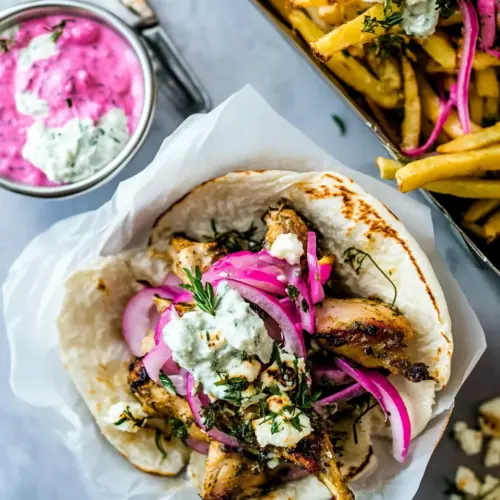
Roasted Chicken Gyros with Tzatziki and Feta Fries
Roasted Chicken Gyros with Tzatziki and Feta Fries combines juicy shredded chicken marinated in tangy yogurt and lemon with crisp oven fries finished in salty feta. This creamy, crispy, easy weeknight dinner brings bright Mediterranean flavors and is perfect for sharing with friends, delivering restaurant quality results at home.
Equipment
- Baking Sheet
- 9 x 13 inch baking dish
- Mixing Bowl
- Forks for shredding
Ingredients
- 1/2 cup plain full-fat Greek yogurt Provide creamy tang and body to sauces and dressings; helps balance acidity in marinades and adds richness to tzatziki.
- 1/4 cup extra virgin olive oil Add fruity, peppery fat for marinades and frying; helps emulsify dressings and carry flavors into the chicken.
- 1/4 cup fresh lemon juice Brighten and tenderize with acidic citrus; helps cut richness and contributes fresh lemony aroma to the yogurt and marinades.
- 5 garlic cloves, finely minced or grated Deliver pungent, savory heat and aromatic depth when minced; infuse marinades and tzatziki with sharp garlicky flavor.
- 1 tablespoon smoked paprika Contribute warm, smoky color and depth; provide a distinctive paprika flavor that complements roasted chicken.
- 1 tablespoon chopped fresh oregano Add bright, aromatic herbaceousness and Mediterranean character; fresh leaves offer a lively lift to marinades.
- Kosher salt and black pepper Season and enhance all flavors in the dish; balance sweetness and acidity while allowing other aromatics to shine.
- 1 1/2 pounds boneless skinless chicken breasts Supply lean protein and a sturdy base for the gyros; roast or grill to develop caramelized exterior and juicy interior.
- 6 fresh pitas or naan bread, warmed Offer soft, warm vehicle for filling; hold sliced chicken and toppings while providing a slightly chewy texture.
- Tzatziki, pickled onions, radish, and lettuce, for serving Provide assembled accompaniments for serving; offer contrasting textures and flavors that complete each gyro.
- 1/4 cup extra virgin olive oil Coat fries or dress salads with a second drizzle of fruity oil; enhances crisping and mouthfeel during roasting or frying.
- 2 garlic cloves, minced or grated Add a mellow garlicky punch to finish the fries or dressing; minced garlic brightens savory components.
- 3 tablespoons chopped fresh oregano Bring concentrated herb flavor to the fries or seasoning blend; chopped oregano intensifies Mediterranean notes.
- 1/2 to 1 teaspoon cayenne pepper Introduce adjustable heat and smoky pepperiness; small amounts add a warming kick to the fry seasoning.
- Kosher salt and black pepper Season the fries and other components to taste; salt and pepper balance flavors and enhance overall palatability.
- 4 medium russet potatoes, cut into 1/4-inch-thick matchsticks Provide a starchy, crisp element when cut into matchsticks and fried or baked; form the base for feta fries.
- 1/2 cup crumbled feta cheese Offer salty, tangy richness as a finishing garnish; crumbled feta melts slightly and contrasts crisp potatoes.
Instructions
- To make the chicken. In a 9 x 13-inch baking dish, combine the yogurt, olive oil, lemon juice, garlic, paprika, oregano, and a pinch each of salt and black pepper. Add the chicken and toss to coat. Cover and marinate in the fridge for at least 1 hour or up to 12 hours. Preheat the oven to 425 degrees F. Remove the chicken from the fridge and let it sit at room temperature while the oven preheats. Transfer the chicken to the oven and roast for 20 to 25 minutes, or until the chicken is cooked through. Remove the chicken from the oven and let cool for 5 minutes. Shred the chicken with two forks or thinly slice it. Meanwhile, make the fries. In a small bowl, whisk together the olive oil, garlic, oregano, cayenne, and salt and black pepper to taste. Place the potato matchsticks in a large bowl and pour over half the garlic mixture. Gently toss to coat. Divide the fries between two baking sheets, arranging them in a single layer. Bake for 15 to 20 minutes, then flip, reduce the oven temperature to 400 degrees F, and bake for 15 to 20 minutes more. Remove from the oven and toss with the remaining garlic mix and the feta. Stuff the chicken inside the warm naan and serve with the fries, tzatziki, pickled red onions, and radishes, if desired.: The air in the kitchen will become fragrant as the sharpness of garlic and the citrus of lemon juice mingle with the creaminess of the yogurt . When you whisk those together with the olive oil and spices, you should smell a bright, savory lift that promises depth once the chicken marinates. The reason this step matters is the marinade both seasons and tenderizes, helping the chicken stay moist during high heat roasting. A common mistake is overworking the meat while coating it, which can tear the surface and cause uneven cooking; instead gently turn pieces so they are fully coated. Visually you want the chicken evenly glossed with the marinade, not pooled in liquid, which signals a good balance. If the garlic scent feels too sharp, give the mixture fifteen to thirty minutes before adding the chicken so the flavors mellow slightly.
- Add the chicken and toss to coat: You will notice the texture of the chicken change as it absorbs the marinade, becoming tacky and scented through. Tossing ensures every surface picks up those aromatic notes, which later translate into uniform flavor after roasting. The why here is simple, even coating equals reliable seasoning; unevenly coated pieces will roast with dry spots or underflavored centers. Avoid overcrowding the dish when tossing, because crowded meat won’t marinate or later roast evenly. If some pieces seem undercoated, gently press the marinade into those areas with a spatula so they catch up.
- Cover and marinate in the fridge for at least 1 hour or up to 12 hours: The passage of time lets the acids and enzymes in the yogurt and lemon juice tenderize the chicken , transforming the texture into something juicy and pull apart tender. You will notice the aroma deepen and the marinade slightly thicken as it clings to the meat. This matters because short marination gives some flavor, while longer windows yield more deeply infused meat. A common pitfall is leaving meat too long in overly acidic marinades, which can make the texture mushy if extended beyond the recommended time; keep to the stated window. When you remove the dish from the fridge, it should look well coated and slightly firmed by the chill, ready to come to room temperature before roasting.
- Preheat the oven to 425 degrees F: You will hear the oven click as it powers up and, soon, a dry heat will build that is essential for creating a roasted exterior. Hot air around the chicken promotes Maillard browning and seals in juices, which is why this high temperature is used. A common error is putting the meat into an oven that has not fully reached temperature, which leads to longer cook times and less pleasing browning. Visual cues to watch for later are golden edges and clear juices; if you skip preheating, you will miss that crisp, roasted character.
- Remove the chicken from the fridge and let it sit at room temperature while the oven preheats: Allowing the chicken to temper helps it cook more evenly, reducing the chance of dried exterior and undercooked center. You will feel the chill leave the surface and the marinade will relax slightly, making the transfer to the baking dish smoother. This matters because temperature parity shortens cook time and improves texture. Avoid leaving the meat out for excessively long periods; thirty minutes is ample. If the kitchen is very warm, shorten the resting time so you are not working with unsafe temperatures.
- Transfer the chicken to the oven and roast for 20 to 25 minutes, or until the chicken is cooked through: As the chicken roasts you will hear a soft sizzle and notice the aroma intensify, with a toasty note from the spices. Proper roasting creates a golden surface and juicy interior, which is critical for shredding or slicing later. The why is that the oven heat quickly sets the exterior while the inside cooks gently, maintaining moisture. A frequent mistake is relying solely on time rather than checking doneness; use visual cues like a plump, opaque interior or a thermometer reading of 165 degrees F. If the exterior is darkening too quickly, tent loosely with foil to prevent burning while allowing the center to finish.
- Remove the chicken from the oven and let cool for 5 minutes: After roasting, a short rest lets the juices redistribute, so when you slice or shred the chicken it will be moist rather than releasing a flood of liquid. The cooled surface also makes handling easier and safer. This pause matters for texture and presentation. A common oversight is slicing immediately, which causes juices to pool on the cutting board; resist the urge and allow the meat to rest briefly. You should feel the meat firm slightly and the aroma settle into a savory, concentrated note.
- Shred the chicken with two forks or thinly slice it: The act of shredding creates strands that soak up tzatziki and meld with bread and toppings, offering a pleasant mouthfeel. You will notice the meat separates easily when it has been properly roasted and rested, with steam rising as you pull it apart. This matters because texture influences how the gyro assembles and how sauces cling. A typical misstep is shredding cold meat which resists clean separation; if necessary, warm the chicken briefly so it pulls apart smoothly. Aim for uniform shreds for consistent bites.
- Meanwhile, make the fries: Right away you will want to combine the oil, minced garlic , chopped oregano , cayenne, and salt so their aromas bloom into the fat. Tossing the matchstick potatoes in half the mixture seasons the surfaces that will crisp in the oven, ensuring browning and flavor. This step matters because precoating the fries means the oil carries flavor and aids in even caramelization. Common mistakes include undercoating or overcrowding the baking sheets, both of which produce limp fries; spread in a single layer for best results. You should hear a gentle sizzle when the fries first hit the hot sheet and smell the garlic toasting.
- Place the potato matchsticks in a large bowl and pour over half the garlic mixture: As you toss, observe the thin ribbons of potato take on a glossy sheen, signaling they are ready for the sheet. The oil helps with heat transfer and the herbs adhere, so each fry gains flavor as it browns. The why is uniform seasoning and improved texture; unevenly oiled fries will brown inconsistently. Avoid adding too much oil which makes the fries greasy rather than crisp. The coated potatoes should glisten without being slick.
- Gently toss to coat: When you gently move the fries, you will see the herb flecks cling and the aromas rise. This careful motion prevents breaking the matchsticks while still ensuring even coverage. Technique matters because overworking the potatoes can make them mushy, while under tossing leaves dry spots. Watch for a uniform glossy finish and a faint garlic scent; those cues mean you are ready to arrange them on the sheets.
- Divide the fries between two baking sheets, arranging them in a single layer: Spacing is crucial, because air needs to circulate around each fry to form crisp edges. As the oven works, you will observe edges browning and the centers becoming tender. This arrangement matters for texture; crowded fries steam instead of crisping. Avoid piling them together, and if necessary use a third sheet rather than overlapping. A visual sign of success is evenly distributed golden color across each sheet after baking.
- Bake for 15 to 20 minutes, then flip, reduce the oven temperature to 400 degrees F, and bake for 15 to 20 minutes more: The first phase starts dehydration and browning, the flip ensures even color, and the reduced temperature finishes the interior without burning the exterior. You will hear a lighter sizzle on the first side and a more pronounced crisping after the flip. The why is layered cooking for optimal texture, combining high heat for browning and moderate heat for thorough cooking. Common errors include skipping the flip or failing to lower the temperature, which can lead to burnt edges. Watch for uniform golden brown tones and a firm but tender bite.
- Remove from the oven and toss with the remaining garlic mix and the feta: Once hot from the oven, the fries will eagerly absorb the remaining herb oil, and the warm surface helps the crumbled feta adhere and soften slightly, creating pockets of salty creaminess. This finishing touch matters because it layers flavor and contrasts textures. A mistake to avoid is adding the feta too early while fries are wet, which can make it clump; toss just after baking. You want the feta distributed in little clusters across the fries for bursts of tang in every bite.
- Stuff the chicken inside the warm naan and serve with the fries, tzatziki, pickled red onions, and radishes, if desired: The sensory payoff is immediate, with steam rising from the warm pitas , the creamy tzatziki cooling the spicy notes, and the fries offering salty crunch. Building your gyro allows you to balance textures and flavors in each mouthful. This step matters because assembly affects how each bite reads in the mouth. A common misstep is overfilling the bread, which makes eating messy; layer thoughtfully so each component is present but manageable. Serve promptly so the fries retain their crispness and the pitas remain warm.
Notes
- Marinating time affects tenderness and flavor; aim for at least one hour and up to twelve hours to let the yogurt and lemon juice do their work without over tenderizing the chicken.
- Room temperature start helps the chicken cook evenly; remove it from the fridge about thirty minutes before roasting so the center doesn’t stay undercooked when the exterior is done.
- Hot oven for browning is essential; preheat to the full temperature so the chicken and fries brown quickly, sealing juices and creating texture contrast.
- Single layer fries ensure crispness; if your sheet pans are small, split the batch so air circulates and you avoid limp centers.
- Finish fries warm with the remaining garlic oil and crumbled feta right out of the oven so the feta softens and clings to the potatoes for maximum flavor contrast.
- Serve family style by letting guests assemble their own gyros, which keeps the experience interactive and prevents the bread from getting soggy too soon.