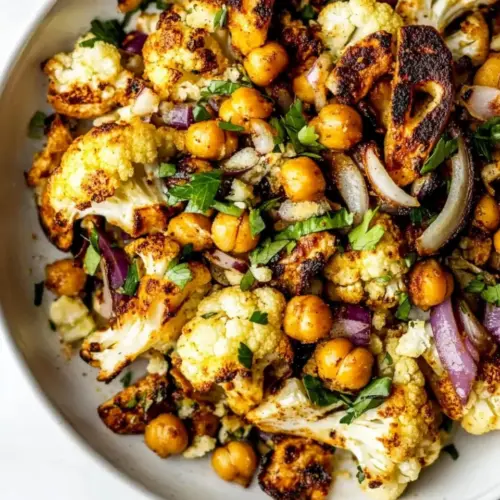
Roasted Cauliflower Salad with Crispy Chickpeas
Roasted Cauliflower Salad with Crispy Chickpeas is a warm, textured salad featuring tender roasted cauliflower and crunchy chickpeas, bright tahini lemon dressing, and sweet chopped dates. This easy weeknight dinner or side brings smoky spices and a satisfying mix of creamy and crispy elements, perfect for make ahead meals or casual entertaining. Try it for a flavorful, pantry friendly meal that always impresses.
Equipment
- Oven
- Baking Sheet
- Mixing Bowl
- Whisk
- Towel
Ingredients
- 1 small head of cauliflower cut into bite-sized pieces Roasted to tender, bite-sized florets that provide a hearty, nutty base and absorb seasonings for the salad.
- 1/2 Red Onion cut into 1/2” slices Sliced into 1/2” rounds to add sharp, mild sweetness and a crunchy contrast when roasted alongside cauliflower.
- 1 teaspoon smoked paprika Sprinkled for a warm, smoky depth that enhances roasted flavors and complements the chickpea crispiness.
- 1/2 teaspoon ground cumin Ground to offer earthy warmth and a subtle citrusy note that pairs well with smoked paprika and tahini dressing.
- 1 teaspoon garlic powder divided Divided to season both the vegetables and the chickpeas, contributing an aromatic garlic underpinning throughout the dish.
- 1 teaspoon kosher salt divided Divided to balance seasoning at different stages, ensuring both the roasting vegetables and the dressing are properly salted.
- 2 tablespoons olive oil divided Divided to coat the cauliflower and chickpeas for roasting and to enrich the dressing with fruity, silky fat.
- 1 15.5 ounce can chickpeas drained and rinsed Drained and rinsed before roasting to crisp up in the oven and provide a protein-rich, crunchy component to the salad.
- 1/4 cup drippy tahini Used drippy for a creamy, slightly bitter base in the dressing that binds lemon and water into a smooth emulsion.
- Juice of 1 small lemon 1-2 tablespoons Squeezed to provide bright acidity that cuts through the tahini and oil, lifting the entire flavor profile of the salad.
- 1/4 teaspoon salt Added to the dressing to finely tune saltiness and enhance all other flavors without overpowering the tahini.
- 3 -4 tablespoons water Stirred in to thin the tahini dressing to a pourable consistency while keeping it creamy and cohesive.
- 1/2 cup pitted Medjool dates chopped Chopped to introduce pockets of concentrated caramel sweetness that contrast roasted vegetables and savory elements.
- 1/3 cup pitted Castelvetrano olives torn in half Torn in half to contribute briny, buttery bites that add complexity and Mediterranean character to the salad.
- 1/2 cup roughly chopped fresh flat-leaf parsley Roughly chopped to provide fresh, herbaceous brightness and a lively finish that balances richness and saltiness.
Instructions
- Prep: Preheat the oven to 425 F and grease or line a large baking sheet. Place the chickpeas on a clean kitchen towel and pat dry; set aside.: The oven heat will create caramelization and aroma, which tells you roasting is working. As you preheat the oven to 425 F , you will smell a faint warmth from the coils as they climb in temperature, signaling the right environment for browning. Greasing or lining a large baking sheet prevents sticking, and placing the towel dried chickpeas aside ensures they can crisp properly. Why this matters, sensory wise: when the oven hits temperature, the air becomes dry and hot, which encourages surface moisture to evaporate quickly, producing that desirable roasted scent. Troubleshooting tip: if the oven is not fully preheated, the vegetables will steam rather than roast, yielding limp results.
- Vegetable Prep: Add the cauliflower and red onion to a large bowl and add the smoked paprika, cumin, 1/2 teaspoon garlic powder and 1/2 teaspoon salt. Drizzle 1 1/2 tablespoons of oil over the veggies and mix well until evenly coated. Spread evenly across half of the baking sheet and set aside.: Tossing the cauliflower and sliced red onion with smoked paprika , cumin , a portion of the garlic powder , and half the salt gives the vegetables a fragrant spice coat that intensifies under heat. As you drizzle about 1 1/2 tablespoons of olive oil and mix, you should notice the spices evenly hugging each piece, and the surface will glisten slightly. Visually, evenly coated florets turn golden and develop tiny charred spots, while the onion softens and caramelizes at the edges. Why this technique matters: even coating ensures uniform browning and flavor distribution. Common mistake: overcrowding the pan, which traps steam and prevents crisp edges.
- Chickpeas: Add the dry chickpeas to the same bowl (no need to rinse) along with the remaining 1/2 teaspoons of garlic powder and salt. Drizzle with the remaining oil and toss well. Spread evenly across the other half of the baking sheet.: After patting the canned chickpeas dry, toss them in the same bowl with the remaining garlic powder , remaining salt , and the last bit of olive oil . You want their skins to be as dry as possible, because dry skins will crisp and rattle gently as they roast. The texture shift from soft to crunchy is audible, that little staccato tells you they are doing well. Why it matters: a light coating of oil helps conduct heat and aids in browning without making them soggy. Troubleshooting tip: if they still seem wet, spread them on a towel and pat again to avoid steaming in the oven.
- Roast: Roast in the top rack of the oven for 20 minutes. Flip the vegetables and toss the chickpeas, then return to the oven and bake for another 15 to 20 minutes.: Position the baking sheet on the top rack and roast for 20 minutes , then flip the cauliflower and toss the chickpeas , returning them to the oven for another 15 to 20 minutes . As they roast, you will notice the cauliflower edges turning golden brown and the aroma becoming nuttier and more complex, while the chickpeas will darken and produce a toasted, savory scent. The sound is subtle but you may hear a faint crackle as moisture leaves the surfaces. Why this matters: the staged roast ensures both components reach their ideal textures without one overcooking. Troubleshooting tip: if any pieces brown too quickly, rotate the sheet and reduce the rack level for more even heat distribution.
- Tahini Dressing: In the meantime, whisk the tahini, lemon juice, and salt together in a small bowl; the mixture will thicken. Continue to whisk the dressing and slowly add 3 tablespoons of water, until the dressing lightens in color and becomes pourable. Add more water to the dressing to thin as necessary. Set aside.: While the roasting proceeds, whisk the tahini , fresh lemon juice , and a little salt in a bowl. Initially the mixture will thicken and look almost paste like, but as you slowly add 3 tablespoons of water and continue whisking, it will lighten in color and become smooth and pourable. The texture should be silky, with a glossy sheen that clings to a spoon. Why this matters: emulsifying the tahini gradually prevents splitting and yields a balanced tang that ties the salad together. Troubleshooting tip: if it becomes too thick, add water in small increments; if it separates, whisk vigorously to bring it back together.
- Assemble: Use a large spoon to spread half of the tahini dressing across the bottom of a large serving plate (or individual plates). Top the dressing with a thin layer of the roasted cauliflower and onion, then sprinkle the crispy chickpeas on top. Garnish the salad with the remaining dates, olives, and fresh parsley. Drizzle the remaining dressing on top.: Spread half the tahini dressing across the bottom of a serving plate, then layer the roasted cauliflower and red onion on top followed by the crispy chickpeas . Top with chopped dates , the torn Castelvetrano olives , and roughly chopped flat leaf parsley , finishing with the remaining dressing drizzled over. As you build the salad, aim for a balance of textures and colors so each serving has a mix of creamy dressing, soft roast, crunchy chickpeas, and sweet fruit. Why this matters: thoughtful assembly ensures every forkful delivers the intended contrast. Troubleshooting tip: if the chickpeas sit in dressing too long they will soften, so add them near the end for maximum crunch.
- Serve: Serve warm, or chilled if desired. Leftovers will keep in the fridge for up to 5 days.: Offer the dish warm or chilled depending on preference, and note that leftovers keep well in the refrigerator for up to 5 days . When serving warm the aromas are more pronounced and the tahini has a silkier mouthfeel, while chilled portions firm up and allow flavors to meld. Why this matters: temperature changes alter how flavors register on the palate, so choose according to your planned timing. Troubleshooting tip: if reheating, do so briefly or the chickpeas may lose their crispness.
Notes
- Dry chickpeas thoroughly: For the crispiest results, drain and rinse the canned chickpeas, then spread them on a clean towel and press gently to remove as much surface moisture as possible before tossing with oil and spices.
- Use an even cut for cauliflower: Cut the cauliflower into similarly sized bite sized pieces so they roast uniformly; uneven pieces will lead to some underdone centers and some over browned edges.
- Reserve some dressing for plating: Spreading half the tahini on the serving plate first creates a flavorful base and helps keep the chickpeas from sitting directly on the plate, enhancing texture and presentation.
- Adjust lemon to taste: Start with a small amount of lemon juice in the tahini and add more if you want a brighter tang; acidity balances the tahini richness and highlights the roasted notes.
- Control oven placement: Roasting on the top rack encourages quicker browning for both the cauliflower and the chickpeas, but watch closely as oven variability can change timing slightly.