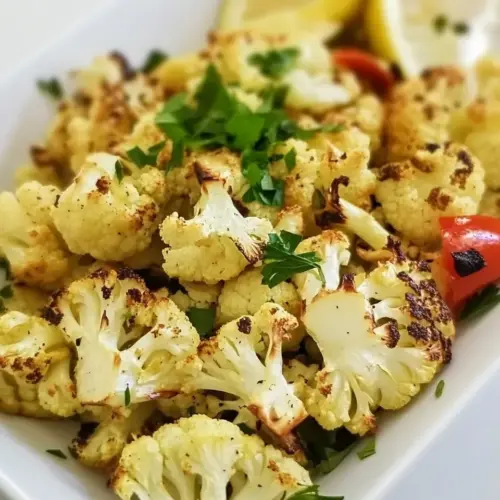
Roasted Cauliflower
Roasted Cauliflower offers crispy, golden edges and a tender interior with minimal effort. This easy weeknight side is savory, toasty, and naturally satisfying, perfect for simple dinners or entertaining. The straightforward seasoning highlights the vegetable's natural sweetness, making it a favorite for both family meals and crowd pleasing gatherings.
Equipment
- Metal baking sheet
- Aluminum Foil
- Metal spatula
Ingredients
- 1 head cauliflower Trim and break into florets to provide the main vegetable base for roasting; delivers a tender interior and caramelized edges when cooked at high heat. Absorbs seasonings and oil, creating a savory centerpiece for the dish.
- 1 tablespoon olive oil Coat the cauliflower evenly to promote browning and prevent drying; contributes subtle fruity flavor and helps salt and pepper adhere. Facilitates crisp exterior texture while keeping the florets moist inside.
- 1 teaspoon kosher salt Season the florets evenly to enhance natural flavors and balance sweetness from caramelization; helps draw out moisture for better browning. Use kosher salt for a cleaner, less intense saltiness that distributes well across the vegetable.
- 1/4 teaspoon black pepper Add a light, sharp heat to taste and highlight savory notes without overpowering; cracked black pepper creates a mild pungency that complements roasted cauliflower. Sprinkle sparingly to avoid dominating the delicate vegetable flavors.
Instructions
- Preheat oven to 450°F and coat a large metal baking sheet with a small amount of olive oil.: You will smell a warm, clean oven air as it approaches temperature, which ensures the surface heat is high enough to brown the cauliflower . The hot sheet helps create immediate sizzle when the florets hit the pan, promoting caramelized edges. Use a light film of olive oil so the pieces do not stick, but avoid pooling oil which can steam the florets instead of roasting them. A common error at this stage is not allowing the oven to fully preheat, which leads to pale, less flavorful results.
- Wash and dry cauliflower and cut into florets. The smaller you cut it, the more toasty and crispy the edges will get.: You will notice a fresh, green vegetal scent as you trim the head. Drying the pieces thoroughly is essential, because moisture on the surface turns to steam in the oven and prevents crisping. When you cut into smaller florets, they offer more exposed surface area, producing more toasty, crunchy edges. Avoid uneven sizes, which cause inconsistent cooking, leaving some pieces underdone while others burn.
- Place the cauliflower in a pile on the baking sheet, drizzle with about a tablespoon of olive oil and sprinkle with salt and pepper.: The little hiss of oil when it meets the hot sheet is satisfying and signals the start of caramelization. Tossing them in the oil lets the seasonings adhere, and you should see a faint glossy coat. If the oil is uneven, some florets will brown faster than others, so make sure every piece has a light coating. Overcrowding with excess oil or seasoning can result in uneven browning.
- Toss to coat and spread into a single layer on the baking sheet.: You'll hear the soft scrape as pieces settle into place, and seeing them in a single layer is crucial so hot air circulates around each floret for even browning. If pieces overlap, the covered spots steam instead of roast, producing limp texture. Resist the urge to crowd the pan, and use a second sheet if necessary to keep space between pieces.
- Cover tightly with aluminum foil and bake for 20 minutes.: Covering creates a short steam phase that helps cook the interiors through, making the centers tender. While covered, the oven air softens the vegetable, and you may notice a gentle, sweet smell as starches soften. The common mistake here is leaving the foil on too long, which prevents the surfaces from browning later. Remove the foil at the right time to allow the exterior to dry and crisp.
- Remove from the oven and using a metal spatula, gently flip the cauliflower.: When you lift the foil, a warm, roasted aroma will rise, and you may see some beginning caramelization. Gently flipping exposes new surfaces to direct heat, so you get more even browning. Use a metal spatula to separate any pieces that stuck, but be careful not to smash them, which would release moisture. Ripping or roughly turning can break florets and make the texture mushy.
- Return, uncovered to the oven, and roast for an additional 10-15 minutes, flipping again after about 10 minutes.: In this final stage, you will hear faint crackles as edges crisp, and the color deepens to golden and amber spots appear. This uncovered roast develops the signature toasty notes and slight chew on the tips. Flip once more to ensure all sides reach similar browning, and watch closely near the end to prevent burning. A frequent error is leaving the pan unattended during this last stretch, which can push some pieces from beautifully caramelized to bitterly charred.
Notes
- Use room temperature vegetables to help the florets roast evenly because cold centers take longer to heat through, which can lead to overbrowned outsides and undercooked middles.
- Choose a metal baking sheet rather than glass, because metal transmits heat faster and encourages better browning on the bottom of each floret.
- Trim into similar sized pieces so every floret finishes at the same time, minimizing guesswork and preventing some pieces from drying out while others remain firm.
- Apply oil sparingly and evenly since too much oil can pool and steam, while too little leaves dry spots that will not brown properly.
- Rotate the pan halfway through if your oven has hot spots, this simple movement promotes uniform color across the batch.
- Let the roasted pieces rest briefly off the heat to let their surface settle, which makes them easier to handle and deepens the flavors as they cool slightly.