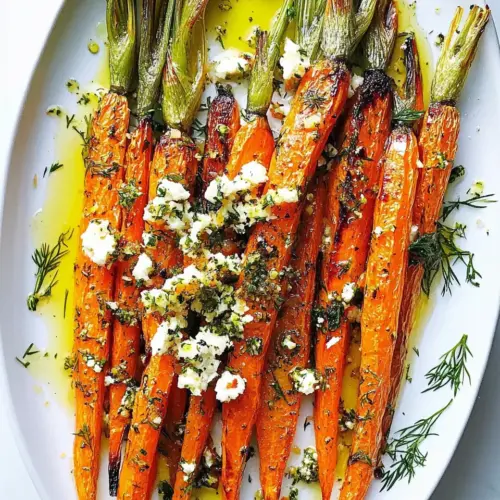
Roasted Carrots with Dill Gremolata
Roasted Carrots with Dill Gremolata delivers sweet caramelized carrots with a bright, herby finish. This easy, crisp sidedish balances tender roasted vegetables with tangy crumbled feta and crunchy pistachios for contrast, making it perfect for an easy weeknight dinner or a springtime gathering. Try it for a flavorful, low fuss addition to your menu.
Equipment
- Sheet Pan
- Mixing Bowl
- Microplane or zester
- Spoon
Ingredients
- 2 bunches carrots with tops, (about 1 1/2 pounds), carrots scrubbed and tops trimmed to about 1-inch Scrubbed and trimmed to 1-inch, provide the sweet, earthy base for roasting while the tops can add freshness or be reserved for garnish; selecting uniform sizes ensures even cooking and tender texture throughout.
- 1/2 cup extra-virgin olive oil, divided Divided between roasting and finishing, delivers rich, fruity fat for caramelization and glossy coating; using extra-virgin olive oil adds depth of flavor and helps the carrots brown evenly in the oven.
- 1/2 teaspoon plus ? teaspoon kosher salt, divided Measured in two parts to control seasoning during cooking and at the end, balances and enhances natural sweetness while preventing over-salting; kosher salt’s larger flakes distribute evenly across the carrots and gremolata.
- 2 tablespoons fresh dill, chopped Chopped finely to introduce an herbal, anise-like brightness into the gremolata; fresh dill’s delicate fronds lift the dish with aromatic complexity and contrast the roasted vegetables.
- Zest from 1 lemon, (about 1 teaspoon) Zested to release bright citrus oils that add a lively, acidic lift to the gremolata; lemon zest contributes aromatic intensity without additional liquid and pairs well with dill and feta.
- 1 garlic clove, finely chopped (1/2-1 teaspoon, depending on how much garlic you like) Finely chopped to infuse pungent, savory depth into the gremolata; garlic adds a warm bite and umami that complements the herbs and balances the sweetness of roasted carrots.
- 2 -3 tablespoons crumbled feta Crumbled sparingly to provide creamy, tangy saltiness that contrasts with sweet carrots and herbaceous gremolata; feta’s crumbly texture adds pockets of savory richness across the dish.
- 2 -4 tablespoons pistachios (optional), chopped Chopped and optional to add a crunchy, nutty element and subtle sweetness; pistachios contribute color, texture contrast, and a buttery finish when sprinkled over the finished carrots.
Instructions
- Preheat the oven to 425°F. Arrange the carrots on a large sheet pan. Drizzle 1/4 cup of the olive oil overtop, and sprinkle with 1/2 teaspoon of the salt. Use your hands to roll the carrots around the pan, making sure they’re well coated. Place in the oven to roast for about 25 minutes. The carrots should be tender and slightly caramelized.: As the oven warms, you should smell a faint warm, dry air and feel even heat if you carefully place your hand near the closed door. A properly preheated oven is crucial because high heat creates the Maillard reaction that produces deep caramel notes on the carrots . If you skip full preheating, the carrots will cook through but not brown, resulting in a blander texture. A common mistake is using a lower temperature for a longer time, which yields soft, steamed vegetables rather than caramelized edges.
- While the carrots roast, make the gremolata. In a small bowl, combine the remaining 1/4 cup of olive oil, dill, lemon zest, garlic, and remaining ? teaspoon of salt, and whisk together. Add 1-2 more tablespoons of olive oil if needed (to make the mixture less pasty). Once the carrots are finished roasting, arrange them on a platter and spoon the dill gremolata over them. Sprinkle with crumbled feta (crumble any large pieces into smaller ones) and pistachios.: When you spread the carrots out in a single layer, you allow hot air to circulate and the surfaces to brown. As you place them, notice any moisture on the skin; drier surfaces brown more readily. The visual cue you want is space between pieces, not touching and piled. Overcrowding causes steaming, so resist fitting too many on one pan even if you need an extra sheet pan.
- Drizzle 1/4 cup of the olive oil overtop: The oil should shimmer slightly as you drizzle it, coating the skin and helping to transmit heat and encourage browning. Moving the pan with your hands helps distribute the oil, ensuring an even sheen. If the oil pools in the pan, the carrots will fry in it rather than roast, so tilt the pan to move excess oil away. A misstep here is using too little oil which prevents proper color development, or too much which can cause sogginess.
- Sprinkle with 1/2 teaspoon of the salt: Sprinkle the salt evenly; you should see fine crystals settling on the surfaces. Salt draws out moisture and amplifies sweetness as the carrots roast, so even distribution is important. If you clump the salt, some pieces will be overseasoned and others under seasoned. Taste one roasted piece toward the end and adjust the finishing seasoning if needed.
- Use your hands to roll the carrots around the pan, making sure they’re well coated: Running your hands over the carrots gives you a tactile sense of oil coverage and ensures the seasoning adheres. You will hear a faint scraping sound as they move across the pan, and you will see the skins glisten when they are thoroughly coated. If you skip this step, the seasoning can sit unevenly, and some carrots will lack flavor. Always wash your hands after handling raw vegetables.
- Place in the oven to roast for about 25 minutes: As they roast, the aroma will shift from raw earthiness to a sweet, almost nutty scent, and you should see edges turning golden to deep amber. The cooking time brings out concentrated sugars and softens the interior. A typical issue is leaving them in too long so they become limp; watch for tender centers and golden edges to know when to remove them.
- The carrots should be tender and slightly caramelized: When you pierce a carrot with a fork, it should yield easily but still hold shape, and the skin will have brown-edged spots where sugars have caramelized. This contrast of tender interior and sweet, slightly crisp exterior is the hallmark of successful roasting. If they are not tender after the given time, check oven calibration and return them to the oven in five minute increments. Avoid overcooking until they become mushy.
- While the carrots roast, make the gremolata: The gremolata combines chopped dill , lemon zest, minced garlic , the remaining oil, and the remaining salt into a bright, herbaceous sauce. You will notice the sharp citrus scent and a fresh green herb aroma as you mix. Whisking incorporates the oil and makes the texture glossy. If it feels too pasty, adding a touch more oil loosens the mix; do not add water, which dilutes flavor.
- In a small bowl, combine the remaining 1/4 cup of olive oil, dill, lemon zest, garlic, and remaining ? teaspoon of salt, and whisk together: The lemon zest should smell lively and the chopped dill fragrant, while the minced garlic adds a wake up savory note. Whisk until the oil emulsifies slightly with the aromatics and the mixture takes on a cohesive texture. If the garlic is too coarse it can overpower the gremolata, so mince finely. A mistake is leaving the mixture too oily or too dry; judge the consistency by how it clings to a spoon.
- Add 1-2 more tablespoons of olive oil if needed (to make the mixture less pasty): If the gremolata looks dry and the herbs are clumping, the additional oil will loosen it and create a glossy finish that will coat the carrots . The extra oil mellows the raw bite of the garlic and helps the flavors disperse. Avoid adding too much oil, which can make the garnish feel greasy rather than bright.
- Once the carrots are finished roasting, arrange them on a platter and spoon the dill gremolata over them: The warm carrots will release a fragrant steam as you spoon the gremolata, and the oil will set into the crevices, marrying flavors. Use a gentle spooning motion so the herb mixture distributes across the top without smearing. If you wait too long and the carrots are cold, the gremolata will not meld as nicely. Serve while still warm for the best sensory contrast.
- Sprinkle with crumbled feta (crumble any large pieces into smaller ones) and pistachios: The final scatter of salty, tangy feta and crunchy pistachios provides contrast to the roasted sweetness. Look for small, even crumbles that melt slightly into the warm vegetables and nuts that retain a crisp bite. Overbearing amounts of cheese can mask the herb brightness, so sprinkle judiciously. If you forget the nuts, the dish still shines but lacks the textural counterpoint.
Notes
- Choose young carrots when possible, because they roast tender and have a sweeter profile that pairs perfectly with the herbaceous gremolata. If you only have larger carrots, slice them lengthwise to even out cooking times and expose more surface area for caramelization.
- Preheat the oven thoroughly, as consistent high heat encourages the Maillard reaction, producing those brown caramelized spots that add depth. Using a hot oven lets the outside color while keeping the interior pleasantly tender, which is what gives this dish its pleasing contrast.
- Distribute oil evenly, coating each vegetable so it browns and does not dry out. A light but complete coating avoids both dryness and oiliness, leading to beautifully roasted surfaces that hold the gremolata well.
- Make the gremolata last minute, so the aromatic oils of the lemon and dill remain bright. Preparing it too early will allow volatile citrus and herb notes to fade; when made just before serving, the flavors sing and the texture is fresher.
- Use crumbled feta sparingly, sprinkling rather than burying the dish in cheese. Small, even crumbles provide creamy bursts without overwhelming the fresh herb and lemon character that defines the gremolata.
- Toast pistachios briefly, watching closely to avoid scorch marks; this step enhances their nutty aroma and adds an irresistible crunch that balances the soft carrots and creamy feta.