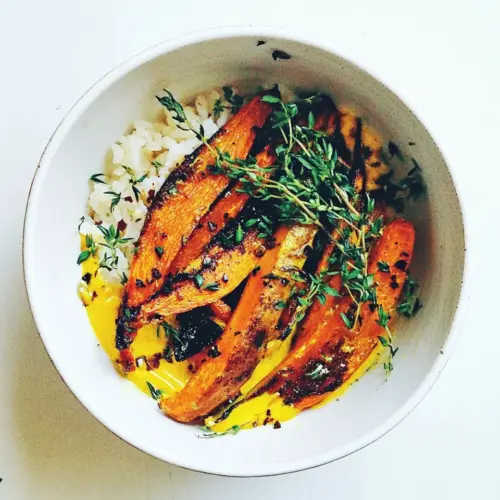
Roasted Carrots Rice with Zingy Turmeric Broth
Roasted Carrots Rice with Zingy Turmeric Broth is a warm, golden bowl combining caramelized carrots and a bright, spicy turmeric broth over chewy brown rice. The soup like broth is aromatic and tangy while the roasted vegetables add sweetness and texture, making it an easy weeknight dinner that feels both nourishing and special. Try it for a cozy solo meal or a simple vegetarian main.
Equipment
- Oven
- Baking Sheet
- Parchment
- Small Saucepan
- Wooden Spoon
- Strainer
Ingredients
- 2 medium carrots, chopped Chopped to bite-sized pieces and roasted to concentrate sweetness and develop caramelized edges, providing body and natural sugars that balance the broth's acidity and spice. Adds tender texture and visual warmth when served over rice, contributing nutrients like beta-carotene and fiber.
- 2 teaspoons olive oil, divided Divided between roasting and sautéing to add fat for caramelization and to carry flavors; contributes a mild fruity richness. Helps prevent sticking and promotes even cooking while enhancing mouthfeel in both the carrots and the broth.
- 2 teaspoons fresh thyme, minced and divided Minced and divided to infuse both the roasted carrots and the simmered broth with fresh herbal notes; adds an aromatic, slightly floral earthiness. Provides bright savory contrast and complements the turmeric and citrus components.
- sea salt and ground black pepper, to taste Used to season and enhance all components, drawing out flavors and balancing sweetness with a touch of minerality and heat from pepper. Applied to the carrots before roasting and adjusted in the broth to achieve final seasoning and depth.
- 1/2 small shallot, minced Minced finely and gently sautéed to form a sweet, aromatic foundation for the broth; contributes subtle umami and softness when cooked down. Adds delicate onion-like complexity without overpowering the ginger and turmeric.
- 1 small clove garlic, minced Minced and briefly cooked to release pungent, savory aromatics that deepen the broth's flavor; pairs with shallot and ginger for a layered base. Provides a hint of pungency that lifts the overall dish without dominating other elements.
- 1 inch piece ginger, peeled and minced Peeled and minced to contribute bright, peppery warmth and a fresh bite to the simmered broth; helps counterbalance the sweetness of roasted carrots. Adds digestion-friendly zing and aromatic lift, enhancing the turmeric's earthiness.
- 1 teaspoon ground turmeric Measured and added to the broth to impart warm, slightly bitter, earthy color and anti-inflammatory notes, tying the broth's flavor together. Enhances visual appeal with golden hue and supports the dish's savory-spicy profile.
- 1 cup water Used as the liquid base for the turmeric broth, simmering briefly to meld aromatics and extract flavors; contributes neutral hydration and texture. Allows for a light, sipping-quality broth that integrates juice, spices, and herbs.
- 2 teaspoons lemon juice Added after cooking to brighten the broth with acidic tang, balancing richness and enhancing aromatic perception; stirs into the broth just before serving. Provides a lively citrus note that lifts the overall flavor profile.
- cooked brown rice, for serving Served as the carbohydrate base to make the dish substantial, offering a nutty, chewy texture that soaks up the turmeric broth and roasted carrot juices. Complements the vegetables and broth while making the meal more filling and balanced.
- sprouts/shoots/small greens of some kind (I like sunflower shoots) Used as a fresh, crunchy garnish to add peppery or nutty microgreen flavors and crisp texture contrast against the warm rice and soft carrots. Provides visual freshness and a burst of raw vitality to each mouthful.
- sesame seeds, for garnish Sprinkled over the finished dish to contribute toasted, nutty flavor and a slight crunch, enhancing texture and visual appeal. Adds small bursts of sesame richness that complement the savory-sesame-friendly profile of the recipe.
Instructions
- Preheat your oven to 400°F. Line a small baking sheet with parchment.: As the oven warms you will notice a dry, warming scent in the kitchen that signals the environment for caramelization. Getting the oven fully up to temperature matters because hot air promotes browning, and that golden color is both visual and flavor payoff. A common mistake is underheating the oven, which leads to limp, pale carrots instead of roasted ones; if your oven runs cool, give it a few extra minutes to stabilize. Use a sturdy baking sheet to ensure even heat distribution, and keep the carrots spaced so steam does not prevent browning.
- Toss the carrots with 1 teaspoon of the thyme, 1 teaspoon of olive oil, salt, and pepper. Scatter them in a single layer on the baking sheet and slide them into the oven. Roast for about 20 minutes or until the carrots are browned in spots and soft.: You will hear a faint hiss as moisture leaves the carrots , and the edges will deepen to amber or light mahogany. These visual cues tell you that natural sugars are concentrating. The thyme tucked into the roast releases herbal oils that perfume the oven air, adding a rustic note. Avoid overcrowding the pan, which traps steam and prevents the crisp edges you want; if many pieces touch, they will steam rather than roast. Turn the pieces once midway if they are unevenly colored; that helps achieve an even char.
- Meanwhile, heat the remaining olive oil in a small saucepan over medium-low heat. Add the shallots. Sauté until translucent and soft, about 5 minutes. Add the garlic, ginger, and remaining thyme. Sauté until very fragrant, about 1 minute. Add the turmeric to the pot and stir to incorporate. Keep stirring until the mix seems paste-like. You're cooking the raw-ness out of the spice at this point, ideally for about 2 minutes (add more oil if necessary). Slowly add the water and stir.: The shallots will soften, giving off a gentle sweet aroma and a glossy appearance as they lose their raw edge. Cooking them slowly draws out sugars without burning, which keeps the broth clean and balanced. Stir occasionally to ensure even softening and scrape any fond to incorporate flavor. Hurrying the step with a hotter pan can char the shallots, creating a bitter note that will carry into the broth.
- Bring the broth to a boil. Simmer for 10 minutes or so. Add the lemon juice and stir at the end. Season with salt and pepper.: Once you add garlic and ginger you will notice a sharp, rising aroma. Bringing the turmeric together with the aromatics and oil allows its oils to bloom, deepening color and tempering any raw bitterness. The paste-like texture indicates the spices are distributed and toasted. Pouring in the water slowly prevents clumping and helps you deglaze the pan, capturing all the savory bits. A common error is adding water too quickly or not cooking the turmeric enough, which can leave harsh, underdeveloped notes.
- Place the roasted carrots and cooked rice in a bowl. Strain the turmeric broth if you like, then ladle it on top. Garnish the bowl with sprouts and sesame seeds if you like.: As the broth comes up to a boil you will see it turn a deep golden hue and smell a warming mix of citrus, earth, and ginger. Simmering gently allows flavors to meld and soften; the liquid should look clear with suspended flecks of spice rather than cloudy and greasy. Adding the lemon juice at the end brightens the whole pot and lifts flavors that otherwise might sit heavy. Over-reducing the broth makes it too intense and can concentrate bitterness, so keep the simmer gentle and taste as you go to reach the right balance of acid and salt.
- Place the roasted carrots and cooked rice in a bowl. Strain the turmeric broth if you like, then ladle it on top. Garnish the bowl with sprouts and sesame seeds if you like.: The final assembly is about contrast: warm, glossy carrots and tender cooked brown rice meeting the clear, aromatic broth. If you strain the broth the bowl looks cleaner and the texture becomes silkier; leaving it unstrained keeps every bit of aroma and small bits of herb for a rustic finish. Sprinkle the sesame seeds and sprouts last for a bright crunch and fresh pop. The usual misstep is to pour broth that is too hot and overcook the garnishes, so let the liquid cool by a minute if you plan to add delicate greens.
Notes
- Swap roasted roots: While carrots are central here, you can try other roasted roots for different sweetness and texture, keeping the roast time similar for even caramelization.
- Adjust the broth intensity: Simmer the broth a little longer for a fuller flavor or keep it brief for a lighter, more aromatic finish.
- Control the heat: Add more freshly ground black pepper if you prefer a background warmth, but do so gradually to avoid overwhelming the broth.
- Garnish with purpose: Use sprouts for peppery freshness or tiny greens for a mild lift, placing them on top just before serving to preserve texture.
- Rice texture matters: Serve on cooked brown rice that is slightly firm so it holds up against the broth rather than becoming mushy.
- Make it ahead: Roast the vegetables earlier and keep the broth warm; combine just before serving for easy entertaining.