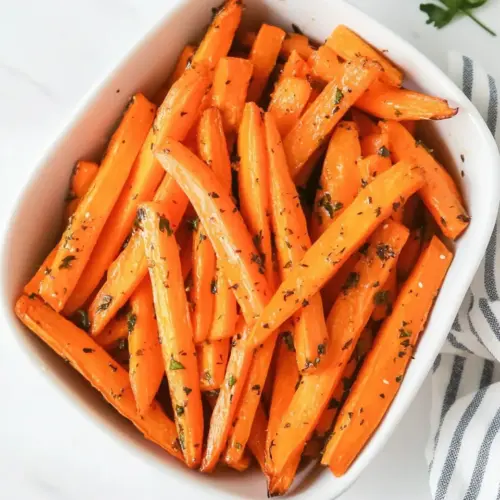
Roasted Carrots
Roasted Carrots are tender, slightly caramelized, and easy to make. This simple side uses olive oil, salt, pepper, and thyme to highlight the natural sweetness of the carrots, making it a perfect easy weeknight side or a crowd pleasing addition for holiday tables. Make them for a quick way to add color and comfort to any meal.
Equipment
- Baking Sheet
- Parchment paper or foil
- Oven
Ingredients
- 4 -5 large carrots peeled and cut into sticks Peel and cut into sticks to provide a sweet, tender base for roasting; caramelizes at high heat to deepen flavor and color. Adds natural sugars and fiber that balance savory seasonings and create a hearty vegetable component.
- 2 teaspoons olive oil Drizzle over the carrots to help conduct heat and promote even browning; coats surfaces so seasonings adhere during roasting. Contributes a subtle fruity richness and prevents sticking while enhancing texture.
- 1/2 teaspoons salt Season lightly to enhance the carrots' natural sweetness and balance the dish; helps draw out moisture for better caramelization. Use sparingly to avoid overpowering and to maintain a pleasant savory finish.
- 1/4 teaspoon pepper Sprinkle sparingly to add mild heat and subtle aroma that complements sweet roasted notes; helps accentuate other seasonings without dominating. Adjust to taste to preserve the carrots' natural flavor profile.
- 1/2 teaspoon dried thyme or 2 teaspoons chopped fresh thyme Crumble dried or chop fresh and scatter over the carrots to infuse earthy, floral notes; adds aromatic depth that pairs well with roasted sweetness. Fresh thyme delivers brighter-herb flavor while dried concentrates savory intensity.
Instructions
- Preheat oven to 425℉. Line a baking sheet with parchment or foil.: The oven should smell faintly warm as it reaches temperature, and you may hear a low hum as elements cycle. Hitting 425℉ is crucial because a high, steady heat encourages sugar caramelization on the surface of the carrots while keeping the inside tender. If the oven is cooler, the carrots will take longer and steam instead of roast, leaving them less caramelized. A common mistake is opening the door repeatedly which drops the temperature; avoid that so the pan gets an even blast of heat.
- Place the carrot sticks on the baking sheet and toss with the olive oil. Sprinkle with salt and pepper.: The surface should feel smooth and ready to catch caramelized bits, and you will notice a glossy sheen once the olive oil hits it. Lining prevents sticking and makes cleanup effortless, keeping the browned sugars from bonding to the pan. If you skip lining, some sugars can bake onto the metal and become hard to remove. One trap is using too small a sheet, crowding the carrots which encourages steaming rather than browning.
- Roast in the preheated oven for 20-25 minutes, until soft and just slightly caramelized around the edges. Remove from oven and sprinkle with thyme. Serve hot.: The carrots should glisten and move freely on the sheet when you've tossed them properly. The olive oil helps create a thin, even coating that promotes browning and carries the salt and pepper. If pieces are clumped, they will steam instead of crisping, so spread them in a single layer. Overcrowding is the main issue here, and if you suspect it you can use a second sheet.
- Sprinkle with salt and pepper: You will see tiny specks sitting on the surface, and as they roast the seasonings will meld into the caramelized edges. Salt lifts the inherent sweetness of the carrots , while the pepper offers a contrasting note. Too much salt early on can draw out moisture and change texture, so measure carefully, and taste one roasted piece to check the balance before adding more.
- Roast in the preheated oven for 20 to 25 minutes: During roasting you will hear a soft crackle as the moisture reduces and the edges begin to brown, and the smell will shift to a warm, sweet aroma with toasted notes. The visual cue to watch for is slight caramelization around the tips and edges, along with a tender center when pierced with a fork. If they are still very firm at 20 minutes, roast a bit longer in short increments to avoid burning. A mistake is leaving them unattended too long, which can quickly tip from caramelized to charred.
- Until soft and just slightly caramelized around the edges: When you probe a piece with a fork, it should slip in with minimal resistance, and the browned edges should be glossy and deepened in color. This balance of soft inside and slightly crisp outside gives roasted carrots their satisfying bite. If they are uniformly pale, the oven was likely too cool, so next time confirm the temperature. If they are blackened, the oven was too hot or they sat too long.
- Remove from oven and sprinkle with thyme: The aroma of the herb will lift immediately when it meets the hot carrots , releasing bright notes that contrast the caramel sweetness. If using fresh thyme , the fragrance will feel lively and green, while dried will blend into the surface more subtly. A pitfall is adding fresh thyme too early, which can dry out and lose its brightness; adding it after roasting preserves its aroma.
- Serve hot: On the plate the carrots will steam slightly and present with a glossy finish, inviting immediate tasting. Serving warm emphasizes texture and aroma, and the first forkful will highlight the soft interior and the concentrated flavors from roasting. Letting them sit too long cools the surface and can mute the experience, so try to serve soon after they come out of the oven.
Notes
- Swap herbs Try rosemary or oregano instead of thyme for a woodier, more Mediterranean note. Use sparingly because strong herbs can overwhelm the natural sweetness of the carrots.
- Add a glaze Brush a little honey or maple syrup in the last few minutes to amplify caramelization, watching closely so it does not burn and create bitterness.
- Change the cut Cut into rounds or diagonal slices for quicker roasting and different mouthfeel, making sure pieces are similar thickness for even cooking.
- Finish with citrus A light squeeze of lemon or orange after roasting brightens the dish and balances richness, adding a refreshing lift to each bite.
- Make them spicy Sprinkle a pinch of cayenne or smoked paprika with the salt and pepper to introduce a warm undertone that contrasts the sweetness nicely.