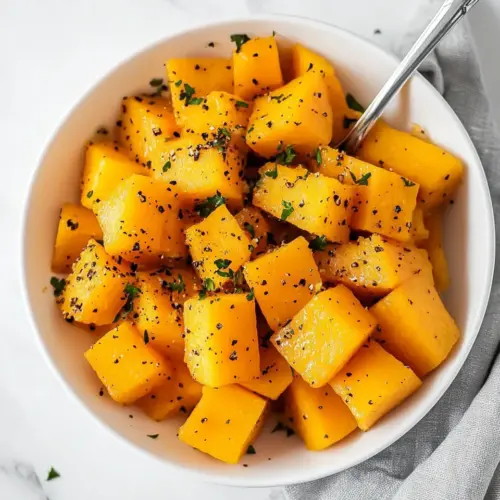
Roasted Butternut Squash
Roasted Butternut Squash is a creamy, naturally sweet, and easy side that develops gentle caramelized notes in the oven. This simple recipe makes a perfect easy weeknight dinner addition or a festive fall side, offering silky texture and bright flavor with minimal effort. Make it to enjoy versatile leftovers that transform into soups, purees, or pasta sauces.
Equipment
- Sheet Pan
- Chef's Knife
- Spoon
Ingredients
- 2 large butternut squash, halved lengthwise, seeds scooped out and discarded (about 2 1/2 lbs) Halved and scooped to expose flesh for even caramelization; provides the sweet, nutty base and bulk of the dish while roasting to tender, golden pieces.
- 1 tablespoon extra virgin olive oil Coats the squash surface to promote browning and prevent sticking; adds subtle fruity richness and helps carry any seasonings during roasting.
- 1/2 teaspoon kosher salt Seasons the flesh to enhance and balance sweetness; draws out moisture slightly to concentrate flavor and make the natural sugars more pronounced.
- fresh ground pepper, to taste Ground to taste to add bright, slightly spicy aromatics; finishes the roasted squash with contrast and depth, lifting the overall flavor profile.
Instructions
- Preheat the oven to 425 F. Spray a large sheet pan with oil.: As you heat the oven, you'll notice the kitchen gradually warming and a faint metallic hum from the heating elements, which signals even heat distribution. This temperature is chosen to encourage gentle steaming of the interior while also promoting some caramelization on the edges, which creates depth of flavor. If the oven is not fully preheated when you put the squash in, the cook time will extend and the texture may become uneven, so always wait until the oven reaches the full temperature. A common mistake is placing the squash into an oven that is still heating, which can produce a soggy rather than roasted finish. If your oven runs hot or cool, use an oven thermometer to confirm accuracy.
- Rub the flesh of the squash halves with olive oil and season with salt and black pepper. Lay the squash halves, cut side down on a rimmed sheet pan. Roast until you can pierce the flesh easily with a fork, about 40 to 45 minutes.: When you spray or lightly oil the sheet pan, you'll reduce sticking and help the squash conduct heat from the pan to its cut surface. The sound here is subtle, just a quiet rasp as you move the pan into place, and visually you want a thin sheen rather than pooling oil. Using parchment can help with cleanup, but direct contact with a lightly oiled pan helps promote even browning along the rim of the squash. Avoid adding excessive oil to the pan because it can cause the squash to slide and steam rather than roast.
- Scoop it out and serve.: As you brush the extra virgin olive oil over the flesh, notice how the surface glistens and the color deepens slightly. The oil helps distribute heat and encourages the development of golden notes at the edges, while the kosher salt and fresh ground pepper balance the natural sweetness. This is also a moment to check for uniform coverage so no dry spots remain, which could undercook. A mistake here is skimping on seasoning because that leaves the squash tasting flat, while too much oil will drown subtle caramelization.
- This can be cubed and seasoned with more salt and served with a little butter and maple syrup, mashed in place of mashed potatoes, pureed, added to salads, or turned into butternut squash soup or a butternut squash sauce for pasta.: Positioning the squash cut side down traps steam against the flesh, which yields a creamy, spoonable interior, while the exposed skin protects it from direct heat. Listen for the dull thud as the pan slides into the oven, then close the door gently to avoid disturbing temperature. The visual cue to watch for when rotating later is a deepening of the skin color and slightly wrinkled edges. A common oversight is placing the squash cut side up, which can dry the surface and reduce creaminess; this method maximizes interior tenderness.
- Roast until you can pierce the flesh easily with a fork, about 40 to 45 minutes: During roasting you will smell a warm, sweet aroma as sugars concentrate and begin to caramelize. The ideal texture is achieved when a fork slides into the thickest part with little resistance, and the flesh appears uniformly tender and slightly glossy. If you undercook, the center can remain fibrous and starchy, so resist the urge to pull the squash out early. Overcooking may cause the edges to collapse excessively and dry out, so check at the 40 minute mark and every 5 minutes after. If your oven bakes unevenly, rotate the pan once midway to ensure consistent doneness.
- Scoop it out and serve: Once cooled slightly, the flesh will separate from the skin easily and should feel velvety and moist to the touch. The aroma will be richer now, and the texture should be spoonable without falling apart completely. Serving warm preserves the luscious mouthfeel, while letting it rest briefly helps the juices redistribute. A mistake to avoid is trying to scoop while the squash is too hot and unstable, which can result in uneven portions; allow it to cool for several minutes before handling.
- This can be cubed and seasoned with more salt and served with a little butter and maple syrup, mashed in place of mashed potatoes, pureed, added to salads, or turned into butternut squash soup or a butternut squash sauce for pasta: The finished squash offers many possibilities because of its balanced sweetness and creamy texture. When you cube and pan sear it, you get a second layer of caramelization, and when mashed it mimics the comforting body of potatoes with a sweeter profile. Pureeing with a splash of cooking liquid yields a silky sauce for pasta, and blending with stock creates a warming soup with minimal effort. A common misstep is over-processing when pureeing, which can make the texture gluey, so pulse cautiously and add liquid gradually.
Notes
- Pick firm, matte-skinned squash to ensure sweetness and dense flesh that roasts well rather than becoming watery.
- Use an oven thermometer because many home ovens misreport temperature, and accurate heat is key for proper caramelization.
- Brush oil evenly to get uniform color and prevent dry patches that can undercook in spots.
- Rotate the pan mid roast if your oven has hot spots, which helps all pieces finish at the same time.
- Cool briefly before scooping so the flesh firms just enough to come away cleanly without falling apart.