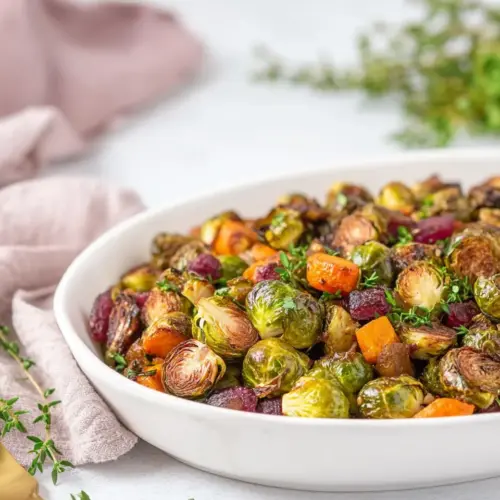
Roasted Brussels Sprouts and Carrots
Roasted Brussels Sprouts and Carrots delivers crispy edges, tender centers, and a glossy sweet and tangy dressing. This easy weeknight side blends honey, balsamic, and mustard for layered flavor, perfect for family dinners or holiday spreads. It’s simple to make yet feels special, a reliable recipe to add to your rotating sides because it always disappears fast.
Equipment
- Oven
- Baking Sheet
- Parchment Paper
- Mixing Bowl
- Whisk
Ingredients
- 14 ounces Brussels sprouts halved Trimmed and halved, provides a hearty, slightly bitter base that roasts to a caramelized exterior and tender interior; helps form the bulk of the dish and soaks up dressings and glazes for flavor depth.
- 14 ounces carrots chopped Chopped into uniform pieces to ensure even roasting and natural sweetness; adds color, texture contrast, and an earthy sweetness that balances the sprouts when caramelized.
- 2 tablespoons olive oil Used to coat vegetables for roasting and to help distribute seasonings; contributes a smooth mouthfeel and encourages browning for enhanced flavor.
- 4 teaspoons fresh thyme Finely chopped and sprinkled for an aromatic, herbaceous note; brightens the roasted vegetables and complements the sweetness of carrots and honey.
- 2 tablespoons honey Drizzled to add sticky sweetness and promote caramelization; balances savory and acidic components while glazing the vegetables for a glossy finish.
- 1 tablespoon balsamic vinegar Added to introduce acidity and a tangy counterpoint; deepens flavor complexity and helps balance the honey and butter richness.
- 2 teaspoons mustard Whisked into the glaze to provide a sharp, piquant undertone; helps emulsify the honey and vinegar for a cohesive coating on the vegetables.
- 1/2 clove garlic crushed (optional) Crushed and optionally included to lend a pungent, savory undertone; when used sparingly it adds aromatic lift without overpowering the other flavors.
- 1 tablespoon butter Melted or dotted over the vegetables to enrich with creamy, savory fat; helps carry flavors and finish the dish with a silky mouthfeel.
- 1/2 teaspoons salt Sprinkled to season and enhance the overall taste profile; brings out natural sweetness and balances bitterness when used at the right level.
- 1/4 teaspoon pepper Ground and added to taste for a subtle heat and complexity; black pepper provides a warm, slightly sharp finish that heightens other seasonings.
- Crumbled cheese, toasted nuts, dried berries optional Crumpled or scattered as optional garnishes to add texture and flavor contrast; cheese, nuts, and dried berries can introduce creaminess, crunch, or tart sweetness to the finished dish.
Instructions
- Preheat your oven to 400 degrees Fahrenheit. Line a large baking sheet with parchment paper for easy cleanup.: When the oven air begins to warm it creates the dry heat needed for surface browning. You should notice a faint, dry scent as the oven approaches temperature, which signals the interior will cook while the exterior crisps. Avoid placing the rack too low, it can overbake bottoms, and don't skip the parchment if you dislike stubborn stuck bits. A common mistake is not letting the oven fully preheat, which leads to steaming rather than roasting, so wait until the oven reaches a steady heat.
- Spread the Brussels sprouts and carrots on the prepared baking sheet. Drizzle with olive oil and sprinkle with fresh thyme, tossing to coat evenly.: As you toss, look for a light sheen on each piece, the oil is what helps the vegetables sing in the oven. The thyme leaves should distribute in small green flecks, releasing fragrance as they warm. If vegetables crowd the pan they steam instead of roast, so keep them in a single layer with space between pieces. One pitfall is under-oiling, which prevents proper browning, or over-oiling, which can make them greasy; aim for an even, thin coating.
- Roast the vegetables in the preheated oven for 25-30 minutes, stirring halfway through, until the Brussels sprouts are golden and the carrots are tender.: During roasting you will hear a faint sizzling as moisture escapes and the edges begin to darken. Visual cues matter, watch for chestnut colored tips and translucent centers for the carrots. Stirring halfway promotes even color, but avoid excessive stirring which slows caramelization. A common slip is pulling the pan out too early because pieces look done on top while undersides remain pale; give the pan enough time to develop uniform color.
- While the vegetables are roasting, combine honey, balsamic vinegar, mustard, optional garlic, melted butter, salt, and pepper in a bowl. Whisk to create the dressing.: When you whisk, the mixture should come together into a glossy, slightly viscous dressing that clings to a spoon. The aroma will be bright from the vinegar and sweet from the honey, a promising scent that hints at the finished dish. If the dressing splits, whisk in a splash of warm water to bring it back. One mistake is adding cold melted butter directly into a cold mix which can re-solidify; ensure the butter is warm and fluid before combining.
- Once the vegetables are roasted, toss them with the dressing while still warm. Transfer to a serving dish and add optional toppings.: The warmth helps the dressing coat and slightly reduce, intensifying flavors. You may notice a gentle hiss as residual moisture meets the dressing and a glossy finish appears on the vegetables. Add toppings like toasted nuts or crumbled cheese at the end to preserve their crunch and texture. Avoid tossing when vegetables are scorching hot, which can wilt delicate toppings; let them rest a minute if needed.
- DEVOUR!: That first bite should offer crisp edges, tender interiors, and a balanced glaze of sweet and tangy flavors. Pay attention to textures, the contrast between caramelized bits and soft centers is what makes this memorable. A mistake is over-seasoning before roasting; sometimes a final sprinkle of salt after tossing elevates the flavors better than salting too early. Sit down and enjoy the layers of flavor you've coaxed from simple ingredients.
Notes
- Swap herbs: Try rosemary or sage for a different aromatic profile, but use sparingly because they can overpower the sweetness of the carrots.
- Make it crunch-forward: Add toasted walnuts or pecans just before serving to introduce a contrasting crunch and nutty warmth.
- Boost acidity: Stir in a touch more balsamic vinegar or a squeeze of lemon at the end for brighter lift if the dish feels too sweet.
- Garlic nuance: If you love garlic, roast a whole clove alongside the vegetables or fold in the optional crushed garlic for a mellower profile than raw.
- Swap sweeteners: Use maple syrup instead of honey for a deeper, woodsy sweetness that pairs beautifully with roasted flavors.