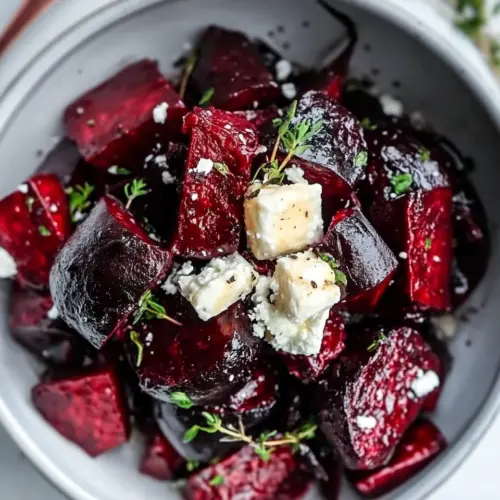
Roasted Beets With Goat Cheese
Roasted Beets With Goat Cheese is an easy, flavorful side that balances sweet, caramelized beets with tangy, creamy goat cheese. The crunchy pumpkin seeds and bright parsley finish make it perfect for an easy weeknight dinner or an elegant seasonal side. Try it for a simple, satisfying addition to your next meal.
Equipment
- Oven
- Rimmed Baking Sheet
- Parchment Paper
- Large Bowl
- Spatula
Ingredients
- 4 cups beets peeled and diced in 2” chunks Roasted to add earthy sweetness and tender texture, provides the main body and color of the dish when peeled and diced into 2” chunks.
- 2 tbsp olive oil Used to coat and help roast the beets evenly, contributes a subtle fruity richness and prevents sticking during cooking.
- 1/2 tbsp sea salt regular or any seasoned sea salt you have Sprinkled to enhance and balance flavors, adds a savory mineral note that brings out the natural sweetness of the beets.
- 2 sprigs parsley Added to provide a fresh, herbaceous lift and bright aroma when used as whole sprigs or chopped for garnish.
- 1/4 cup goat cheese crumbles or squares (I used Chevoo brand goat cheese in olive oil) Crumpled over the warm beets to contribute creamy, tangy richness and a contrasting texture that complements the root vegetables.
- 1/8 tsp pepper fresh cracked Ground over the finished dish to introduce a sharp, mildly spicy accent that sharpens and balances the creaminess of the cheese.
- 2 tbsp pumpkin seeds roasted (substitute sunflower seeds) Toasted and scattered for crunchy texture and nutty flavor, offers a pleasant contrast and can be swapped with sunflower seeds if needed.
- 1/2 tsp lemon juice (optional) Squeezed sparingly to brighten and lift the overall flavor, optional acidity that cuts through richness and enhances freshness.
Instructions
- Preheat the oven to 400 degrees F. Set out a large rimmed baking sheet with parchment paper.: When you open the oven and slide the sheet in, you should hear a faint hiss as the hot air meets the metal, and that initial high heat is what encourages the beets to begin caramelizing right away. Preheating also ensures even cooking, because putting beets into a cold oven will cause them to steam and become mushy instead of developing browned edges. A common mistake is not preheating fully, which leads to longer cook time and uneven color. Make sure the rack is centered so the heat circulates around the pan well.
- To a large bowl, add diced beets, drizzle with olive oil, and sprinkle with sea salt. Mix together until all ingredients are integrated. Add beets to the sheet pan in a flat layer.: As you toss the beets with olive oil and sea salt , smell the faintly fruity oil and the mineral salt coating each cube. The oil acts as a conductor for heat and helps promote browning, while the salt draws out moisture and amplifies sweetness. Spread the pieces in a single layer so air can circulate and each side can brown. Overcrowding the pan traps steam, preventing crisping, which is a frequent error. Use two pans if necessary to give the beets space to roast.
- Add beets to the oven. How long to roast beets in oven will vary a bit based on size of the chunks. My technique is to bake beets for 15 minutes. Flip them around with a spatula and bake for another 5-10 minutes or as long as desired until beets roast to your desired level of doneness. They should be fork tender and starting to brown around the edges.: Inside the oven you will notice aromas start to deepen after about 10 to 12 minutes, as sugars start to caramelize. I aim to bake the beets for 15 minutes, then flip them and continue roasting for another 5 to 10 minutes until they are fork tender and edges show browning. The sound is subtle, mostly the quiet crackle of roasted sugars, and visually you want to see color developing on several sides. The rationale for this two stage timing is to give them an initial blast of heat to set surface color, then even out doneness after flipping. A typical mistake is leaving them untouched for the whole roast, which can cause uneven browning and some pieces to overcook while others remain firm.
- Transfer oven roasted beets to a serving platter and sprinkle with parsley and goat cheese crumbles or squares, a crack of salt and pepper as desired, pumpkin seeds, and (optional) a squeeze of lemon juice.: When you flip the beets , you should see areas that have taken on deep mahogany edges while other faces are still lighter, and this is the cue they need another short stint in the oven. The flip helps each side get exposure to the hot pan surface, increasing even caramelization and developing a mix of tender insides and slightly crisped outsides. If you skip flipping, the bottoms may become too dark while tops stay underdone. Watch for fork tenderness as your primary indicator rather than exact times, because oven temperatures and cubing size vary widely.
- Transfer oven roasted beets to a serving platter and sprinkle with parsley and goat cheese crumbles or squares, a crack of salt and pepper as desired, pumpkin seeds, and optional squeeze of lemon juice.: As you move the warm beets to the platter, you will notice the steam rising and the sweet, concentrated aroma that built during roasting. Scatter the chopped parsley to add a fresh green contrast, and crumble the goat cheese so pockets of creamy tang melt slightly against the warm cubes. The toasted pumpkin seeds add a satisfying snap, and a tiny squeeze of lemon juice brightens the whole ensemble. Avoid adding too much acid, which can overwhelm the delicate balance, and taste before adding a final pinch of sea salt or more pepper .
Notes
- Seed swap: If you do not have pumpkin seeds, toasted sunflower seeds are a great alternative that provide similar crunch and nuttiness.
- Cheese form: Use crumbled goat cheese for easy scattering, or small squares if you want little melting pockets of tang across the platter.
- Lemon use: The lemon juice is optional, add just a light squeeze to lift flavors, particularly if your beets are especially sweet.
- Salt guide: Adjust the amount of sea salt to your preference and based on whether your goat cheese is briny; always taste before adding a final pinch.
- Roast intensity: For more caramelization roast a touch longer, but watch closely so the beets do not dry out and lose their tender interior.