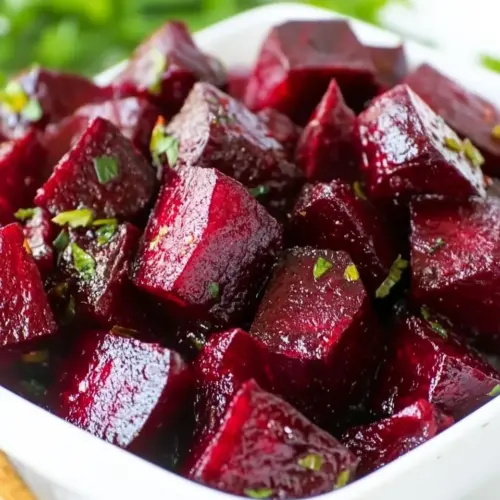
Roasted Beets
Roasted Beets deliver tender, caramelized roots with a sweet earthy aroma and crisped edges. This easy side is perfect for an easy weeknight dinner or seasonal spread, showcasing simple ingredients like olive oil, salt, black pepper, and dried thyme. The result is a colorful, flavorful dish that makes a persuasive case for roasting as your go to method.
Equipment
- Oven
- Baking Sheet
- Parchment paper or silicone baking mat
- Chef's Knife
Ingredients
- 4 medium beets Peel and roast to concentrate natural sweetness and earthiness; provides the base vegetable body for the dish and softens when cooked through. Adds vibrant color and a tender texture that pairs well with herbs and acid.
- 1 tablespoon olive oil Coat and gently crisp surfaces while helping seasonings adhere; contributes healthy fats and enhances mouthfeel without overpowering beet flavor. Choose extra-virgin for fruity notes or regular olive oil for a neutral finish.
- 1/2 teaspoon salt Season and enhance inherent flavors while promoting even taste distribution; helps balance sweetness from the beets and brings out savory undertones. Use fine salt to dissolve quickly and avoid gritty texture on roasted slices.
- 1/4 teaspoon black pepper Season subtly to introduce mild heat and depth; helps balance sweetness and saltiness while enhancing overall flavor complexity. Grind fresh or use preground black pepper for a brighter, more aromatic finish.
- 1 teaspoon dried thyme Infuse savory, slightly floral aroma during roasting to complement the beets' sweetness; adds herbal complexity and a pleasant finish. Sprinkle evenly to avoid clumping and to ensure aromatic distribution across pieces.
Instructions
- Preheat oven to 400° F. Line a large baking sheet with parchment paper or silicone baking mat.: As the oven warms you will notice a dry, warming heat that readies the pan to caramelize surfaces quickly. The lined sheet prevents sticking and promotes even browning across the beets . I like to place the rack in the center so air circulates well. If the oven is not fully up to temperature, roast times will lengthen and the beets may steam instead of crisping, which is a common pitfall to avoid.
- Trim greens off the beets. Wash. Peel skin, if desired.: Start with the tactile sensation of the rough skin under cold water as you scrub. Trimming the greens removes moisture pull from the root, ensuring the flesh roasts evenly. Peeling is optional; the skin will soften when roasted, but peeling gives a cleaner presentation. A mistake here is leaving long greens attached which can act like wicks and dry out the roots during roasting.
- Cut into 1/2" cubes.: As you slice, you'll hear the faint resistance of a firm beet yielding to the knife, and the clean edges help each piece roast uniformly. Uniformity is crucial, since uneven pieces will result in overcooked scraps and underdone chunks. Use a sharp chef's knife and steady hands to produce consistent cubes. Cutting unevenly is the most frequent cause of inconsistent textures on the tray.
- Toss chopped beets with olive oil and seasoning.: When you combine the beets with olive oil , salt , black pepper , and dried thyme , you will feel the oil coat each cube and see seasonings cling to the surface. This coating is what allows the heat to brown the edges and create flavor compounds. Work gently so the cubes remain intact. Over tossing or using too much oil can lead to soggy surfaces that resist caramelization.
- Arrange on the baking sheet in a single layer.: Lay the cubes with a little space between them so hot air can circulate and the edges can crisp. When pieces are crowded they steam, producing dull, softer texture. Visually, you want each cube to have some exposed surface area touching the hot sheet. Crowding the pan is a common mistake and will prevent those delicious browned moments.
- Roast for 35 to 40 minutes, or until soft.: As the minutes pass, the kitchen will fill with a sweet, earthy scent that signals caramelization. Look for glossy edges and a tender center when pierced with a fork. The timing gives the sugars time to concentrate; pull earlier for firmer bites or wait until golden for more sweetness. Opening the oven too often to check can drop the temperature and prolong cooking, so trust your visual cues.
- Remove from oven and cool for 10 minutes before serving.: Fresh from the oven the aroma is intense and the heat sharp on your hands; a short rest lets the juices redistribute and the texture settle. This pause also makes the beets easier to handle and improves their mouthfeel. Serving immediately can lead to a hotter, less cohesive texture, so allow this short cooling period for the best bite.
- Enjoy!: At this point the senses converge: the sweet scent, the warm weight in your bowl, the glossy exterior. Take note of the balance between caramelized notes and earthy depth. If something is missing, a tiny adjustment to seasoning after resting can lift the final plate. The most common oversight at serving is not tasting for salt, so sample and adjust as needed.
Notes
- Add a finishing acid - A quick squeeze of citrus or a light splash of a bright element right before serving can lift the sweetness and add freshness.
- Toss with herbs after roasting - Fresh herbs added just after the pan comes out provide a lively contrast to the roasted warmth, making the dish feel brighter.
- Use different oils - Swapping olive oil for a more neutral oil will change the aroma slightly and let the natural beet flavor come forward more strongly.
- Adjust the cut size - Smaller cubes will caramelize more and soften faster, while larger pieces retain a meatier bite and longer cook times.
- Serve warm or room temperature - Warm brings out sweetness, while room temperature highlights texture and makes the beets suitable for salads or buffets.