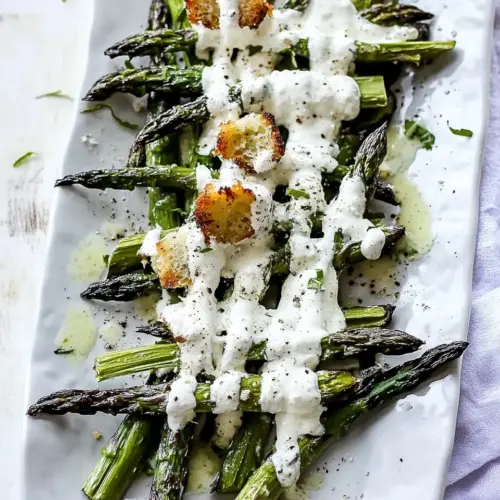
Roasted Asparagus Caesar Salad
Roasted Asparagus Caesar Salad is a creamy, crispy spring favorite that balances tender roasted asparagus with a tangy yogurt based Caesar dressing and crunchy garlic butter croutons. It’s an easy weeknight salad with bright lemon notes and savory Parmesan, perfect for light lunches or simple dinners. Make it when asparagus is fresh for the best results and a memorable plate.
Equipment
- Anchovy Paste
- Extra Virgin Olive Oil
- Baking Sheet Pan
Ingredients
- 1/3 cup plain Greek yogurt Provide creaminess and tang to form the Caesar-style dressing while keeping the sauce lighter than mayonnaise; whisk smoothly with mustard and lemon for a balanced emulsion that coats the asparagus.
- 2 tablespoons grated Parmesan cheese Add nutty, savory umami to deepen the dressing’s flavor; sprinkle into the yogurt mixture and fold gently so the cheese melts into the dressing for cohesive richness.
- 2 tablespoons creamy Dijon mustard Bind and emulsify the dressing while contributing a sharp, savory mustard flavor; whisk thoroughly with yogurt and oil to create a stable, silky dressing consistency.
- 1 tablespoon lemon juice Brighten and balance the rich elements by adding fresh acidity; squeeze and stir into the dressing to lift flavors and create a crisp, zesty finish on the salad.
- 2 teaspoons olive oil Improve mouthfeel and help the dressing spread evenly with a mild fruitiness; drizzle into the yogurt mixture while whisking to achieve a smooth emulsion and subtle richness.
- 1 teaspoon anchovy paste Deliver concentrated savory, salty depth characteristic of classic Caesar dressing; incorporate a small amount into the dressing to provide anchovy-like umami without fishy overpowering.
- 1 teaspoon grated garlic Impart pungent, aromatic garlic flavor in a fine, integrated form; grate and mix into the dressing so the garlic perfume distributes evenly without harsh bites.
- Kosher salt, to taste Season to taste to enhance and balance all components; sprinkle sparingly during dressing preparation and adjust at the end to ensure proper seasoning of asparagus and croutons.
- Fresh cracked pepper, to taste Add freshly ground heat and complexity to elevate flavors; crack over the assembled salad to provide aromatic bites and subtle spiciness that contrasts the creamy dressing.
- 1 pound asparagus, ends trimmed Serve as the main vegetable of the dish, trimmed and roasted to tender-crisp perfection; toss with oil, roast until slightly charred, and arrange over the dressed salad for texture and freshness.
- 10 homemade garlic butter croutons Provide crunchy, buttery texture and garlicky flavor as flavorful garnish; scatter over the salad to introduce crisp contrast against roasted asparagus and creamy dressing.
- 2 tablespoons shaved Parmesan cheese Finish the dish with delicate salty, savory shavings for presentation and flavor lift; sprinkle over the plated salad so each bite has a burst of Parmesan intensity.
Instructions
- In a small bowl whisk together all ingredients. If the mixture is too thick simply thin it out with a little water.: The dressing will smell bright and tangy, with the sharpness of lemon juice and the savory perfume of Parmesan cheese and anchovy paste . Whisking vigorously aerates the yogurt, creating a silkier texture that clings to vegetables. If it feels too thick, adding a teaspoon of water at a time brings it to the right consistency without diluting flavor. A common mistake is overseasoning before tasting, so I always mix first and then adjust salt and pepper sparingly. You should sense a balanced tang and umami, not an overpowering saltiness.
- Preheat oven to 425 degrees F.: As the oven warms, you'll notice a slight hum and the kitchen beginning to carry a warm, dry heat that is ideal for roasting. Preheating ensures the asparagus begins to caramelize as soon as it hits the hot pan, promoting even browning. If you skip preheating, the asparagus will steam instead of roast, leaving it limp rather than slightly crisp at the tips. Always let the oven fully reach temperature for reliable results.
- Trim asparagus ends, lay flat on a cookie sheet, and drizzle with olive oil.: When trimming, snap or cut the woody ends until you reach tender stalk, which smells fresh and green. Laying them flat prevents overcrowding so each stalk gets direct contact with the hot pan, encouraging even caramelization. The olive oil should lightly coat each spear, giving a faint sheen and helping the exterior crisp. Over-oiling can make them greasy, so use just enough for a thin coat.
- Sprinkle with kosher salt and black pepper.: Sprinkling seasonings just before roasting means the salt draws out a touch of moisture while the heat concentrates flavor, creating little pockets of savory intensity. Freshly cracked black pepper releases volatile aromatics that become more pronounced when roasted. Beware of over-salting, especially if your Parmesan cheese is already salty; season in stages and taste after tossing with the dressing.
- Roll stalks on the sheet to evenly cover with seasoning and oil.: Rolling the asparagus is audible and tactile, you will hear a soft scrape as they move across the sheet and see a sheen of oil evenly distributed. This ensures every surface has contact with heat and seasoning, promoting consistent browning. If you skip this step, some sides may remain dry and underseasoned. Use tongs or the back of a spoon to gently turn them so you keep the tips intact.
- Add to oven and depending on the thickness of your asparagus stalks it should be done anywhere between 7 and 10 minutes.: As they roast, expect a warm, toasty aroma and a subtle sugar browning that amplifies the vegetable's natural sweetness. Thicker stalks need closer to 10 minutes for tenderness, while thin spears can be done in 7. Look for slightly browned tips and a gentle give when pressed, not mushiness. A frequent error is leaving them too long, which turns the stalks limp and papery, so check early and often.
- Remove asparagus from the oven, drizzle with the desired amount of Caesar dressing, croutons and shaved Parmesan. Sprinkle with black pepper if desired.: The moment you lift the sheet from the oven a warm steam rises, carrying roasted green notes that mingle with the sharpness of the dressing as you toss. Drizzling warm asparagus with dressing helps it absorb flavor, and the contrast between hot stalks and cool creamy dressing is wonderfully pleasing. Add croutons last so they retain some crunch, and finish with shaved Parmesan cheese which softly melts against warm vegetables. One mistake people make is tossing too vigorously which breaks the spears, so combine gently to keep the presentation intact.
Notes
- Trim properly: Snap or trim the woody ends where the stalk naturally breaks, it removes fibrous parts and ensures each bite is tender.
- Oil sparingly: Lightly coat each stalk in olive oil to promote caramelization without making them greasy.
- Watch roasting time: Check at seven minutes for thin stalks and at ten for thicker ones to avoid overcooking and losing snap.
- Emulsify dressing: Whisk the Greek yogurt, Dijon mustard, and Parmesan cheese thoroughly so it stays creamy and clings to the vegetables.
- Add croutons last: Toss croutons in right before serving so they remain crunchy against the warm, dressed asparagus.