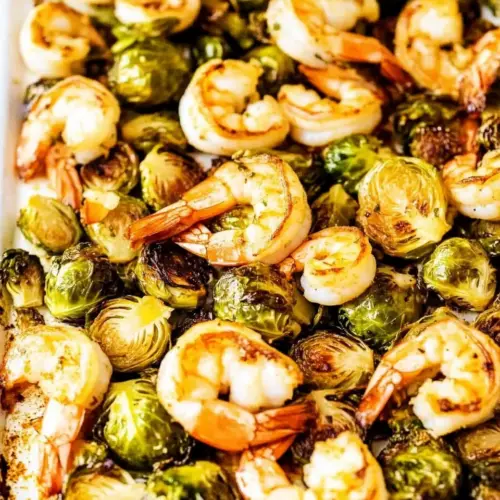
Roasted Asian Shrimp and Brussels Sprouts Sheet Pan Meal
Roasted Asian Shrimp and Brussels Sprouts Sheet Pan Meal is a crispy savory weeknight dinner that combines caramelized sprouts with glossy, sweet soy glazed shrimp. Fast to prepare and full of texture, this easy sheet pan recipe delivers bold umami notes and nutty sesame flavor, perfect for busy evenings when you want something impressive yet simple to make.
Equipment
- Baking Sheet
- Colander
- Mixing Bowl
- Ziploc bag
Ingredients
- 1 lb . jumbo frozen shrimp, thawed and drained well (I used 16-25 size shrimp.) Thaw and drain thoroughly to remove excess ice and water; provides the main protein and absorbs bold Asian-inspired seasonings during roasting. Ensure shrimp are patted dry so they caramelize quickly on the sheet pan without steaming, resulting in tender, flavorful bites.
- 1 lb . brussels sprouts, stems trimmed and cut in half Halve and trim the stems to expose flat surfaces for even roasting; supplies a crisp, slightly sweet vegetable component that contrasts the shrimp. Toss with oil and seasonings so edges crisp and develop a nutty, caramelized flavor while remaining tender inside.
- 2 T olive oil Coat vegetables and shrimp evenly to promote browning and prevent sticking; supplies healthy fats that help carry flavors and crisp the brussels sprouts. Measure two tablespoons to achieve enough coverage without excess oil, balancing texture and calorie content.
- salt and fresh-ground black pepper to taste Season to taste to enhance and balance natural flavors; creates savory contrast and can be adjusted for personal spice preference. Use fresh-ground black pepper for brightness and salt to amplify sweetness and umami from both shrimp and sprouts.
Instructions
- Thaw shrimp overnight in the refrigerator.: The aroma of chilled shrimp after thawing is faintly oceanic and clean, which tells you they are ready for marinating. Thawing slowly in the refrigerator keeps the texture firm and prevents bacteria growth, unlike a quick warm water thaw that can partially cook them. A common mistake is leaving them at room temperature to speed things up, which risks uneven thawing and a softer texture. If your shrimp still feels icy, let it sit refrigerated until pliable, you want them fully thawed but cool to the touch.
- At least 15-20 minutes before you’re starting to cook, put the shrimp in a colander placed in the sink and let them drain well.: As the shrimp drain, you can hear the faint drip and feel the surface go from slick to tacky, which helps the glaze adhere. Good drainage prevents excess liquid steaming the shrimp on the sheet pan, which would rob them of the appealing roast color. A typical pitfall is skipping this step and ending up with watery cooking juices that prevent browning. If the shrimp are still releasing a lot of liquid, extend the drain time and blot them later for best results.
- Mix the soy sauce, rice vinegar, sweetener, agave, sesame oil, and garlic powder to make the marinade/glaze mixture.: When you whisk these ingredients together you get a glossy, slightly thick glaze that smells of toasted sesame and bright vinegar. This balance of salty, sweet, and acid is what gives the dish its savory lift, and the glaze will caramelize gently under heat. A common error is making the glaze too heavy with sweetener, which can burn quickly on high heat; taste and adjust so it has freshness from the vinegar and depth from the soy sauce. Keep a small bowl for brushing and do not pour all over at once, you want layers of flavor.
- Preheat oven to 400 F/200 C and spray a large baking sheet with oil or non-stick spray.: You should feel the warm oven air and sense a dry heat, which helps the brussels sprouts brown. A properly preheated oven ensures the pan receives immediate heat, promoting caramelization instead of slow steaming. A common misstep is skipping preheat, which leads to limp sprouts and unevenly cooked shrimp . Use a baking sheet with some room so air circulates around the pieces for even crisping.
- After the shrimp have drained well, put them on a layer of paper towels, cover with more towels, and blot dry, so they are as dry as you can get them.: You will notice the paper towels darken as they absorb residual moisture, and the surface of each shrimp should feel slightly tacky rather than wet. Removing surface water is crucial for achieving that glossy sear and preventing steaming. A frequent mistake is rushing this step, which leaves excess water and prevents browning. If towels become saturated, switch to dry towels and pat again to get them properly dry.
- Put the dried shrimp and half of the marinade/glaze mixture into a Ziploc bag and let the shrimp marinate while you start cooking the brussels sprouts.: The chilled shrimp will take on the glaze flavors quickly, and after a few minutes you can smell the soy and sesame penetrating the surface. Marinating briefly is enough for these small proteins, and it adds savory depth without making them mushy. Over marinating, especially with acidic components, can make the texture mealy, so limit time accordingly. If you need to pause, keep the bag refrigerated until ready to roast.
- Wash brussels sprouts if needed and dry well. (Most packaged brussels sprouts don’t need washing.): Clean brussels sprouts have a fresh, green scent and a firm snap when broken, which signals they are fresh. Drying is important because water will inhibit caramelization and create steam pockets under the sprouts. A common slip is tossing wet sprouts onto the pan, which prevents browning and yields a soggy result. Dry them thoroughly, spinning in a salad spinner or patting with towels, before oiling.
- Trim the stem end off each brussels sprout and cut in half, taking care not to make leaves fall off as much as you can. (Individual leaves may get overly done when they cook; I kind of liked the dark single leaves, but Kara thought they were too bitter.): When you trim and halve them you expose interior surfaces that will brown and sweeten in the oven, releasing a warm, slightly nutty fragrance. Keeping most leaves intact helps the halves roast evenly, while loose leaves may crisp faster and darken. A common mistake is uneven halving, which causes mismatched cook times. Aim for uniform halves so the whole pan finishes together.
- Put brussels sprouts into a bowl and toss with desired amount of olive oil, salt, and fresh-ground black pepper, then spread the brussels sprouts out in a single layer on the baking sheet and roast 15 minutes.: As the sprouts roast you will hear a soft hiss and then smell their sugars caramelizing, turning slightly sweet and nutty. Tossing them in oil ensures even browning and that crisp edged texture we want. A frequent error is overcrowding the pan, which traps steam and prevents browning; keep them in a single layer with space between halves. Check for deep golden edges at the 15 minute mark to know they are ready for the next step.
- After the brussels sprouts have cooked 15 minutes, drain the shrimp well in a colander placed in the sink.: Draining now prevents any residual marinade from pooling on the pan, and the shrimp should look glossy but not dripping. You will notice a faint caramel aroma from the roasting sprouts, and the shrimp should be tacky enough to hold onto the glaze without sliding. A common mistake is leaving the shrimp wet, which leads to steaming instead of roasting, so blot them briefly if needed before adding them to the pan.
- Remove baking sheet from the oven, push the brussels sprouts over to one side, and spread the drained shrimp out in a single layer.: Moving the sprouts gives the shrimp direct contact with the hot pan, which encourages gentle browning and a pleasant roasted note. When you spread them in a single layer you should be able to see the shiny glaze and slight space between pieces, which helps heat circulate. Avoid piling shrimp on top of sprouts or on each other, as crowding causes steaming and uneven doneness.
- Put back in the oven and roast until shrimp have turned pink and are barely firm, about 6-8 minutes. (Smaller shrimp will cook more quickly; don’t overcook the shrimp for best flavor.): Keep an eye on the shrimp as they change color to opaque pink and their flesh becomes springy to the touch, a clear visual cue they are cooked. The oven sound shifts to a steady sizzle and you may smell the glaze caramelizing slightly, which adds depth. A common pitfall is overcooking; shrimp go from tender to rubbery very quickly. Remove them at the first sign of firmness for the best texture.
- Remove the sheet pan from the oven, give the shrimp and brussels sprouts a stir (and remove any burned individual leaves if you have some), and brush with the remaining marinade/glaze.: After stirring you will see glossy edges and tender interiors, and brushing on the remaining glaze adds a final glossy sheen and punch of flavor. This finishing step layers brightness and allows the glaze flavors to stand out without burning. A typical mistake is brushing before checking doneness; if the glaze is applied too early it can scorch. Apply it off heat for the best appearance and flavor.
- Serve immediately.: Hot from the oven the dish offers a contrast of crisp and tender textures and a warm, savory aroma that invites immediate serving. Serving right away preserves the texture of the brussels sprouts and the plumpness of the shrimp , keeping flavors at their peak. Letting it sit will soften the crisp edges and dilute the vibrancy, so plate promptly for the best experience.
Notes
- Swap the sweetener thoughtfully Replace the sweetener with a similar measure of honey or maple if desired, keeping in mind that sweeter liquids can brown faster. Taste the glaze before using and reduce heat slightly if it seems very sweet.
- Adjust the sesame note Increase or decrease the sesame oil to taste; a little goes a long way and adds toasty depth. If using more, reduce other fats slightly to avoid greasiness on the pan.
- Use different shrimp sizes Larger shrimp will need an extra minute or two in the oven; smaller shrimp finish faster so watch closely. Keep them in a single layer for even cooking regardless of size.
- Control the char on sprouts If you prefer milder sprouts, roast 2 to 3 minutes less and finish with the glaze off heat. This keeps centers tender and reduces bitterness from deeply charred leaves.
- Make it extra garlicky Add a pinch of garlic powder to the oil for the sprouts or a small amount of fresh minced garlic to the glaze, added at the end to avoid burning. Fresh garlic is more pungent, so use sparingly to avoid overpowering the dish.