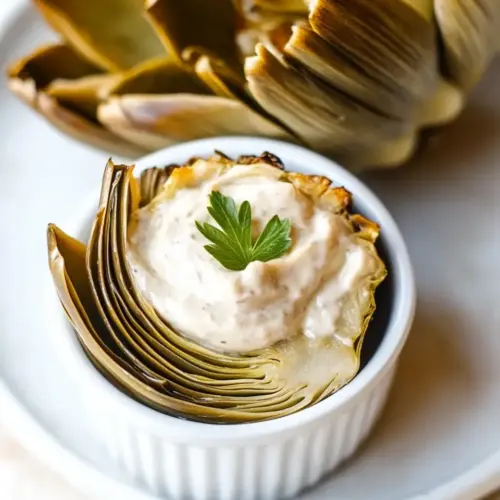
Roasted Artichoke with Skinny Aioli
Roasted Artichoke with Skinny Aioli features tender, caramelized artichoke halves paired with a creamy, tangy Greek yogurt aioli. The dish is crisp at the edges, silky at the heart, and brightened by lemon and garlic, making it a light but satisfying option for easy weeknight dinners or casual entertaining. Try it for a simple, flavorful vegetable course that still feels special.
Equipment
- Oven
- Baking Sheet
- Aluminum Foil
- Mixing Bowl
- Whisk
Ingredients
- 4 artichokes Trim and quarter to expose the hearts for even roasting; provides the main vegetable base and a tender, nutty flavor when cooked. Maintain a bit of stem to hold leaves together and remove choke if large after roasting. Pair with lemon and salt to brighten the artichoke’s natural taste for serving.
- 4 tablespoons olive oil Drizzle to coat artichokes before roasting, helping to crisp edges and carry heat for caramelization. Use extra-virgin for flavor or regular olive oil for a milder profile. Also adds richness that balances the tangy aioli.
- 1 lemon sliced Slice and tuck among artichokes to add bright citrus aroma and to prevent browning during preparation; roasted slices impart mellowed acidity. Also squeeze or use zest as needed to accentuate the dish’s freshness. Serves both flavor and presentation roles on the pan.
- 1 teaspoon kosher salt Season evenly over artichokes to enhance natural flavors and to aid in drawing out moisture for better roasting results. Use kosher salt for its coarser grain, which distributes well across vegetable surfaces. Adjust to taste if serving with additional salty accompaniments.
- 1/2 teaspoon black pepper Sprinkle for mild heat and earthy depth that complements the artichoke’s subtle sweetness; helps balance the dish’s acidity. Freshly ground yields more vibrant aroma and flavor. Use sparingly to avoid overpowering delicate components.
- 1/2 cup Greek yogurt Whisk with garlic, lemon juice, and olive oil to create a tangy, creamy skinny aioli that lightens the dish. Greek yogurt contributes body, protein, and a pleasant tang while keeping calories lower than traditional mayonnaise. Chill briefly to let flavors meld before serving alongside roasted artichoke.
- 2 garlic cloves minced Mince finely to infuse the aioli with pungent, savory bite and aromatic depth; raw garlic sharpens the overall flavor profile. Mix thoroughly into yogurt so it disperses evenly and mellows slightly over time. Adjust amount if a subtler garlic presence is preferred.
- 1 tablespoon lemon juice Squeeze freshly to introduce bright acidity into the aioli and to balance the richness of yogurt and olive oil. Lemon juice cuts through fat and refreshes the palate when dipping roasted artichoke leaves. Consider adding a little more for extra brightness if needed.
- 1/8 teaspoon kosher salt Season the aioli gently to enhance and unify flavors without overpowering the yogurt’s tang or garlic’s punch. Use the finer kosher salt measure to control seasoning precisely in the sauce. Taste and adjust before serving alongside artichokes.
- 2 tablespoons olive oil Whisk into the yogurt-based aioli to add silky mouthfeel and to help emulsify the sauce for smooth dipping texture. Use gradually while mixing to achieve desired consistency and sheen. Extra oil also brings subtle fruity notes depending on the variety chosen.
Instructions
- Preheat oven to 375 degrees. Prepare the artichokes by trimming off the tops of the leaves and cut them in half. Cut off the white, fibrous hairs and inner purple leaves.: Warmth fills the kitchen as the oven comes up to temperature, and that steady, even heat is crucial because it encourages gentle caramelization while allowing the interior to steam. You should sense a dry, warm hum from the oven when it hits the set point, and the preheat ensures predictable cooking so the hearts soften at the same rate as the outer leaves brown slightly. Why this matters, the consistent oven temp prevents the exterior from charring before the center cooks through. A common mistake is placing cold pans inside the oven which can delay proper searing and extend cooking time, so let the oven reach 375 before you put the artichokes in.
- Place a piece of aluminum foil under each half, and drizzle them with olive oil. Cover each half with a slice of lemon, sprinkle with salt and pepper, then wrap up the artichoke halves in foil. Bake for 45 minutes.: As you work, you will hear the faint snap of leaves and see the tight, pale interior when you slice them. Trimming reveals the tender core and reduces the tougher, chewy portions. The visual cue to stop trimming is when you reach the plump, pale leaf bases and the heart becomes prominent. Why this technique matters is because removing the tough tips ensures a uniformly tender eating experience. Many people err by trimming too little, leaving fibrous leaves that are unpleasant to eat, so be decisive in removing the outermost coarse layers.
- Whisk all the aioli ingredients together, olive oil last. Drizzle on top of artichokes.: When you halve the artichokes , you will see the fuzzy choke above the heart and some inner purple leaves that are not meant to be eaten. Scrape or spoon out that fibrous material until the heart is smooth and accessible. This step affects texture profoundly because leaving the choke makes the center inedible and disrupts the pleasure of pulling tender leaves away. A typical mistake is to leave small amounts of the hairs which can create an unpleasant stringy sensation, so take your time and remove them thoroughly.
- Place a piece of aluminum foil under each half, and drizzle them with olive oil: The foil cradles each artichoke and collects juices, while the olive oil forms a thin coating that promotes browning and carries the lemon flavor. Look for a gentle sheen on the cut surfaces after oiling, that glistening is the sign you have enough. This technique matters because the oil both flavors and insulates, helping the heat to penetrate without drying out the hearts. Avoid using too little oil, a common mistake, because dry edges can become tough rather than pleasantly crisp.
- Cover each half with a slice of lemon, sprinkle with salt and pepper, then wrap up the artichoke halves in foil: The lemon releases steam and citrus oils as it warms, bathing the flesh with brightness. When you seal the foil, you trap that fragrant steam so the interior softens while the exposed edges still roast. A successful seal produces a faint hiss as steam collects, and the scent of warm lemon will rise as they cook. This method matters because it marries roasting and steaming for consistent tenderness. People sometimes under-season here, which leads to bland results, so be sure the kosher salt and black pepper are evenly scattered.
- Bake for 45 minutes: As the artichokes roast, the kitchen fills with a warm, vegetal aroma and the lemon note becomes more pronounced. You should notice the outer leaves darkening slightly at the tips and the flesh giving to a gentle fork test after about 40 minutes. The reason timing matters is that it allows the choke to soften and the heart to become yielding, yet preserves some structure. A typical error is pulling them out too early; if the heart resists a fork, they need more time. Conversely, leaving them far past tenderness risks drying the flesh, so aim for a happy medium around the instructed period.
- Whisk all the aioli ingredients together, olive oil last: When you combine the Greek yogurt , minced garlic , lemon juice , and a pinch of kosher salt , you will smell a bright, tangy aroma that balances the savory garlic. Adding the final 2 tablespoons of olive oil slowly softens the mixture and creates a silky, cohesive texture. This matters because the order builds emulsion and prevents the sauce from becoming too thin; the texture should be creamy and cling to a spoon. A frequent mistake is adding the oil too quickly which can separate the sauce, so pour it in gradually while whisking for smoothness.
- Drizzle on top of artichokes: When you unwrap the foil, warm steam and lemon scent will billow out, and the artichoke flesh should glisten. Spoon the aioli over the halves so the creamy sauce nestles into the crevices and onto the hearts, offering both contrast and balance. Why this finishing touch matters is that the cool creaminess highlights the roasted flavors and makes each bite luscious. One common misstep is serving the aioli cold straight from the fridge, which mutes aroma; bring it to cool room temperature so it melds harmoniously with the warm artichokes .
Notes
- Choosing artichokes Start by selecting firm, heavy artichokes with tightly packed leaves; these are likely to be freshest and will roast to the best texture.
- Trimming technique Use a sharp knife to remove the top third of the leaves and trim the stem a bit so the halved artichoke sits flat, this makes even roasting easier and reduces stringy bits.
- Lemon placement Place a thin slice of lemon directly on the cut surface so its oils and steam infuse the flesh during roasting, enhancing brightness without extra acid later.
- Foil method Wrap each half individually so steam circulates well; this doubles as a tidy way to serve and keeps the oven clean from drips.
- Garlic preparation Mince the garlic very fine and let it sit briefly in the yogurt to mellow its raw edge before serving, this produces a gentler, more integrated flavor.
- Serving temperature Serve the aioli at cool room temperature so it blends into the warm artichoke rather than clumping or tasting chilled, which helps the aromas sing.